
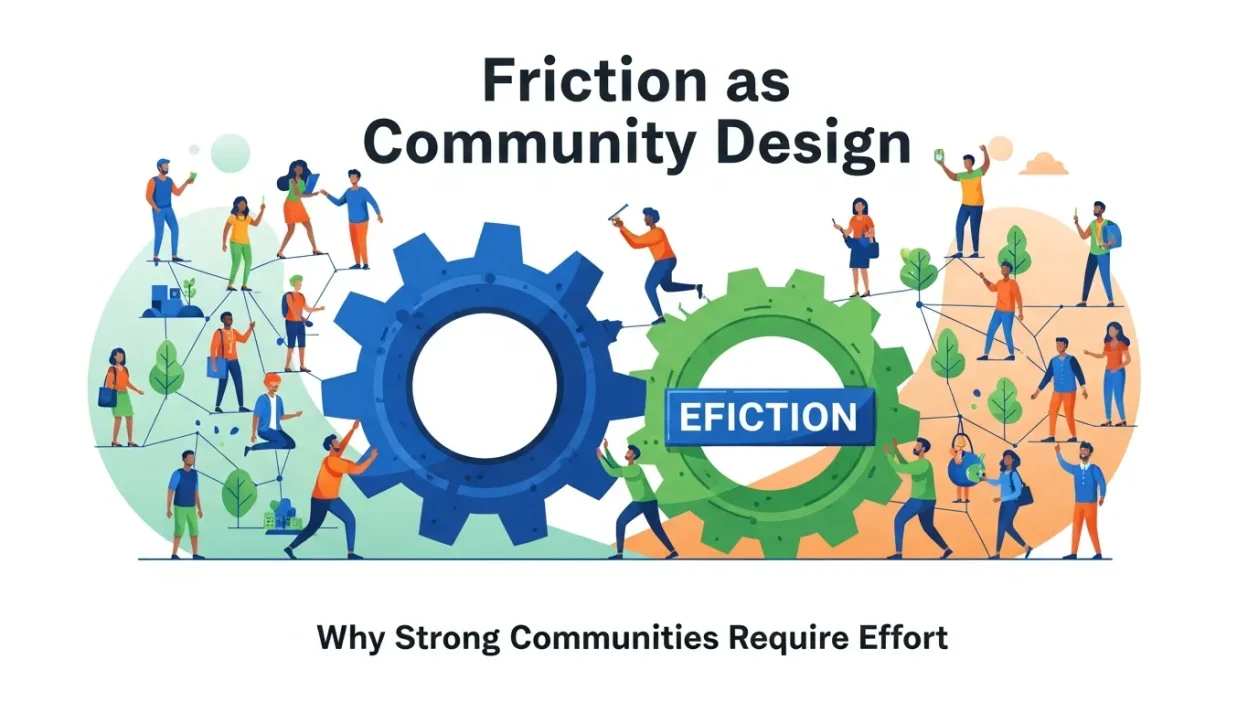
Friction as Community Design challenges the idea that easier is always better. This approach argues that intentional barriers—such as applications, time investment, effort, and vulnerability—create stronger, more committed communities. By requiring meaningful participation, friction filters for alignment, deepens trust, and transforms passive members into active contributors. Rather than slowing communities down, strategic friction builds belonging that is earned, ethical, and enduring.
For years, community builders have embraced the mantra of reducing friction at all costs. Make joining easy. Simplify onboarding. Remove barriers. The conventional wisdom suggests that any obstacle between potential members and your community reduces growth and engagement.
Yet something counterintuitive emerges when we examine our most meaningful communities – both online and offline. The groups that command our deepest loyalty often required significant effort to join. The communities we value most typically demanded something meaningful from us before granting membership.
This observation challenges the frictionless paradigm dominating modern community design. Perhaps certain types of friction, thoughtfully implemented, create stronger communities rather than weaker ones.
The Psychological Value of Earned Belonging
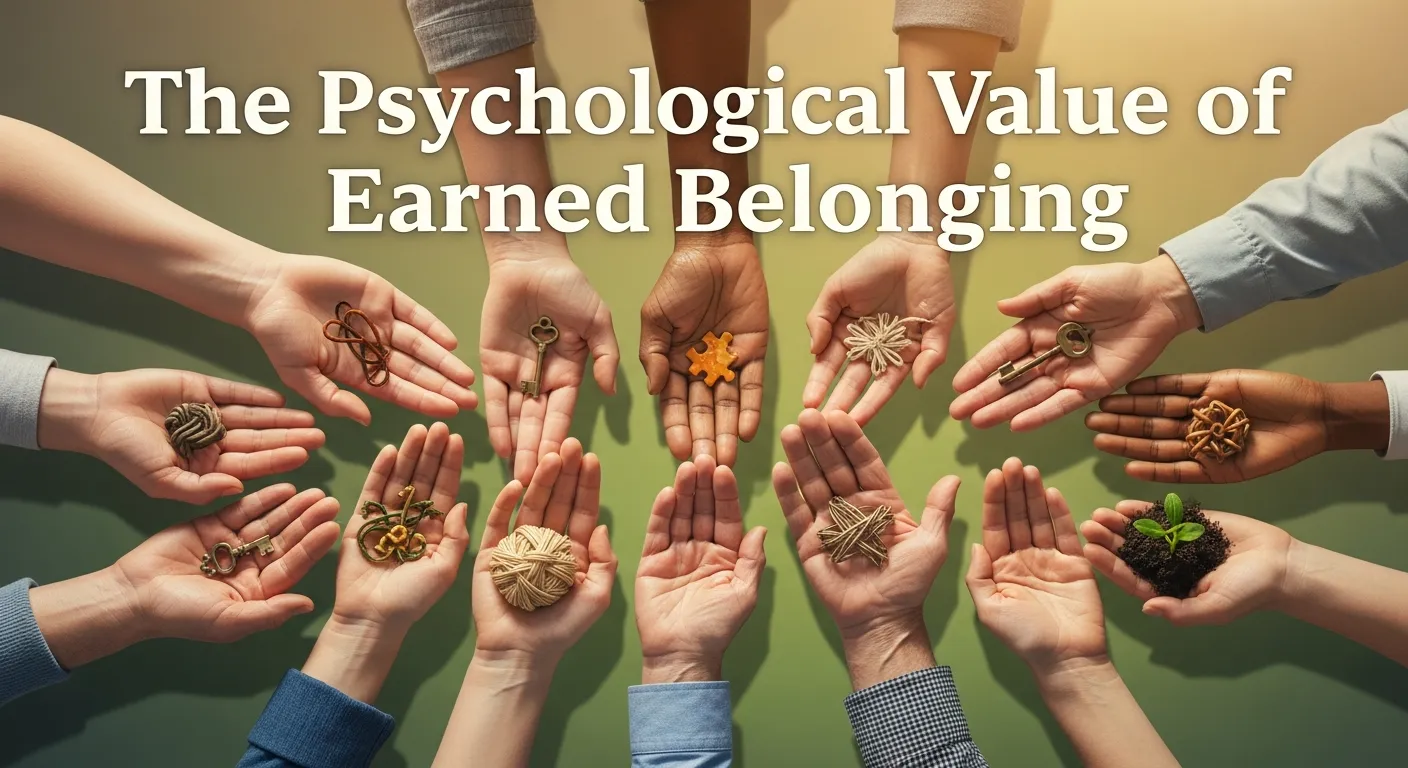
Human psychology reveals why friction often strengthens community bonds. The effort justification principle shows that we value what we work for more than what comes easily. Communities requiring meaningful investment – whether time, vulnerability, skill demonstration, or financial commitment – trigger this psychological mechanism.
When we overcome barriers to join a group, we unconsciously increase our valuation of that community. What required effort must have value. What tested our commitment must be worth committing to. This internal justification creates stronger initial bonds than frictionless alternatives.
Social identity theory further explains this phenomenon. Our sense of identity partially forms through group affiliations. Communities with distinctive entry requirements create clearer boundaries around who belongs, strengthening members’ sense of shared identity and distinctiveness from non-members.
Friction as a Signal of Seriousness
Communities rarely fail because people cannot join easily; they fail because members never develop a serious relationship with the space. When entry requires intention and effort, friction works as a signal—this is not a casual drop-in environment but a place that values commitment. That signal immediately changes how newcomers perceive the community and their role within it.
Strategic friction filters out passive participants while inviting those who are willing to invest attention and energy. This doesn’t reduce quality participation—it concentrates it. Members arrive already primed to contribute, not just consume.
This type of friction communicates three things clearly:
- Membership is meaningful, not disposable
- Participation is expected, not optional
- The community values depth over volume
Distinguishing Strategic Friction from Poor Design
Critical distinctions exist between strategic friction that strengthens communities and frustrating barriers that simply drive people away. Strategic friction serves clear community purposes – it tests commitment, ensures value alignment, demonstrates necessary skills, or builds shared experiences. Poor design creates arbitrary obstacles that serve no community purpose.
Strategic friction appears early in the community journey, establishing the relationship terms from the beginning. It transparently communicates why the barrier exists and what community value it protects. When members understand friction’s purpose, they experience it as meaningful rather than annoying.
At Build Bonding, we’ve observed repeatedly that communities with thoughtful friction not only retain members longer but also generate more meaningful contributions and connections among those members.
Why Friction as Community Design Outperforms Frictionless Models
Frictionless communities optimize for entry but rarely for endurance. When anyone can join instantly, members feel little attachment to staying, contributing, or protecting the space. Friction as Community Design shifts the focus from rapid acquisition to long-term relational depth.
This approach recognizes that strong communities are built on intentional participation, not passive presence. Strategic friction slows growth slightly, but it dramatically increases the likelihood that members will engage meaningfully once inside.
Communities that ignore Friction as Community Design often experience:
- High sign-ups with low participation
- Minimal trust between members
- Weak shared identity and culture
Application Processes as Community Strengtheners
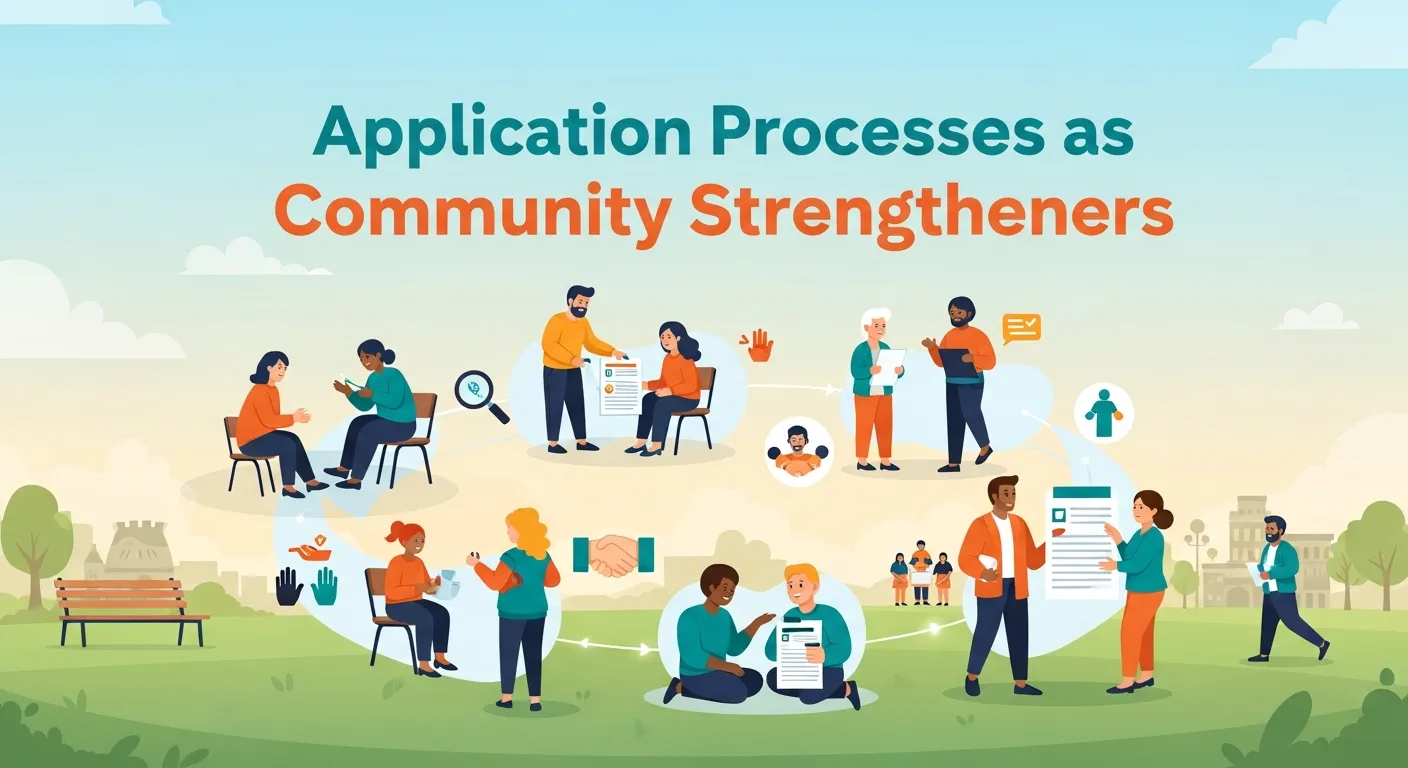
Selective application processes represent one of the most common and effective forms of strategic friction. Communities ranging from professional organizations to artist collectives use applications not just to control numbers but to strengthen the resulting community.
Well-designed applications serve multiple community purposes simultaneously. They communicate community values and expectations clearly. They prompt reflection that helps potential members self-select appropriately. They create opportunities for community leaders to identify how new members might contribute uniquely.
The most effective applications don’t simply filter for credentials but instead probe for alignment with community purpose and values. Questions that require vulnerability and authentic sharing set the tone for the relationships that will form within the community.Reading More Creating Pathways for Community Participation
Friction as Community Design in Practice
Different forms of friction serve different purposes, but all function as design tools when aligned with community goals. Friction as Community Design allows builders to choose barriers that actively strengthen culture rather than accidentally dilute it.
| Friction Type | Design Purpose | Resulting Community Outcome |
|---|---|---|
| Application-based | Value alignment & reflection | Intentional, mission-aligned members |
| Financial | Commitment & accountability | Higher engagement consistency |
| Knowledge-based | Shared foundation | Deeper conversations & collaboration |
| Time-based | Progressive trust | Long-term loyalty |
| Vulnerability-based | Emotional investment | Strong relational bonds |
When these elements are combined thoughtfully, friction becomes a unifying force rather than a limiting one.
Financial Investment and Community Commitment
Money creates particularly powerful friction in community design. Financial commitments test seriousness and create skin in the game for new members. When people pay for membership, they typically show up more consistently and engage more meaningfully to justify their investment.
However, financial barriers come with important ethical considerations around accessibility and inclusion. Thoughtful communities address this tension through sliding scales, scholarship opportunities, or alternative contribution pathways that maintain meaningful friction without excluding economically disadvantaged members.
The specific amount matters less than the psychological threshold it represents. Even modest Financial Investment can significantly increase member engagement compared to free alternatives. This explains why freemium communities often struggle with sustained participation despite large membership numbers.
Knowledge Barriers and Community Identity
Some communities maintain strength through knowledge-based friction. Members must demonstrate specific expertise, complete educational requirements, or pass knowledge tests before gaining full membership. This approach creates communities with shared intellectual foundations and vocabulary.
Professional communities naturally embrace this model through credentialing processes. However, even hobby-based communities benefit from knowledge thresholds that ensure meaningful participation. Photography groups might require basic technical understanding before admission. Book clubs might expect familiarity with certain foundational texts.
These knowledge requirements create common ground that facilitates deeper discussion and collaboration once inside the community. Rather than excluding people permanently, well-designed knowledge friction often includes pathways for motivated newcomers to acquire necessary background.
Time-Based Friction and Progressive Engagement
Time represents another valuable friction dimension. Communities that unfold gradually often form deeper bonds than those offering immediate full access. Gradual revelation of community spaces, practices, or knowledge creates anticipation and rewards continued participation.
Japanese tea ceremony communities exemplify this approach. New practitioners spend years working through progressive levels of access and understanding. This deliberate pacing transforms what could be a simple beverage ritual into a lifelong community of practice with extraordinary retention and dedication.
Digital communities can implement similar progressions through staged access to different platform areas, gradually revealed community traditions, or time-based achievement of different member statuses. These temporal designs create a sense of journey that strengthens member identification with the community.
Friction as Community Design Across the Member Journey
Friction as Community Design should not be limited to the point of entry. Communities that integrate progressive friction throughout the member journey encourage continuous recommitment. Each stage of participation deepens identity, trust, and belonging.
Rather than overwhelming new members, gradual effort requirements create a sense of movement and growth. Members don’t just join—they evolve within the community, earning their place repeatedly through contribution and presence.
Effective journey-based friction includes:
- Staged access to Environments for Deeper Connection
- Earned roles tied to contribution, not tenure
- Rituals that mark progress and belonging
Effort Thresholds as Filtering Mechanisms
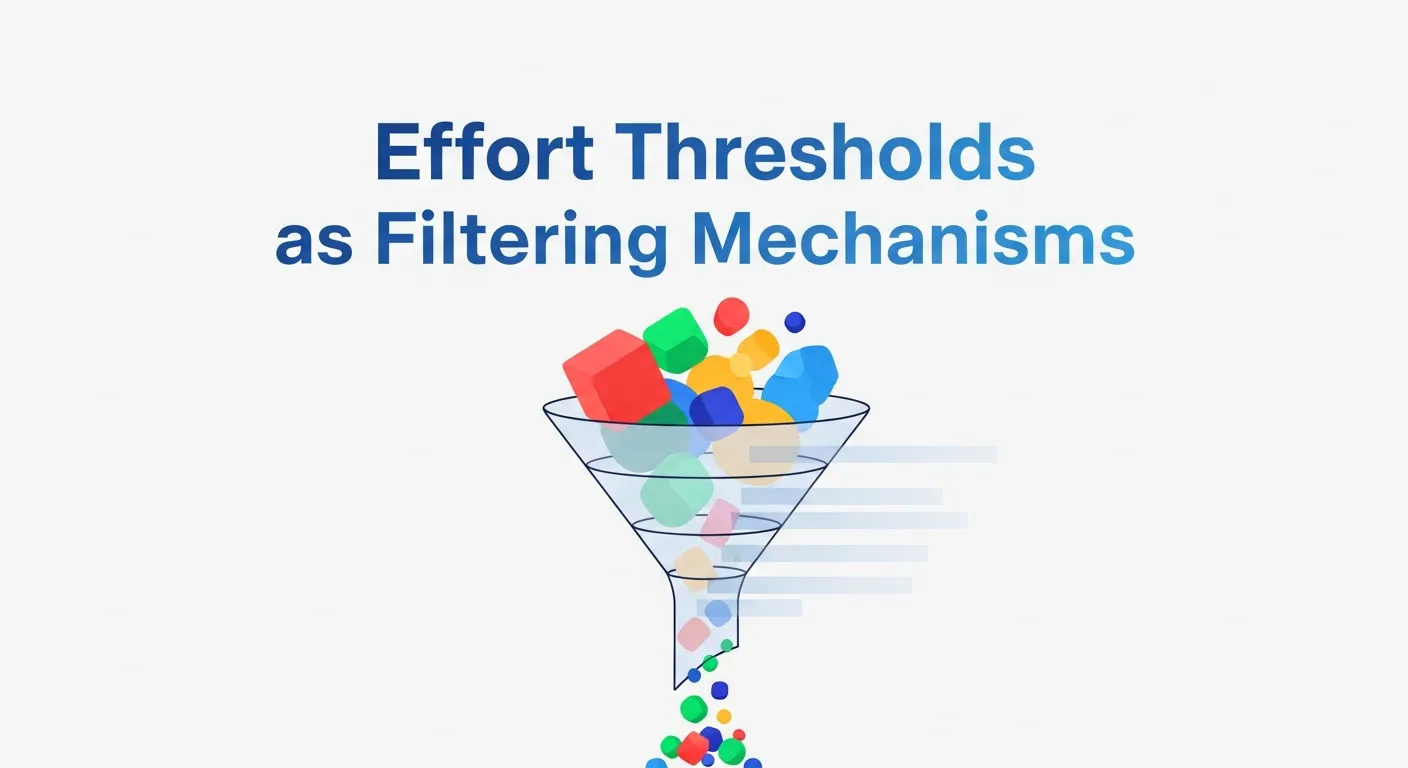
Communities sometimes implement effort thresholds specifically to filter for desired member qualities. These barriers intentionally select for persistence, creativity, problem-solving ability, or other traits aligned with community values.
Historical examples include puzzles hidden in job postings at tech companies or deliberately difficult application processes for certain artistic collectives. These mechanisms attract individuals who enjoy the specific type of effort required – an early alignment between member attributes and community culture.
While potentially exclusionary when poorly designed, thoughtful effort thresholds can identify members likely to thrive in and contribute to the particular community environment. The key lies in designing friction that selects for characteristics genuinely relevant to community participation rather than arbitrary barriers.
Vulnerability Requirements and Emotional Connection
Perhaps the most powerful community friction involves vulnerability requirements – expectations that members share authentic experiences, challenges, or aspirations with the group. This emotional investment creates deeper connections than communities based solely on transactional exchanges.
Traditional religious communities intrinsically understand this principle. Confession, testimony, and ritual vulnerability create strong bonds among members who have witnessed each other’s authentic humanity. Modern therapy groups and support communities build on similar foundations.
Digital communities can implement vulnerability friction through application questions requiring personal reflection, onboarding processes that include story sharing, or community rituals that periodically invite deeper disclosure among established members.
Designing Strategic Friction for Your Community
Creating effective friction begins with clarity about your community’s core purpose and values. What specific qualities define your ideal members? What behaviors do you want to encourage? What community elements do you most need to protect? Answering these questions reveals where strategic friction provides the most benefit.
Consider implementing friction at multiple journey stages rather than concentrating it all at entry. Initial barriers might filter for basic alignment, while progressive friction throughout the member journey continually deepens commitment and engagement.
Test friction elements with small member cohorts before full implementation. Gather feedback about which requirements felt meaningful versus frustrating. Continuously refine your approach based on how different types of friction impact community dynamics.
Ethical Considerations in Friction Design
Ethical friction design requires ongoing attention to issues of accessibility, privilege, and inclusion. Barriers that select for commitment can unintentionally exclude people facing structural disadvantages or with different cultural backgrounds.
Regular community audits should examine whether your friction mechanisms disproportionately impact certain demographic groups. Developing alternative pathways that maintain meaningful commitment requirements while accommodating different circumstances helps build more diverse yet still cohesive communities.
The most thoughtful communities view friction not as a filtering mechanism primarily but as a relationship-building tool that strengthens bonds with and among the members who do join.
Measuring the Impact of Strategic Friction
Several metrics help evaluate whether your friction design strengthens community bonds effectively. Retention duration – how long members stay active – provides one key indicator. Participation consistency – how regularly members engage – offers another. Contribution depth – the meaningfulness of member participation – provides particularly valuable insight.
Communities with well-designed friction typically show higher scores on these metrics than frictionless alternatives, even if their absolute membership numbers grow more slowly. This quality-over-quantity approach often creates more Sustainable Funding Models for Long-term Growth in the long term.
Friction as Community Design Is an Ethical Choice
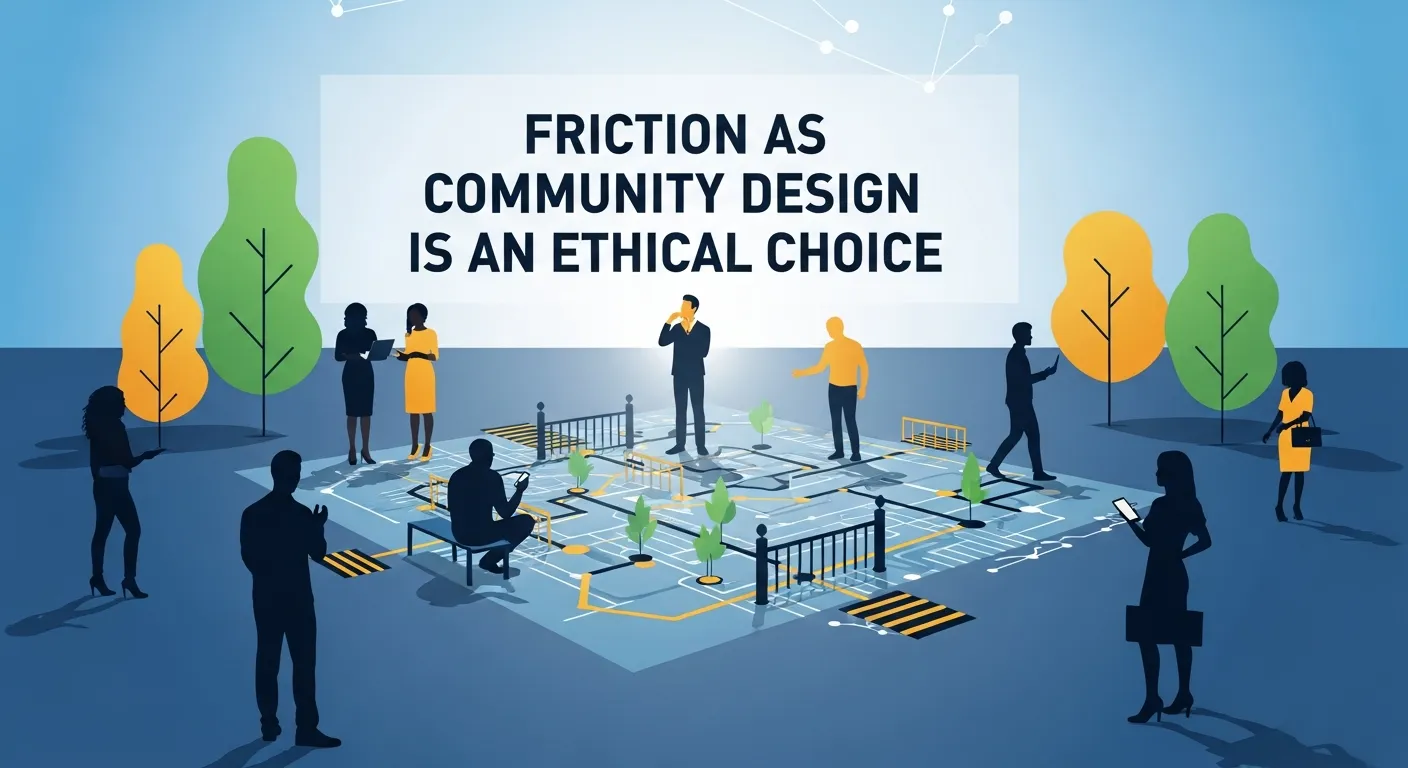
Choosing Friction as Community Design is not about exclusion—it is about respect. It respects members’ time, energy, and emotional investment by ensuring the community they enter is worth committing to. When friction is transparent and purpose-driven, it feels fair rather than restrictive.
In a digital world optimized for speed and convenience, communities that require effort stand out. They offer something increasingly rare: belonging that feels earned, relationships that feel real, and participation that truly matters.
Conclusion: The Courage to Require More
Building communities with meaningful friction requires courage in a world obsessed with frictionless experiences. It means potentially growing more slowly than competitors. It requires explaining your approach to stakeholders focused on member acquisition metrics.
Yet the communities that ultimately transform members’ lives rarely take the easy path. They ask for real commitment. They require genuine investment. They maintain standards that not everyone will meet.
By thoughtfully designing strategic friction into your community architecture, you create spaces where deeper human connections can flourish – where membership carries genuine meaning precisely because it wasn’t easily obtained. In a world of increasingly superficial digital interactions, these friction-forged communities offer what many people hunger for most: relationships and belonging that feel truly earned.
Frequently Asked Questions (FAQs)
1. What is Friction as Community Design?
Friction as Community Design is the intentional use of meaningful barriers—such as applications, time, effort, or commitment—to build stronger community bonds, deeper alignment, and long-term engagement.
2. Why is Friction as Community Design important in community building?
Friction as Community Design signals seriousness and intention. It filters for aligned members, increases emotional investment, and helps create communities built on participation rather than passive membership.
3. How does Friction as Community Design create stronger communities?
By requiring effort, Friction as Community Design increases perceived value, strengthens shared identity, and encourages members to contribute, protect culture, and build trust.
4. Is Friction as Community Design the same as bad user experience?
No. Friction as Community Design is purposeful and transparent, while poor user experience creates unnecessary or confusing obstacles with no benefit to the community.
5. What types of friction are used in Friction as Community Design?
Friction as Community Design commonly includes application-based, financial, knowledge-based, time-based, effort-based, and vulnerability-based friction—each serving a specific community goal.
6. Doesn’t Friction as Community Design reduce community growth?
Friction as Community Design may slow initial sign-ups, but it increases retention, engagement quality, trust, and contribution—leading to healthier, more sustainable growth.
7. How do applications support Friction as Community Design?
Applications are a core tool of Friction as Community Design. They communicate values, encourage self-selection, and set expectations for intentional and meaningful participation.
8. Is financial friction ethical within Friction as Community Design?
Yes. Ethical Friction as Community Design includes sliding scales, scholarships, or alternative contribution options to balance commitment with accessibility and inclusion.
9. How does time-based friction fit into Friction as Community Design?
Time-based Friction as Community Design uses gradual access, earned roles, and progressive trust to create a sense of journey and deepen long-term member commitment.
10. Can digital communities apply Friction as Community Design?
Absolutely. Digital communities can apply Friction as Community Design through staged access, contribution-based status, structured onboarding, and vulnerability-driven rituals.
11. What is vulnerability-based Friction as Community Design?
Vulnerability-based Friction as Community Design requires authentic sharing and reflection, creating emotional investment, trust, and stronger relational bonds.
12. How can communities measure the success of Friction as Community Design?
The success of Friction as Community Design can be measured through retention duration, participation consistency, contribution depth, trust levels, and overall community health.