

Conflict as Opportunity reframes disagreement as a powerful tool for community growth rather than a threat to harmony. When communities engage conflict with curiosity, emotional intelligence, and clear processes, tension reveals hidden needs, strengthens trust, and builds long-term resilience. Avoidance weakens communities, while thoughtful engagement turns friction into connection.
Most of us instinctively avoid conflict. We sense tension rising in a community meeting and brace ourselves, hoping it passes quickly.
But what if these challenging moments aren’t threats to our communities but opportunities to strengthen them?
The most resilient communities don’t avoid disagreements – they develop healthy ways to move through them. These communities emerge stronger after conflicts, not weaker.
The Hidden Value in Community Disagreements

Conflicts reveal what people truly care about. When someone speaks up despite the discomfort, they’re showing what matters deeply to them.
These moments of friction expose the values, concerns, and needs that might otherwise remain hidden. They bring important issues to the surface where they can finally be addressed.
Left unexamined, these underlying tensions typically don’t disappear – they simmer and grow. Addressed thoughtfully, they become doorways to deeper understanding.
Conflict as Opportunity: Revealing the Invisible Layers of Community
Conflict as opportunity allows communities to uncover what usually stays unspoken. Beneath surface harmony often lie unmet needs, unacknowledged fears, or misaligned expectations. Disagreement acts like a spotlight, illuminating these hidden layers so they can finally be addressed.
When communities learn to view tension as information rather than disruption, they gain access to deeper truth. These moments offer clarity about boundaries, values, and priorities—insights that peaceful periods rarely reveal on their own.
Conflict reveals important signals such as:
- Gaps between stated values and lived experience
- Power imbalances or unheard voices
- Emotional needs that lack safe expression
- Structural issues disguised as personal disputes
Handled with care, these revelations become starting points for stronger alignment and trust.
Beyond Fight or Flight: A Third Response to Conflict
Our brains are wired with strong fight-or-flight responses to perceived threats, including social conflicts. This worked well for our ancestors facing physical dangers but serves us poorly in community settings.
Research from the Conflict Research Consortium shows that communities can develop a third response beyond confrontation or avoidance – collaborative engagement with disagreement.
This approach treats conflicts not as battles to win but as shared problems to solve together. It requires moving from defensive positions to exploring underlying needs and interests.
Slowing Down: The Skill That Turns Conflict into Opportunity

One of the most powerful tools in transforming conflict is intentional slowing down. When conversations accelerate under emotional pressure, misunderstanding multiplies. Slowing the pace creates space for reflection, curiosity, and choice.
Conflict as opportunity depends on this pause. It allows participants to step out of automatic reactions and into conscious engagement. In that pause, communities can shift from blame to inquiry and from certainty to openness.
Slowing down during conflict can include:
- Pausing conversations when emotions peak
- Naming what feels difficult in the moment
- Asking clarifying questions instead of making assumptions
- Allowing silence for processing and reflection
This deliberate deceleration often prevents escalation and opens the door to collaborative resolution.
The Counterintuitive Power of Acknowledging Differences
Many community leaders mistakenly focus only on common ground, avoiding acknowledgment of real differences. This approach backfires.
When differences remain unaddressed, people feel unseen and unheard. Their trust in the community erodes slowly but steadily.
Directly acknowledging areas of disagreement actually builds trust. It signals respect for different perspectives and creates space for authentic dialogue rather than superficial harmony.
Emotional Intelligence: The Foundation for Healthy Conflict
Emotional intelligence – particularly self-awareness and self-regulation – provides the groundwork for productive conflict engagement.
Community members who can name their emotions during tense moments and choose their responses rather than reacting instinctively create space for resolution rather than escalation.
As we discuss on our home page, these emotional skills can be developed through practice and supportive community norms that normalize naming feelings directly.
From Positions to Interests: The Crucial Shift
Many conflicts get stuck at the level of positions—the specific demands, solutions, or stances that appear incompatible. Focusing solely on positions often leads to stalemates, frustration, and escalating tension, because the surface-level disagreements seem unresolvable.
Beneath these positions lie interests—the underlying needs, concerns, motivations, and values that drive people’s stances. Often, conflicting positions serve similar interests, such as safety, fairness, recognition, or belonging, even if the proposed solutions differ.
When communities learn to shift conversations from positions to interests, dialogue becomes far more constructive. Instead of debating who is “right” or “wrong,” members explore why each position exists and what underlying needs are at play. This reframing allows groups to discover creative, mutually satisfying solutions that might have seemed impossible at first glance.
By focusing on interests rather than rigid positions, communities reduce defensiveness, build empathy, and unlock collaboration. What once looked like a deadlock can transform into an opportunity for alignment, innovation, and deeper trust among members.
Listening for Meaning, Not Winning Arguments

When conflict arises, people often listen to respond rather than to understand. This habit turns conversations into debates instead of dialogues. Conflict as opportunity requires a different kind of listening—one focused on meaning beneath words.
Deep listening helps communities hear the fear, hope, or care driving strong opinions. When people feel genuinely understood, defensiveness softens, making cooperation possible even amid disagreement.
Listening for meaning involves:
- Reflecting back what you hear before responding
- Asking about impact rather than intent
- Validating emotions without agreeing on solutions
- Staying curious about perspectives that differ from your own
This form of listening transforms conflict from confrontation into connection.
Creating Safe Spaces for Constructive Disagreement
Communities that handle conflict well establish clear norms and processes before tensions arise. They create containers that make constructive disagreement possible.
These might include agreements about communication practices, facilitation approaches for difficult conversations, or shared vocabulary for naming what’s happening in the moment.
The goal isn’t eliminating strong emotions but channeling their energy toward deeper understanding rather than division.
Conflict Avoidance vs Conflict as Opportunity
Not all conflict responses are equal. The way a community interprets disagreement determines whether it weakens or Social Bond to Strengthen Relationships.
| Conflict Avoidance | Conflict as Opportunity |
|---|---|
| Suppressing disagreement | Naming tension openly |
| Prioritizing comfort | Prioritizing understanding |
| Short-term peace | Long-term trust |
| Unspoken resentment | Shared clarity |
| Fragile harmony | Resilient connection |
Communities that embrace conflict as opportunity build durability, while those that avoid it often accumulate invisible fractures over time.
The Facilitator’s Role in Transforming Conflict
Skilled facilitation makes an enormous difference in how conflicts unfold in community settings.
According to The Center for Nonviolent Communication, effective facilitators help:
Maintain focus on understanding before problem-solving Ensure all voices are heard, especially quieter ones Translate accusatory statements into expressions of needs Identify areas of agreement alongside differences
These interventions transform potentially divisive moments into opportunities for collective growth.
Learning Through Conflict: The Growth Mindset Approach
Communities that thrive through conflict embrace what psychologist Carol Dweck calls a growth mindset. Instead of seeing disagreements as threats or failures, they view them as opportunities for learning, insight, and stronger connections. Conflict becomes a chance to uncover hidden perspectives, clarify values, and deepen mutual understanding.
After navigating a disagreement, these communities take deliberate time to reflect. They ask questions such as: What have we learned about ourselves and others? What new perspectives or solutions emerged? How have our relationships been affected or strengthened? This reflective practice transforms challenging experiences into collective knowledge that informs future interactions and decision-making.
By adopting a growth mindset, communities shift from simply reacting to conflict toward proactively learning and evolving. Each resolved tension becomes a building block for resilience, trust, and emotional intelligence, laying the foundation for stronger, more adaptable communities over time.
Normalizing Discomfort as Part of Community Health
Healthy communities don’t eliminate discomfort—they normalize it. Conflict as opportunity reframes unease as a sign of engagement rather than failure. Discomfort often means people care enough to stay present.
When communities openly acknowledge that tension is part of growth, members feel less fear around difficult conversations. This cultural shift reduces avoidance and increases collective courage.
Communities that normalize discomfort tend to:
- Address issues earlier rather than later
- Recover faster after disagreements
- Build emotional resilience over time
- Strengthen trust through honesty
Discomfort, when supported, becomes a catalyst rather than a barrier.
From Fragile to Antifragile: Building Stronger Through Stress
The most resilient communities become what author Nassim Taleb calls “antifragile” – actually strengthening through stressors rather than despite them.
Each successfully navigated conflict builds confidence in the community’s ability to handle future challenges. Members develop deeper trust in both the community’s processes and in each other.
The community develops emotional and relational muscles that can only grow through the resistance training that conflicts provide.
Conflict as Community Investment
Seen through this lens, time spent addressing conflicts isn’t a distraction from community building – it is community building in its most fundamental form.
The patience, courage and care invested in working through disagreements yields returns in deeper connections, greater resilience, and more authentic belonging.
By embracing conflict as opportunity rather than threat, communities transform potential breaking points into their strongest foundations.
Choosing Conflict as Opportunity, Again and Again
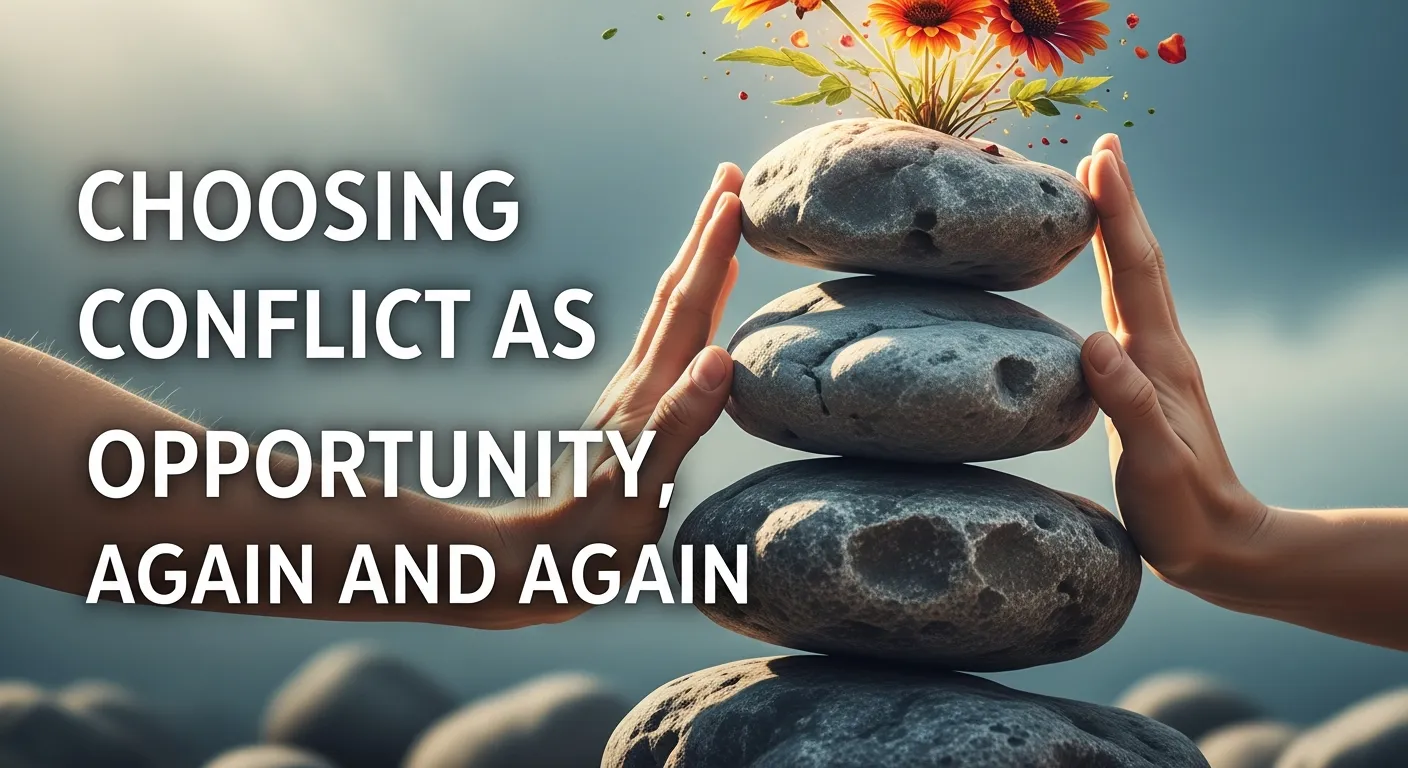
Seeing conflict as opportunity is not a one-time mindset shift—it’s a repeated choice. Each disagreement offers a fork in the road: avoid and weaken, or engage and grow.
Communities that consistently choose engagement develop a reputation for integrity and depth. Over time, members trust not that conflict won’t happen—but that it will be handled with care, courage, and respect.
That trust becomes the strongest foundation a community can have.
Let’s wrap up
Conflict does not signal failure in a community—it signals care, engagement, and unmet needs seeking expression. When communities choose to see conflict as opportunity, they move beyond fear and defensiveness into learning and alignment. Through slowing down, listening deeply, acknowledging differences, and creating safe containers for disagreement, communities become more resilient, trustworthy, and alive. Each conflict handled with care becomes an investment in stronger relationships and deeper belonging.
FAQs: Conflict as Opportunity
1. What does “Conflict as Opportunity” mean?
“Conflict as Opportunity” means seeing disagreement not as a threat, but as a chance to learn, grow, and strengthen relationships. Rather than avoiding tension or suppressing differences, it encourages communities to explore underlying needs and concerns to foster understanding and resilience.
2. Why is conflict important in communities?
Conflict highlights what people truly care about, revealing values, unmet needs, and hidden tensions that might otherwise remain invisible. When addressed constructively, these moments strengthen trust, clarify expectations, and create more authentic and engaged communities.
3. What happens when communities avoid conflict?
Avoiding conflict often leads to unspoken resentment, misunderstandings, and slowly eroding trust. Over time, fragile harmony gives way to hidden fractures, making relationships and the community itself weaker and less resilient.
4. How does conflict strengthen community trust?
Handled respectfully, conflict signals that differing perspectives are safe to express. When members feel heard, acknowledged, and valued, trust deepens, relationships are strengthened, and the community becomes more inclusive and resilient.
5. What role does emotional intelligence play in conflict?
Emotional intelligence allows community members to recognize and name their emotions, regulate impulses, and respond thoughtfully. This skill transforms potentially tense situations into constructive dialogue, preventing escalation and fostering deeper connection.
6. Why is slowing down important during conflict?
Slowing down during conflict prevents reactive behavior, giving space for reflection and curiosity. It allows participants to process emotions, ask clarifying questions, and approach disagreements collaboratively rather than defensively, turning tension into meaningful insight.
7. What is the difference between positions and interests?
Positions are the specific demands or solutions people express, while interests are the underlying needs, concerns, or motivations driving those positions. Focusing on interests allows communities to find creative solutions that satisfy multiple parties rather than getting stuck in opposing stances.
8. How does listening transform conflict?
Deep, empathetic listening shifts the focus from winning arguments to understanding meaning. By reflecting back what is heard, validating emotions, and staying curious, communities reduce defensiveness and open the door for cooperation and collaborative problem-solving.
9. What makes a space safe for disagreement?
A safe space for conflict includes clear norms, established communication practices, facilitation methods, and shared vocabulary to name and navigate emotions. Safety comes not from avoiding tension, but from knowing disagreements can occur without judgment or escalation.
10. What role do facilitators play in conflict?
Facilitators guide communities through conflict by ensuring all voices are heard, slowing the pace of conversation, translating accusatory language into expressions of need, and highlighting areas of agreement alongside differences. Their interventions help transform conflict into opportunities for understanding and growth.
11. Why is discomfort necessary for healthy communities?
Discomfort signals engagement and growth. Communities that normalize it are more willing to address issues early, recover faster, and build emotional resilience. Recognizing that tension is part of healthy collaboration prevents avoidance and strengthens long-term trust.
12. How does choosing conflict as opportunity build resilience?
Each conflict approached thoughtfully becomes a learning moment. Communities gain confidence in their ability to handle disagreements, strengthen relationships, and reinforce trust. Over time, members develop the skills, norms, and emotional strength needed to thrive amid challenges, turning potential breaking points into enduring foundations.