

Ethical Community Growth requires balancing scale with depth. While expanding membership can increase impact and visibility, growth without intention can dilute trust, culture, and member experience. Communities must evaluate whether scaling aligns with their mission, values, and capacity. By prioritizing transparency, intentional onboarding, phased expansion, and meaningful success metrics beyond member count, leaders can pursue Ethical Community Growth that preserves intimacy while strengthening long-term sustainability.
Community builders often find themselves torn between two seemingly opposing imperatives: scaling their membership to increase impact and focusing on depth to preserve the intimate connections that make communities valuable. This tension isn’t merely practical—it’s deeply ethical. The decisions we make about growth shape not just the size of our communities but their very nature and the experiences of those within them.
Many community leaders feel implicit pressure to grow continuously. Stakeholders expect increasing numbers. Social validation seems to favor larger communities. Yet thoughtful community builders recognize that growth without purpose often dilutes the very essence that attracted members in the first place. The question isn’t whether to grow, but how and when growth serves your community’s core purpose.
Understanding the True Value of Your Community
Before making growth decisions, we must understand what members truly value about our communities. For some communities, scale directly enhances value—more members means more diverse perspectives, greater resource sharing, and broader networking opportunities. Think of professional networks where scale creates more connection possibilities.
For other communities, intimacy itself is the primary value. Support groups, creative collectives, and specialized learning communities often thrive precisely because of their limited size. When everyone knows everyone, trust forms more readily, vulnerability increases, and deeper sharing becomes possible.
At BuildBonding, we’ve observed that most communities actually derive value from a specific balance between scale and intimacy that aligns with their purpose. Finding your community’s ideal balance requires ongoing conversation with members about what they value most.
The Ethics Behind Community Decisions
Communities are more than just numbers—they are ecosystems of trust, shared values, and mutual support. Ethical decision-making ensures that every growth initiative aligns with the well-being of members, not just organizational goals or external pressures. By embedding ethics into growth strategies, leaders protect the essence of what makes their community meaningful.
- Encourages fairness in member engagement
- Maintains respect for individual contributions
- Prevents prioritization of growth at the cost of culture
Ethics also guide tough trade-offs. For instance, deciding whether to approve more members, introduce monetization, or implement strict moderation policies requires balancing short-term benefits with long-term impact. Communities that integrate ethics into these decisions often enjoy stronger loyalty, higher retention, and more resilient cultures.
Signs Your Community Should Scale
Certain indicators suggest your community might benefit from thoughtful scaling. When demand consistently exceeds capacity—with waitlists growing and prospective members eager to join—you may be artificially constraining value. Similarly, when current members actively recruit others because they see clear benefits in expansion, growth likely serves your community’s purpose.
Resource abundance provides another green light for scaling. When your moderation team has capacity, your technical infrastructure can handle more users, and your community processes are well-documented, you can grow without compromising experience. Under these conditions, scaling often enhances community value without sacrificing quality.
Mission fulfillment sometimes demands growth. If your community exists to create widespread change, solve significant problems, or support a broad population, strategic growth directly advances your purpose. According to research from The Community Roundtable, mission-driven communities often find that thoughtful scaling amplifies their impact on the very issues they formed to address.
Balancing Quantity with Quality
While scaling can offer exciting opportunities, it can also create challenges if quality is compromised. Thoughtful community leaders monitor both engagement metrics and member sentiment, ensuring that every new addition contributes positively without overwhelming existing structures.
- Focus on meaningful interactions rather than raw membership numbers
- Recognize when growth is straining moderation or infrastructure
- Maintain member satisfaction as the primary indicator of success
A practical approach is to set internal benchmarks for engagement and cultural adoption. For example, if a community grows by 20% but participation per member decreases, it may indicate that quality is being sacrificed. In these cases, scaling should pause, and strategies for deeper engagement should take priority.
Signs to Focus on Depth Instead
Other signals suggest your community should prioritize depth over growth. When engagement metrics decline as membership increases, members may be experiencing diluted value. Watch for decreasing participation rates, shorter conversation threads, or less meaningful exchanges—all potential symptoms of premature scaling.
Cultural dilution represents another warning sign. When new members don’t adopt community norms, founding values become less visible, or the community’s distinctive character fades, rapid growth may be undermining your foundation. Communities often need time to absorb and acculturate new members before adding more.
Resource constraints create natural limits to healthy growth. When moderators feel overwhelmed, response times lengthen, or quality control issues emerge, scaling further may exacerbate these problems rather than create new opportunities. Similarly, when your technology platform struggles under current usage, addressing these limitations should precede additional growth.
Most importantly, listen when core members express concerns about community changes. Their longevity gives them comparative perspective, and their concerns often reflect real shifts in community experience that metrics might miss.
Ethical Growth Strategies That Preserve Community Value
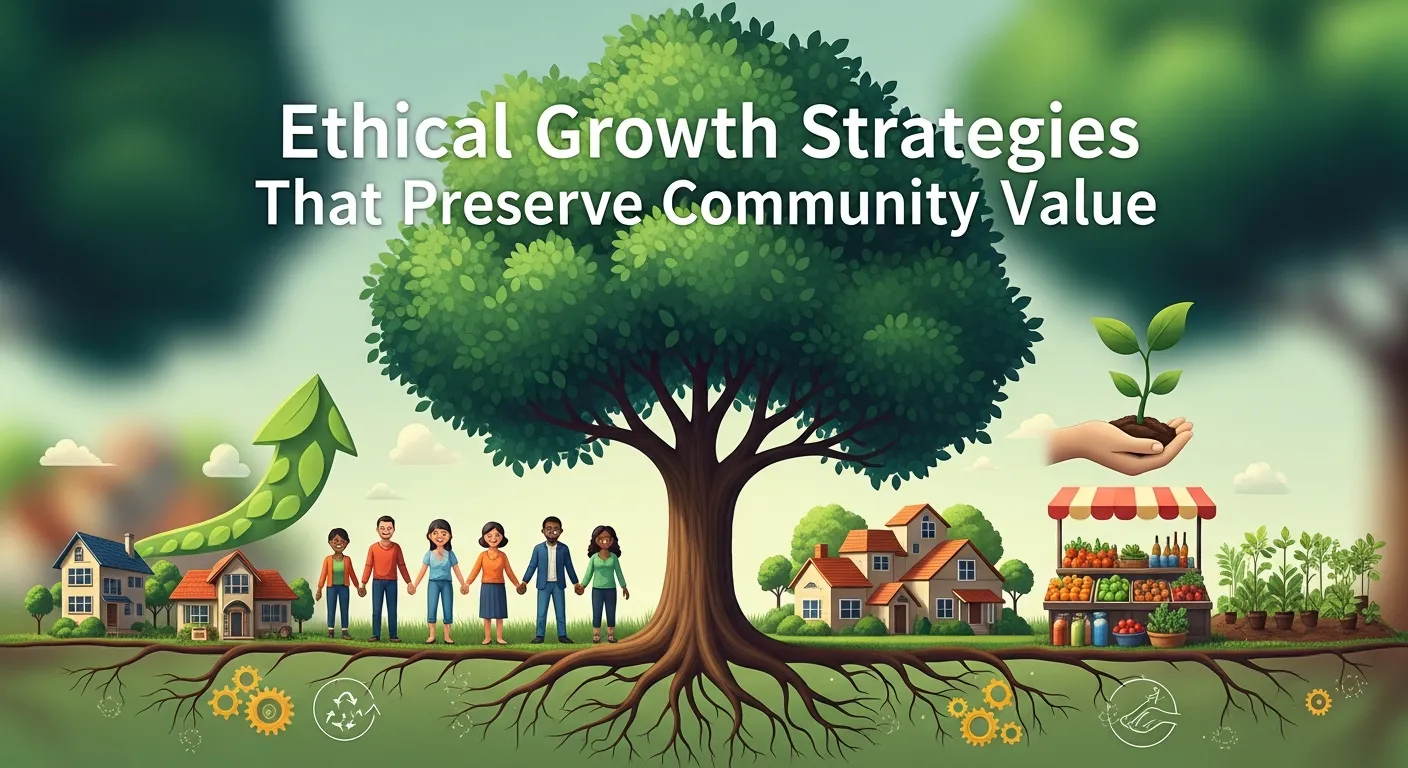
Regardless of whether you choose to scale or focus on depth, certain approaches preserve community integrity during periods of change. Transparency about growth decisions demonstrates respect for members and invites their participation in shaping the community’s future. Clearly articulate why you’re growing, how you’ll maintain quality, and what members can expect during transitions.
Intentional onboarding processes help preserve culture during growth periods. Beyond explaining rules, effective onboarding immerses new Asymmetrical Value Exchange Community, connects them with established participants, and actively integrates them into existing conversations. Communities that invest in onboarding typically maintain stronger cultures even during rapid growth.
Sub-communities create “small within large” experiences that combine scale benefits with intimacy. Interest groups, geographical circles, and experience-level cohorts help members find their specific tribes within the broader community. These structures allow for overall growth while preserving the close connections many members seek.
Phased growth—deliberately paced expansion with pauses for integration—allows communities to scale without losing their essence. Rather than growing continuously, wise community builders alternate between growth phases and consolidation periods where they focus on strengthening connections among existing members.
Measuring What Matters: Beyond Member Count
How we measure success fundamentally shapes our growth decisions. Communities fixated solely on member counts inevitably sacrifice depth for scale. Instead, develop multidimensional success metrics that capture what truly matters to your community’s purpose.
For relationship-centered communities, measure connection formation, trust development, and relationship strength. For knowledge-sharing communities, track problem resolution rates, resource creation, and learning outcomes. For support-focused communities, measure emotional well-being improvements and personal growth milestones.
The most telling metric often isn’t how many people join but how many stay and thrive. Retention rates, especially among your most valuable contributors, reveal whether your community delivers lasting value. Core member satisfaction indicates whether growth decisions honor or undermine your community’s foundation.
Key Metrics for Ethical Community Growth
Measuring success beyond size is critical for ethical community growth. Tracking engagement, retention, cultural alignment, and member satisfaction allows leaders to make informed decisions that reinforce the community’s purpose.
- Retention rate of active members
- Depth of engagement in discussions or events
- Alignment with community values
- Contribution of members to shared knowledge or support
| Metric | Description | Why It Matters |
|---|---|---|
| Retention Rate | Percentage of members who stay active over time | Indicates long-term value and member satisfaction |
| Engagement Depth | Average number of meaningful interactions per member | Shows quality of community connections |
| Cultural Alignment | Degree to which members adhere to norms and values | Maintains identity and trust |
| Contribution | Number of resources, posts, or support given by members | Demonstrates active participation and value creation |
Tracking these metrics provides a holistic understanding of growth, ensuring that expansion enhances rather than undermines the community’s mission.
Finding Your Community’s Right Size
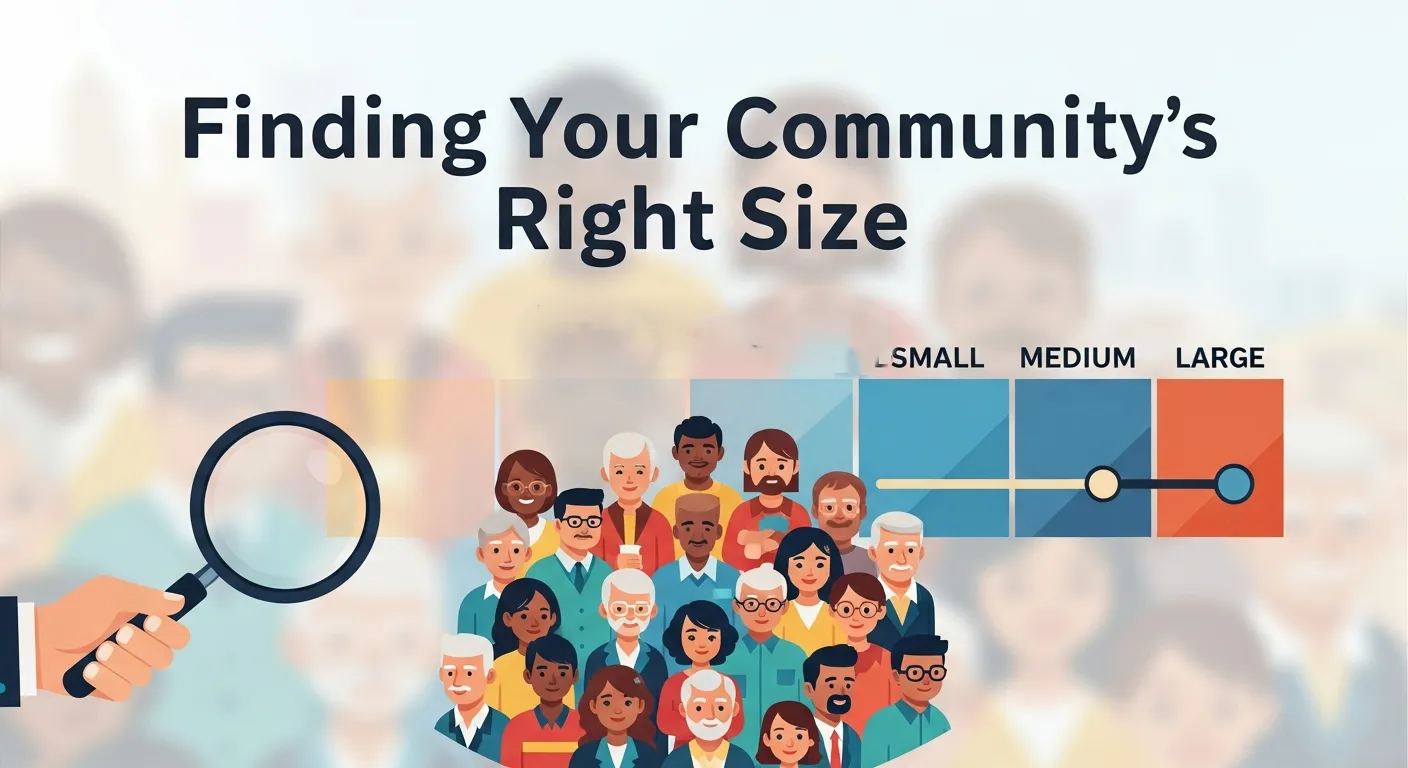
Rather than assuming bigger is better, consider whether your community has a “right size” that optimally fulfills its purpose. Some communities function best with dozens of members, others with hundreds, and still others with thousands or more. The right size depends entirely on your community’s specific purpose, value proposition, and engagement model.
For highly interactive communities where everyone ideally knows everyone else, Dunbar’s number suggests an upper limit around 150 members. Communities requiring deep trust and vulnerability often function best at even smaller scales. Conversely, communities focused on resource sharing, collective intelligence, or broad impact may benefit from much larger memberships.
Rather than setting arbitrary growth targets, regularly revisit fundamental questions: Does our current size enable or hinder our purpose? Are we large enough to generate sufficient value? Are we small enough to maintain necessary intimacy? Let purpose, not ego or external pressure, guide your sizing decisions.reading more Circular Economy Communities
The Courage to Choose Depth
In a world that often equates bigger with better, choosing depth over scale requires courage. Some of the most impactful communities remain relatively small by design, creating profound experiences for fewer people rather than diluted experiences for many. This approach isn’t failure—it’s intentional focus.
Remember that depth creates advocacy. Members who experience profound value become your most effective growth engine, organically attracting like-minded others who will appreciate your community’s distinctive qualities. Paradoxically, focusing on depth often leads to more sustainable growth over time than pursuing scale directly.
Trust that meaningful community experiences create ripples beyond your membership. The insights, connections, and transformations members experience within your community travel with them into their other relationships and communities. Sometimes the greatest impact comes not from directly touching more people but from deeply transforming fewer people.
Conclusion
The choice between scaling and focusing on depth isn’t a one-time decision but an ongoing navigation requiring constant reflection and adjustment. By centering ethical considerations and community purpose in every growth decision, you create sustainable value that serves both current and future members.
What matters most isn’t how large your community becomes but how faithfully it fulfills its purpose and serves those who call it home. When growth decisions flow from mission rather than metrics, communities develop an authentic momentum that attracts precisely the right members at the right pace.
The most successful communities aren’t necessarily the largest but those that most powerfully embody their distinctive values and deliver their unique forms of value. By focusing first on depth—on creating truly meaningful experiences—you build a foundation sturdy enough to support whatever scale best serves your community’s purpose.
FAQs About Ethical Community Growth
1. What is Ethical Community Growth?
Ethical Community Growth is the intentional expansion of a community in ways that protect its core values, culture, and member experience while aligning with its mission.
2. Why is Ethical Community Growth important?
Without Ethical Community Growth, rapid scaling can dilute trust, weaken engagement, and compromise the community’s purpose.
3. How do you balance scale and depth in Ethical Community Growth?
By evaluating whether growth enhances member value, maintaining cultural integrity, and ensuring infrastructure can support expansion.
4. When should a community focus on scaling?
Ethical Community Growth supports scaling when demand exceeds capacity, resources are sufficient, and growth advances the community’s mission.
5. When should a community prioritize depth over growth?
When engagement declines, culture weakens, or moderators feel overwhelmed, Ethical Community Growth principles suggest consolidating before expanding.
6. How can onboarding support Ethical Community Growth?
Intentional onboarding helps preserve community norms, integrate new members effectively, and maintain cultural consistency during growth phases.
7. What metrics matter in Ethical Community Growth?
Beyond member count, focus on retention, engagement quality, relationship strength, contributor satisfaction, and mission impact.
8. Can Ethical Community Growth involve staying small?
Yes. Ethical Community Growth may mean intentionally limiting size to preserve intimacy, trust, and meaningful interaction.
9. What role does transparency play in Ethical Community Growth?
Transparency builds trust by clearly communicating growth decisions, expectations, and how community values will be protected.
10. How do sub-communities support Ethical Community Growth?
Sub-groups allow communities to scale while maintaining smaller, intimate spaces that foster connection and belonging.
11. What risks arise without Ethical Community Growth?
Unstructured growth can lead to cultural dilution, reduced engagement, member dissatisfaction, and leadership burnout.
12. What is the long-term goal of Ethical Community Growth?
The goal of Ethical Community Growth is sustainable impact—ensuring the community expands (or stabilizes) in ways that strengthen purpose, preserve identity, and create lasting value.