
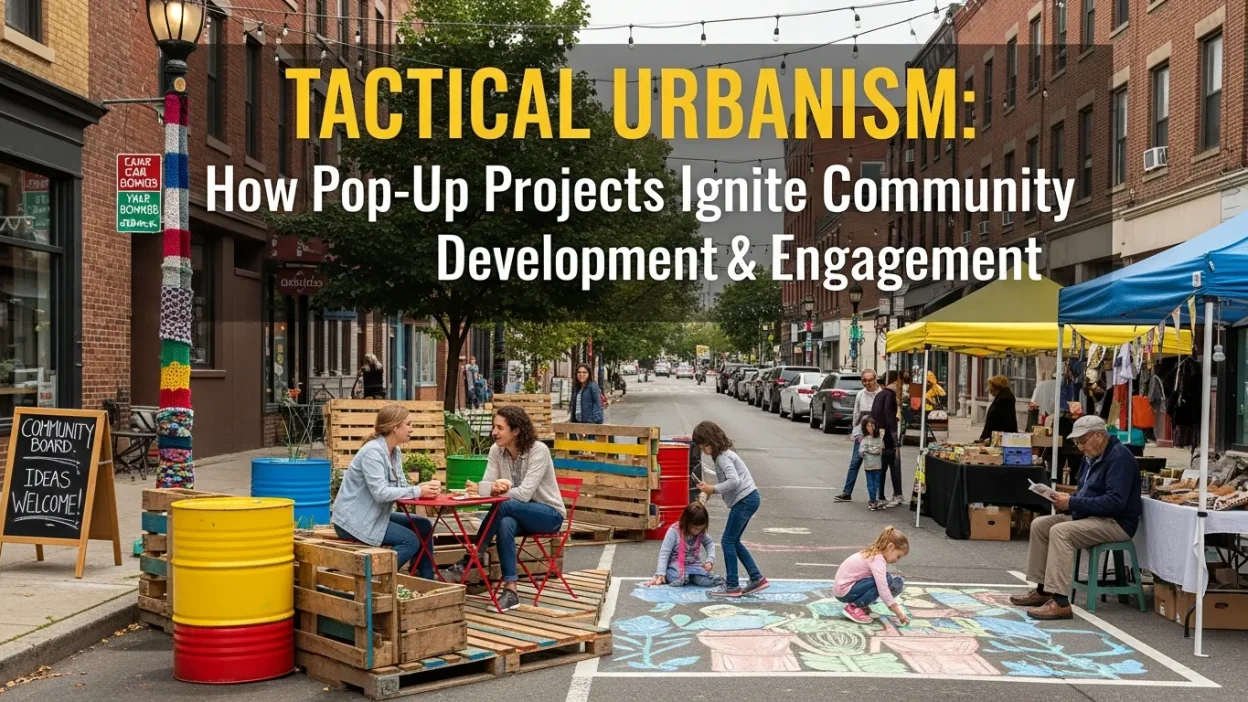
Tactical Urbanism Pop-Up Projects are low-cost, temporary urban interventions that help communities test new public space ideas quickly. These projects encourage community participation, improve street safety, and provide valuable data for long-term urban planning decisions.
Cities around the world are using tactical urbanism to improve public spaces in fast and creative ways. This approach uses small, low-cost urban interventions like pop-up parks, parklets, temporary bike lanes, street murals, and painted crosswalks. Unlike large city planning projects that require big budgets and long timelines, these temporary pilot projects let communities test ideas quickly.
Tactical urbanism invites community participation. It gives residents a voice in shaping their streets and neighborhoods. It also builds stronger social connections, supports local culture, and inspires new forms of public space design. Many cities, planners, and organizations—including Project for Public Spaces (PPS), Better Block, and local municipalities—use these strategies to guide long-term development.
What Is Tactical Urbanism?
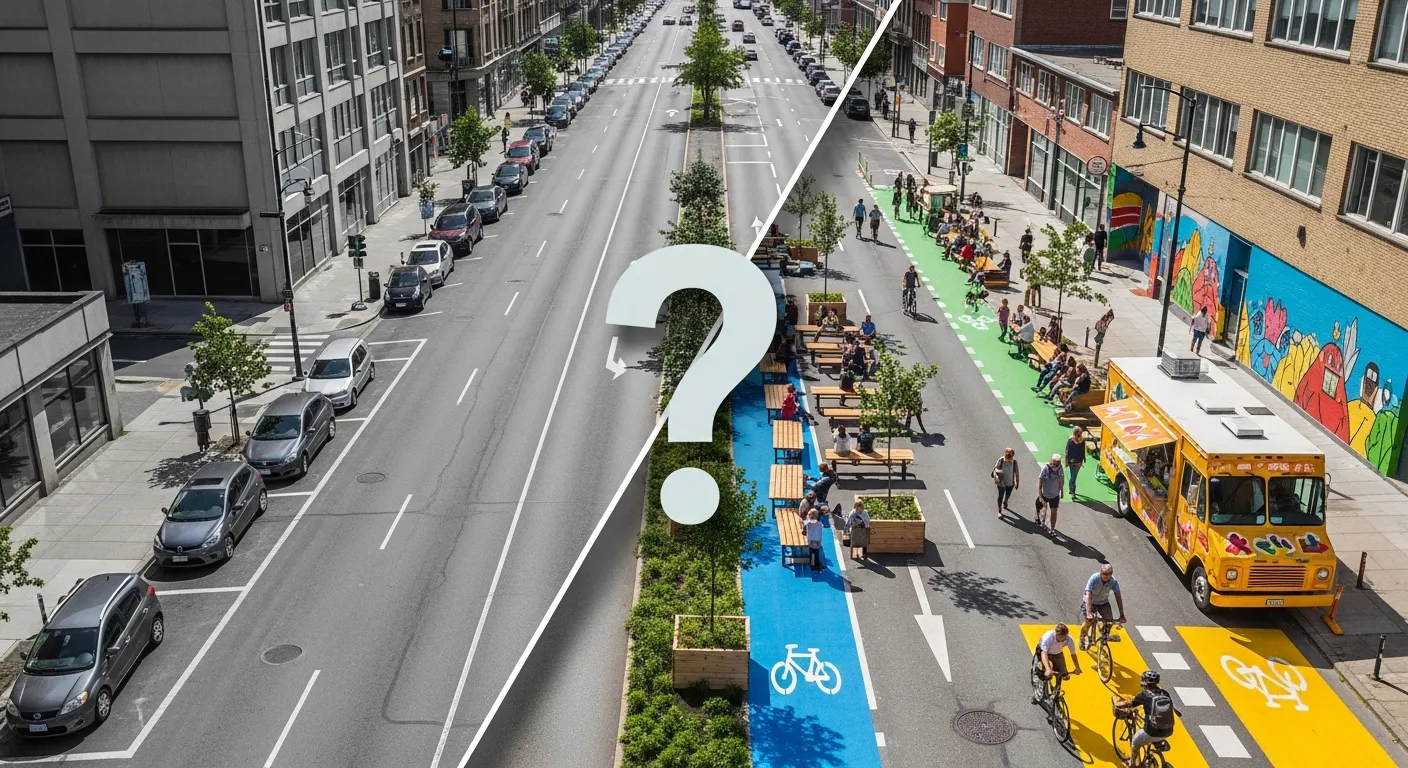
Tactical urbanism is a method of improving city spaces through short-term, low-cost, and community-led interventions. It focuses on quick changes that can be tested, measured, and refined before a city invests in permanent infrastructure. This approach is used by urban planners, city governments, nonprofits, and community groups to make streets safer and more vibrant.
Common tactical urbanism tactics include:
- Parklets – Turning a parking space into a small public area with seating, plants, and art.
- Pop-Up Plazas – Closing streets temporarily to create pedestrian-friendly zones for events and gatherings.
- Street Murals and Paintings – Adding colorful crosswalks or road art with help from local artists and residents.
- Guerrilla Gardening – Planting flowers or greenery in neglected spaces to improve the environment.
- Modular Street Furniture – Using moveable chairs, tables, and shade structures to create flexible public spaces.
These small interventions support community engagement, public space activation, and urban prototyping. By using rapid testing and local collaboration, tactical urbanism helps people feel ownership of their neighborhood. It also shows how streets and public areas can become safer, more attractive, and more functional with simple improvements.
Tactical Urbanism Pop-Up Projects and Community-Led Change
Tactical Urbanism Pop-Up Projects are short-term, low-cost interventions designed to test new ideas for public space improvement. These projects empower local communities to experiment with street design, public seating, and pedestrian-friendly features without waiting for long-term infrastructure investment. By using temporary materials and fast implementation, tactical urbanism pop-up projects help cities understand what works, gather real-world feedback, and build momentum for permanent urban change.
Key Benefits of Pop-Up Community Projects
Pop-up projects offer more than visual improvements. When planned with community input, tactical urbanism creates lasting value for people and cities. Here are the key benefits:
1. Community Engagement
Pop-up installations bring residents into the design and planning process. People help shape their own streets and public spaces. This builds civic pride, stronger social connections, and a shared sense of ownership. Cities like New York City DOT and San Francisco Planning Department often use this approach to involve local communities.
2. Cost-Effectiveness
Tactical urbanism uses low-cost materials, local volunteers, and simple construction methods. This makes it easier to test ideas without large budgets. Municipalities and nonprofits can experiment with new layouts before committing to long-term investments.
3. Data-Driven Planning
Pop-up projects act as real-world prototypes. Planners collect data on pedestrian flow, public seating use, traffic behavior, and community preferences. This helps organizations like Nacto, Urban Land Institute, and city planners make informed decisions based on real user feedback.
4. Increased Safety
Interventions such as parklets, paint-based curb extensions, and temporary plazas slow down vehicles and make crossings clearer. These adjustments improve visibility, reduce collisions, and make streets feel safer for walking, cycling, and gathering.
5. Catalyzing Long-Term Change
Successful pilots often lead to permanent redesigns. Pop-up projects can influence zoning updates, street calming policies, public space plans, and investment in permanent infrastructure. Examples from Barcelona, Portland, and Copenhagen show how temporary ideas can shape long-term urban transformation.
How Tactical Urbanism Pop-Up Projects Activate Public Spaces
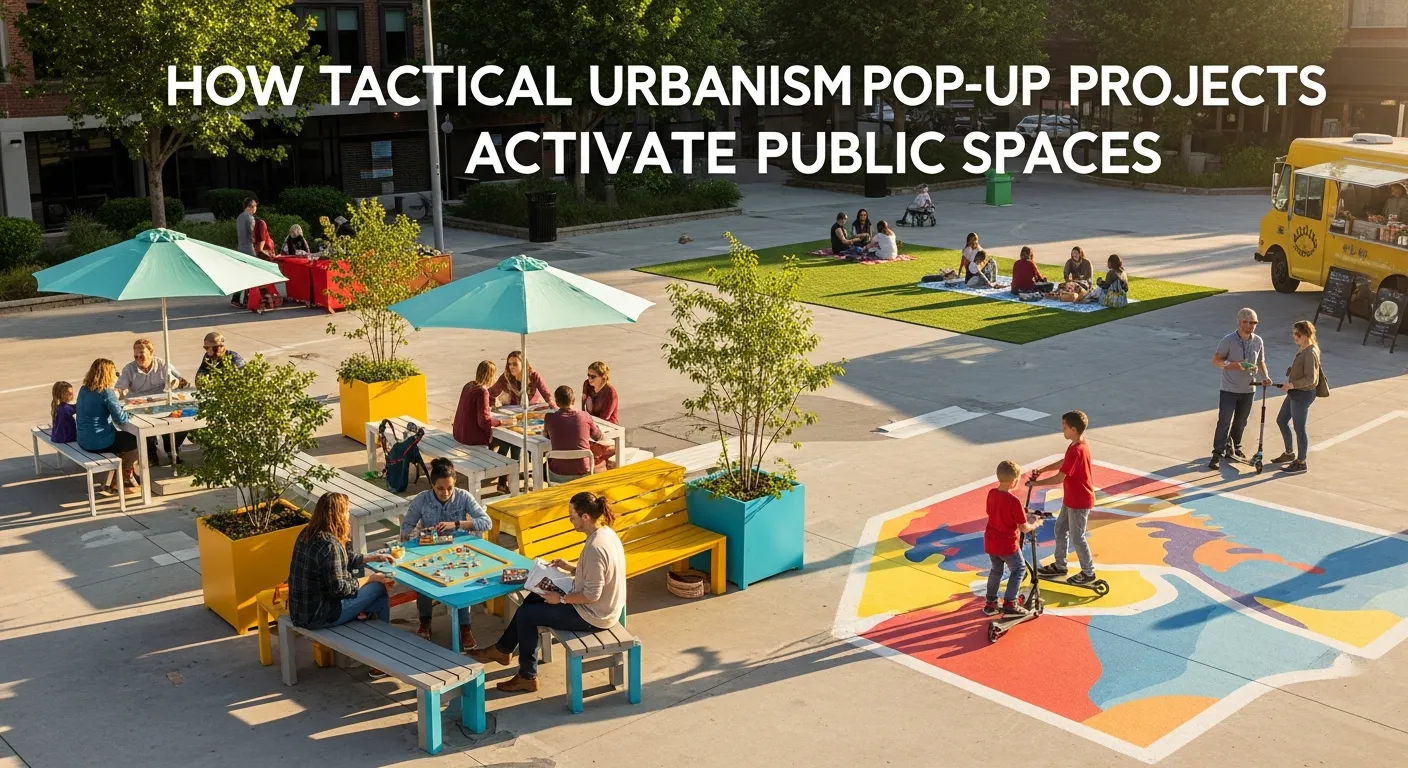
One of the strongest advantages of Tactical Urbanism Pop-Up Projects is their ability to activate underused public spaces. Empty streets, parking areas, and vacant corners can quickly transform into lively gathering places through pop-up plazas, parklets, and street art. These temporary projects encourage people to walk, socialize, and spend time outdoors, helping neighborhoods feel safer, more welcoming, and more connected.
Tactical Urbanism Pop-Up Projects as a Tool for Urban Innovation
Cities around the world use Tactical Urbanism Pop-Up Projects as an innovation tool to test bold ideas with minimal risk. Instead of relying only on long planning cycles, urban planners and local governments can pilot new street layouts, traffic calming measures, and public amenities in real conditions. Successful pop-up projects often become the foundation for permanent redesigns, making tactical urbanism a bridge between experimentation and long-term urban policy.
3 Inspiring Case Studies
1. San Francisco Parklets Pilot
In 2010, San Francisco launched a parklets program that allows businesses and residents to convert parking spaces into mini-parks. Over a dozen prototypes using planters, benches, and bike racks proved so popular that the city formalized the parklet permit process. Today, more than 360 parklets enhance streetscapes, boost foot traffic for local merchants, and create social gathering spots.
2. Bogotá Ciclovía Pop-Up Car Free Days
Bogotá’s weekly Ciclovía, which closes over 120 kilometers of streets to cars every Sunday, began as a small, one-day trial in 1974. Neighborhood groups organized makeshift signs and volunteers to direct cyclists and joggers. The event now attracts millions, demonstrating how a modest pilot can evolve into a signature public program with health, economic, and community benefits.
3. London’s Better Bankside Street Murals
In Southwark, local businesses and artists teamed up to paint giant murals across sidewalks and curb extensions at key intersections. The bright colors slow down traffic, guide pedestrians safely, and attract tourists. Residents report feeling safer, and local cafes have seen a measurable uptick in outdoor seating usage.
Planning Your Own Tactical Urbanism Project
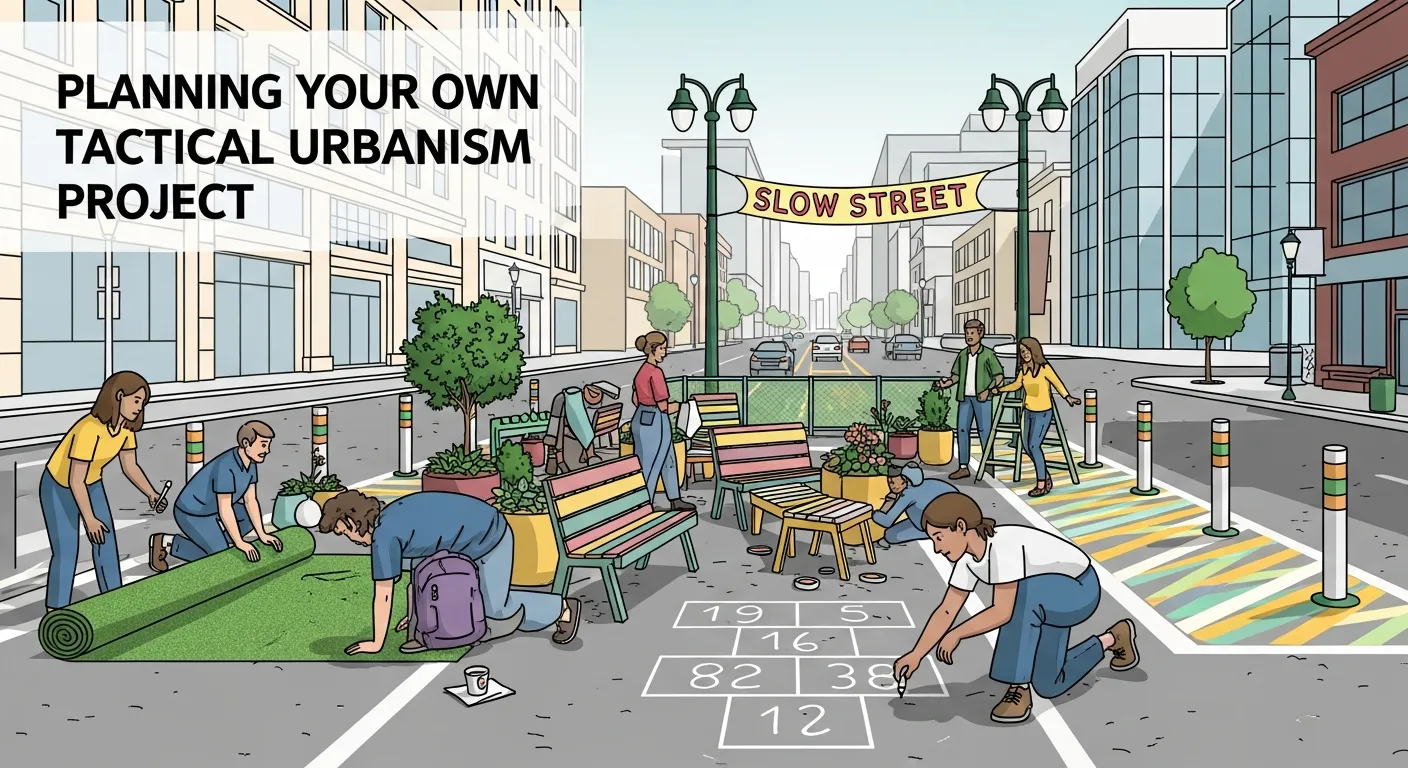
Launching a successful pop-up project involves more than paint and seating—it requires collaboration, clear goals, and effective outreach. Below are essential steps to guide your community development effort:
1. Identify Goals and Metrics
Define what success looks like. Are you aiming to reduce speeding, increase foot traffic, improve aesthetics, or foster social interaction? Establish measurable metrics—such as pedestrian counts, dwell time, or survey feedback—to evaluate impact.
2. Engage Stakeholders Early
Reach out to residents, local businesses, neighborhood associations, and municipal departments. Host participatory workshops or online surveys to gather input on design preferences, location selection, and programming ideas.
3. Secure Permissions and Partnerships
Coordinate with your city’s transportation, public works, and parks departments. Some jurisdictions have fast-track permits for temporary demonstrations. Partner with local nonprofits, schools, or art collectives to share resources and volunteer support.
4. Design for Flexibility
Use modular, easy-to-install materials—planters on wheels, foldable seating, chalk paint, and removable signage. This flexibility allows you to refine layouts based on real-time observations and feedback.
5. Promote and Activate
Announce your pop-up event via social media, local newsletters, and block-by-block flyers. Plan complementary activities—live music, art demonstrations, storytelling circles, or family games—to draw diverse audiences and showcase the space’s potential.
Learn More: Circular Economy Communities: Empowering Local Development Through Resource Sharing
Engaging Residents for Long-Lasting Impact
The most successful tactical urbanism projects are co-created with the community. To foster genuine buy-in:
- Host Design Jams: Collaborative workshops where participants sketch ideas and vote on favorite concepts.
- Volunteer Build Days: Hands-on installation events that double as block parties and boost neighborly connections.
- Storytelling Walls: Install a temporary mural or chalkboard asking residents to share memories or hopes for their street.
- Local Artist Commissions: Showcase community talent by inviting artists to design site-specific installations.
Measuring Success and Scaling Up
After your pop-up has run for a defined period—one weekend or several weeks—collect data and stories to build the case for permanence:
- Quantitative Metrics: Use pedestrian counters, speed guns, or smartphone apps to track changes in foot traffic, bike usage, or driver speeds.
- Qualitative Feedback: Conduct brief street intercept surveys or community meetings to capture residents’ impressions and improvement suggestions.
- Visual Documentation: Before-and-after photos, time-lapse videos, and drone footage can illustrate the transformation powerfully.
With compelling evidence, advocate for permanent infrastructure—new street furniture, curb extensions, raised crosswalks, or expanded plazas—to municipal councils or private funders.
Tactical Urbanism Pop-Up Projects and Long-Term Urban Planning
Although Tactical Urbanism Pop-Up Projects are temporary, their impact on long-term planning is significant. Data collected from pop-up installations—such as foot traffic, usage patterns, and community feedback—helps city officials make evidence-based decisions. When residents experience the benefits firsthand, support for permanent public space investments grows, turning short-term experiments into lasting urban transformation.
Why Cities Are Investing in Tactical Urbanism Pop-Up Projects
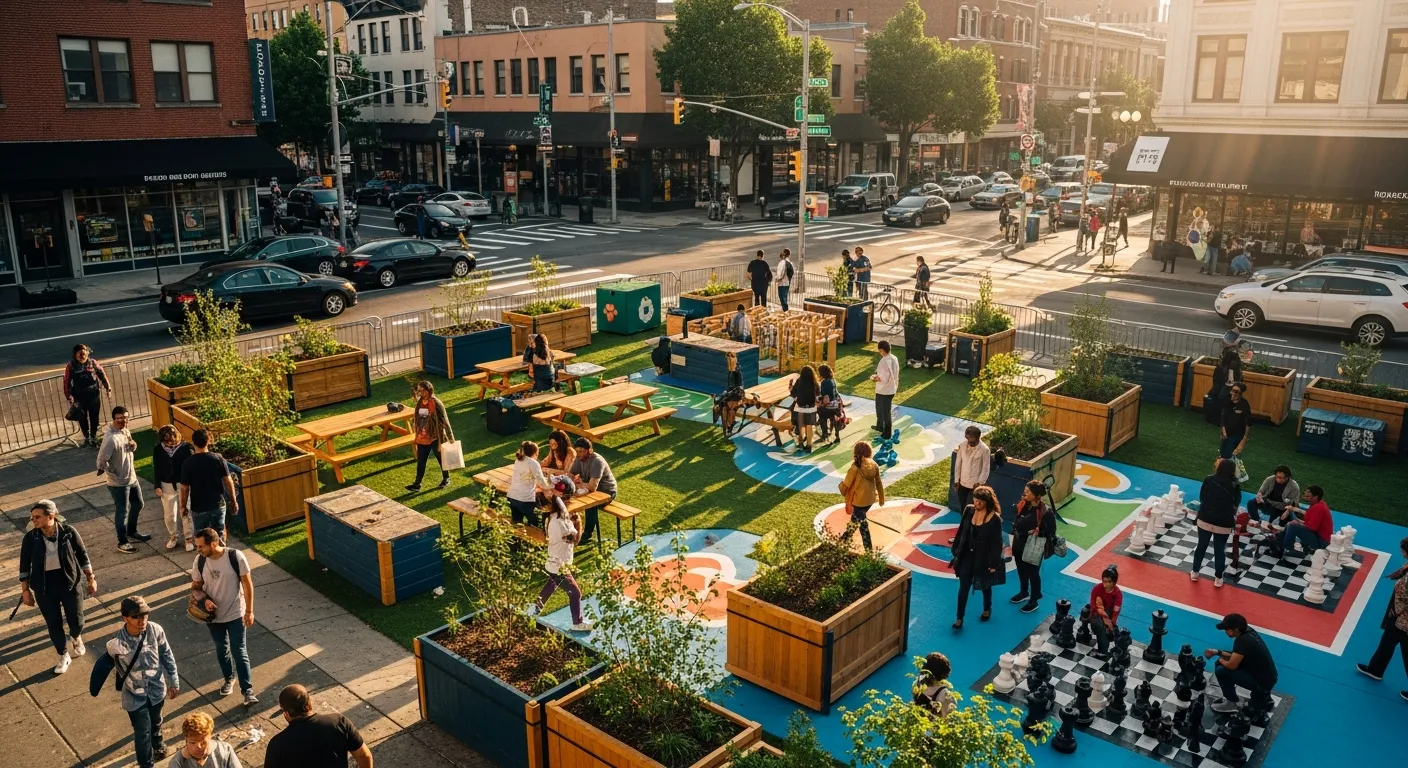
More cities are investing in Tactical Urbanism Pop-Up Projects because they deliver visible results quickly. These projects allow municipalities to improve walkability, safety, and community engagement without large budgets. By involving residents, artists, and local businesses, pop-up projects create shared ownership of public spaces and reduce resistance to future infrastructure changes. This makes tactical urbanism an effective strategy for inclusive and sustainable urban development.
Overcoming Common Challenges
Tactical urbanism isn’t without hurdles. Below are frequent obstacles and strategies to address them:
- Regulatory Delays: Start conversations with city officials early. Present case studies from peer cities to build confidence in temporary demonstration approaches.
- Limited Budget: Crowdsource materials—leftover paint from neighbors, reclaimed wood from local businesses, or grant funds from community foundations.
- Resident Skepticism: Emphasize the reversibility of pop-up designs. Demonstrate early wins quickly—floor markings or planters—to build trust.
- Maintenance Concerns: Recruit local stewards for basic upkeep and create a rotating schedule to share responsibility.
Conclusion: From Temporary Experiments to Lasting Transformation
Tactical urbanism provides a flexible, community-led urban approach to improving cities and neighborhoods. By tapping into the creativity and energy of residents, temporary street interventions, pop-up urban initiatives, and community building activities can spark stronger social connections, enhance safety, and pave the way for long-term public space improvements. Whether you are a neighborhood association member, local business owner, or city planner, embracing tactical urbanism allows you to test innovative ideas on a small scale, gain community support, and drive meaningful neighborhood revitalization. Start with modest interventions, think big, and watch your community thrive—one pop-up project at a time.
FAQs: Tactical Urbanism Pop-Up Projects
1. What are Tactical Urbanism Pop-Up Projects?
Tactical Urbanism Pop-Up Projects are short-term, low-cost urban interventions designed to improve public spaces and test new ideas quickly. These projects often include parklets, pop-up plazas, temporary bike lanes, street murals, and pedestrian-friendly street designs. The main goal is to experiment with urban solutions before committing to permanent infrastructure changes.
2. Why are Tactical Urbanism Pop-Up Projects important for cities?
These projects help cities respond quickly to local needs without heavy financial investment. They reduce risk by allowing planners to test ideas in real-world conditions while encouraging community participation. Tactical Urbanism Pop-Up Projects also support flexible, data-driven decision-making in modern urban planning.
3. Who can lead Tactical Urbanism Pop-Up Projects?
Tactical Urbanism Pop-Up Projects can be led by local residents, community organizations, nonprofits, urban planners, local businesses, and municipal authorities. Their collaborative nature allows different stakeholders to work together, making urban development more inclusive and community-focused.
4. How long do Tactical Urbanism Pop-Up Projects usually last?
The duration can vary from a single day to several weeks or months. Some pop-up projects are designed as temporary demonstrations, while others evolve into long-term or permanent solutions after positive feedback and evaluation.
5. What materials are commonly used in pop-up projects?
Pop-up projects typically use low-cost, reusable, and temporary materials such as paint, planters, modular furniture, traffic cones, wooden pallets, signage, and recycled items. These materials allow easy installation, modification, and removal without permanent damage.
6. Do Tactical Urbanism Pop-Up Projects improve public safety?
Yes. By reducing vehicle speed, improving pedestrian visibility, and encouraging active street use, Tactical Urbanism Pop-Up Projects often enhance public safety. Traffic-calming measures and pedestrian-friendly designs help lower accident rates and create safer streets.
7. How do communities benefit from Tactical Urbanism Pop-Up Projects?
Communities benefit through safer streets, improved walkability, stronger social interaction, and increased civic pride. These projects give residents a voice in shaping their environment, creating a stronger sense of ownership and belonging.
8. Are Tactical Urbanism Pop-Up Projects expensive?
No. One of the core principles of Tactical Urbanism Pop-Up Projects is affordability. They rely on simple materials, volunteer participation, and temporary installations, making them accessible even for communities with limited funding.
9. How do cities measure the success of pop-up projects?
Cities evaluate success through pedestrian and cyclist counts, vehicle speed monitoring, community surveys, observational studies, and public feedback. This data helps determine whether a temporary project should be improved, expanded, or made permanent.
10. Can Tactical Urbanism Pop-Up Projects become permanent?
Yes. Many successful permanent public spaces began as temporary Tactical Urbanism Pop-Up Projects. When projects demonstrate clear benefits, city authorities often use the results to justify permanent infrastructure investment.
11. What challenges do Tactical Urbanism Pop-Up Projects face?
Common challenges include regulatory approval, limited funding, maintenance responsibilities, and resistance from certain stakeholders. However, strong community engagement and clear communication often help overcome these barriers.
12. How do Tactical Urbanism Pop-Up Projects support long-term urban planning?
These projects provide real-world testing, measurable data, and community feedback. This evidence helps urban planners design more effective, inclusive, and sustainable long-term solutions based on actual user behavior and needs.