

When building a community, it’s tempting to focus solely on membership numbers. Growth feels good—watching those numbers climb can provide a quick dopamine hit. But community success isn’t just about how many people join; it’s about what happens after they do.
Member count is merely a vanity metric when isolated. A community with 10,000 passive members often delivers less value than one with 500 active participants who genuinely connect with each other. This is why savvy community builders have shifted focus to more meaningful indicators of community health and impact.
Engagement Metrics That Matter
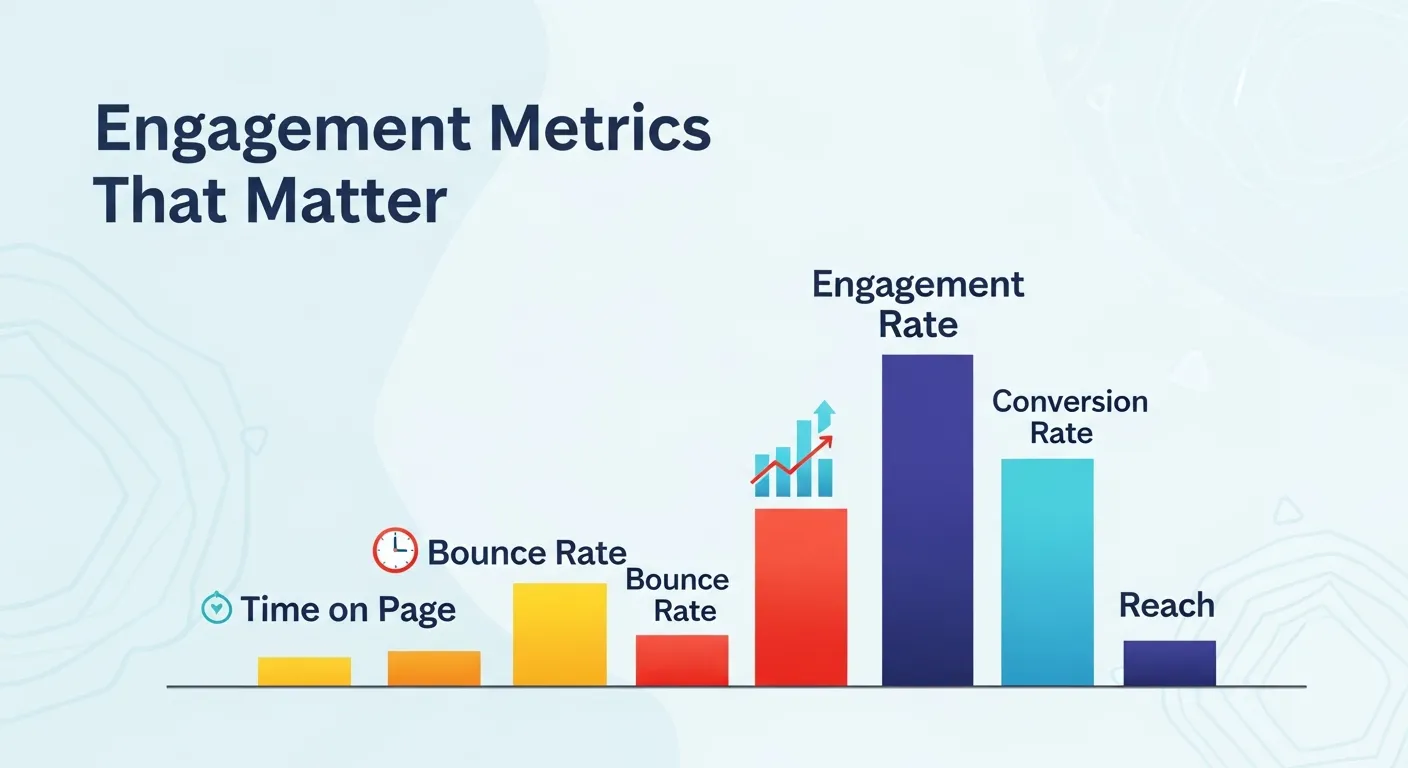
True community success is reflected not by how many people join, but by how members actively interact and contribute. A key starting point is measuring conversation depth rather than just volume. Metrics such as thread length, response times, and the number of unique participants in discussions help reveal whether the community is fostering meaningful dialogue or merely generating noise. Longer, thoughtful discussions with diverse participation indicate a thriving, engaged community.
Participation rates offer another essential perspective. Consider what percentage of members contribute regularly, and examine the ratio of creators to consumers. The Community Participation Ladder framework provides guidance: in a healthy community, roughly 1% of members are heavy contributors, 9% participate occasionally, and the remaining 90% observe or “lurk.” Monitoring these patterns allows community managers to identify gaps, encourage more active involvement, and nurture emerging contributors.
User-generated content serves as a powerful indicator of internal momentum. When members voluntarily share resources, initiate discussions, or create content that benefits others, it shows the community is self-sustaining and collaborative. Encouraging and recognizing such contributions helps strengthen engagement, build trust among members, and reinforce a culture of active participation.
By focusing on these engagement metrics, communities can move beyond superficial numbers and gain a clearer understanding of their true health, vitality, and the quality of connections being formed.
Advanced Community Success KPIs for Engagement
Community success KPIs extend beyond simple counts of posts or comments—they focus on the quality and depth of engagement. Tracking these metrics helps you understand whether your community is creating meaningful connections, not just generating activity.
Consider monitoring the following engagement indicators:
- Average thread length and depth of discussions
- Number of members actively responding to posts
- Ratio of new vs. returning contributors
- Frequency of member-initiated conversations
- Cross-participation in multiple channels or topics
These KPIs provide actionable insights into whether your community is fostering collaboration, knowledge sharing, and authentic relationships.
Value Creation and Impact Metrics

Communities exist to create value. Measuring this impact requires both quantitative and qualitative approaches.
Problem resolution rates demonstrate practical community value. Track how frequently members’ questions receive helpful answers or how often challenges find solutions through community interaction. This direct value creation keeps members returning.
Knowledge sharing represents another critical dimension. Monitor resource usage, document collaboration, and peer learning initiatives. Communities that effectively capture and distribute collective wisdom become indispensable to their members.
At BuildBonding, we’ve found that tracking skill development through community participation provides particularly insightful data. How many members credit the community with helping them acquire new abilities? What professional advancements do they attribute to community involvement?
Measuring Tangible Impact Through Community Success KPIs
Beyond engagement, community success KPIs should capture the tangible outcomes and value creation for members and organizations. Tracking these metrics ensures the community is not only active but also impactful.
| KPI Category | Metric Example | Insight Provided |
|---|---|---|
| Problem Solving | % of member questions answered | Demonstrates practical value and responsiveness |
| Knowledge Sharing | Resources downloaded or shared | Shows the community’s contribution to skill growth |
| Retention & Loyalty | Member retention rate | Indicates long-term member commitment |
| Advocacy | NPS or referrals | Measures willingness to recommend and community influence |
| Organizational Impact | Support deflection or revenue influence | Quantifies ROI for connected business objectives |
Regularly reviewing these KPIs allows community managers to adapt strategies, reinforce strengths, and address gaps—ultimately creating a healthier, more sustainable community.
Retention and Relationship Metrics
Healthy communities maintain strong member relationships over time. Retention rate—the percentage of members who remain active after specific time periods—often reveals more about community health than acquisition numbers.
Member lifetime value helps quantify the long-term impact of retention. This combines duration of membership with contribution levels, measuring how value compounds over time.
The Net Promoter Score (NPS) provides additional insight, revealing members’ willingness to recommend your community to others. High NPS scores typically correlate with sustainable growth through positive word-of-mouth.
Qualitative Community Success KPIs
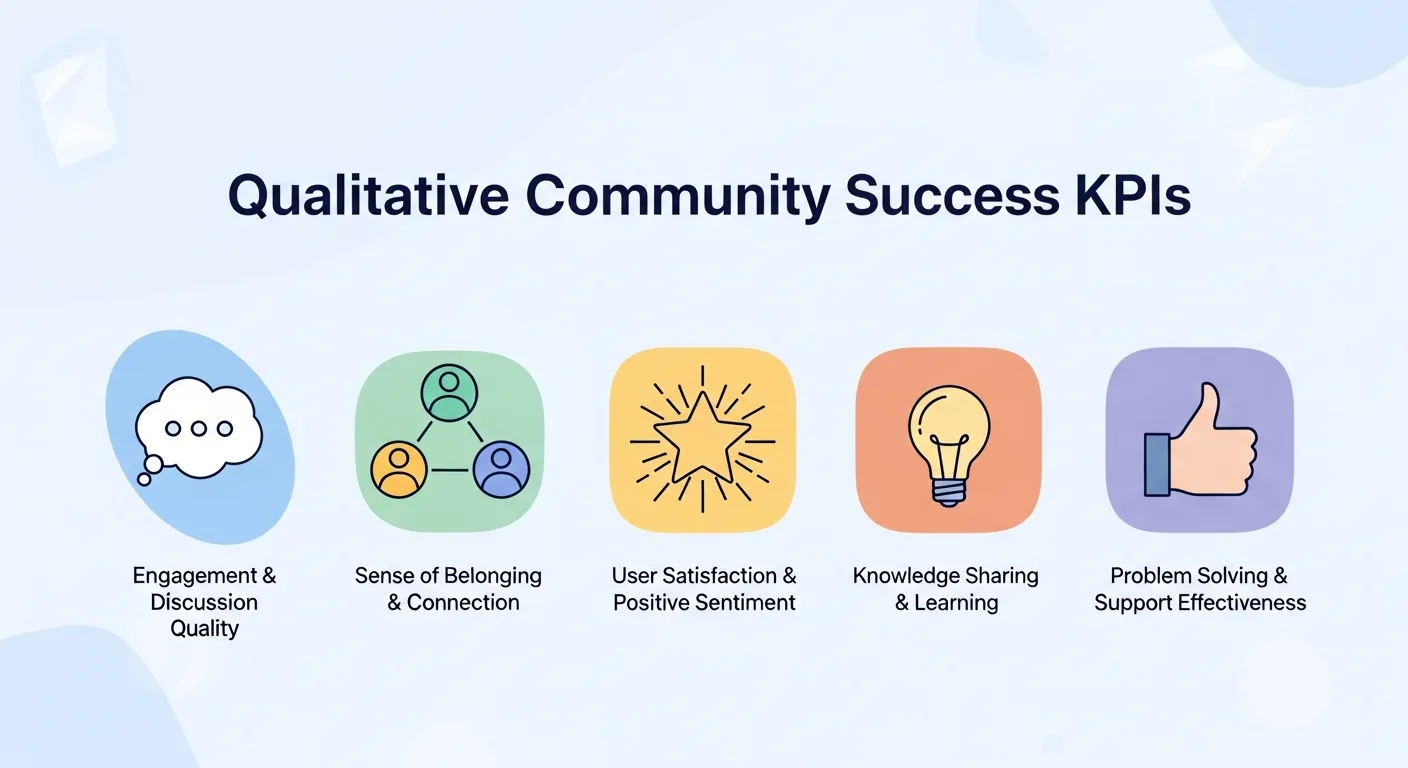
While numbers provide clarity, qualitative KPIs capture the human dimension of community success. They reflect member sentiment, cultural alignment, and psychological safety—factors that often determine long-term sustainability.
Key qualitative metrics include:
- Member sentiment through surveys or discussion analysis
- Observed leadership development and mentorship
- Alignment of member behaviors with community values
- Examples of cross-generational or cross-role collaboration
- Stories of individual impact or transformation
Blending quantitative and qualitative KPIs provides a complete picture of community health, ensuring both measurable outcomes and meaningful experiences are captured.
Business Alignment Metrics
For communities connected to organizations, business alignment metrics demonstrate community impact on broader objectives.
Customer satisfaction improvement shows how community participation enhances the overall customer experience. Compare satisfaction scores between community members and non-participants to quantify this difference.
Support deflection rate measures cost savings when community members help each other instead of requiring official support channels. This quantifies community ROI in concrete terms.
Revenue influence tracking connects community participation to business outcomes. Do active community members purchase more, stay loyal longer, or advocate more effectively than non-members?
Community Health Indicators
Beyond quantitative metrics, qualitative health indicators provide essential context for community success.
Psychological safety—members’ comfort in expressing themselves without fear—forms the foundation of thriving communities. Through regular sentiment analysis and feedback surveys, you can monitor this critical environmental factor.
Leadership development within the community signals sustainability. Track how many members take on increasing responsibility, mentor others, or emerge as community champions.
Cultural alignment ensures your community embodies its stated values. Regular culture audits help assess whether member behaviors and interactions reflect your community’s mission and principles.
Crisis Management for Community Leaders Using Community Success KPIs
Effective crisis management in communities requires more than reactive measures—it relies on tracking community success KPIs that indicate vulnerabilities and strengths before, during, and after a crisis. Leaders can use these metrics to anticipate member needs, reduce panic, and maintain trust.
Key crisis management strategies for community leaders include:
- Monitoring engagement drops during critical events
- Identifying members who may need support or guidance
- Tracking sentiment to gauge stress and anxiety levels
- Activating leadership and mentorship roles for immediate assistance
- Maintaining transparent communication to reinforce psychological safety
By using community success KPIs proactively, leaders can turn potential disruptions into opportunities for connection, resilience, and growth.
Creating a Community Success Dashboard
A centralized dashboard enables community managers to track KPIs efficiently by combining both quantitative and qualitative data, providing a comprehensive view of community health. Such a tool supports informed decision-making, helps identify trends, and highlights areas that require attention or intervention. The dashboard should capture engagement metrics, including posts, responses, and overall participation rates, alongside value creation metrics such as problem resolution, knowledge sharing, and skill development. Retention indicators, like active member counts, churn rates, and Net Promoter Score (NPS), are also essential, as are business alignment metrics including customer satisfaction, support deflection, and revenue impact. Additionally, qualitative measures such as sentiment analysis, leadership growth, and cultural alignment offer insight into the community’s deeper dynamics. By visualizing all these KPIs in one place, managers can quickly evaluate strengths and gaps, guiding strategy to enhance community impact and ensure long-term success.
Implementing a Balanced Measurement Approach

Effective community measurement requires balancing quantitative data with qualitative insights. Establish clear baselines for your chosen metrics, then track changes over time rather than focusing on absolute numbers.
Remember that metrics should serve your community’s unique purpose. A learning community might prioritize knowledge-sharing metrics, while a support community might focus on problem resolution rates.
Most importantly, regularly share measurement insights with your community. Transparency builds trust and helps members understand how their participation contributes to collective success.
Conclusion
Community success KPIs provide a comprehensive way to evaluate the health and impact of a community beyond simple membership numbers. By measuring engagement, value creation, retention, and alignment with organizational or community goals, leaders can make informed decisions, improve member experiences, and foster meaningful connections. Balanced use of quantitative and qualitative KPIs ensures sustainable growth, stronger relationships, and long-term community resilience.
Frequently Asked Questions
1. What are community success KPIs?
Community success KPIs are measurable indicators that evaluate how effectively a community achieves its goals. They assess engagement, value creation, member retention, satisfaction, and overall impact, going beyond simple membership counts to reveal whether a community is truly thriving.
2. Why are community success KPIs important?
These KPIs provide actionable insights for community managers, showing which initiatives drive engagement, foster collaboration, and create tangible value. By tracking them, communities can grow meaningfully, improve member experiences, and align activities with broader organizational or social goals.
3. What are common quantitative community success KPIs?
Quantitative KPIs include participation rates, discussion depth and thread length, problem resolution percentages, knowledge-sharing metrics, retention and churn rates, Net Promoter Scores (NPS), and frequency of member-initiated contributions. These numbers help identify active and valuable participation.
4. What are qualitative community success KPIs?
Qualitative KPIs capture the human and cultural aspects of a community. They include member sentiment, leadership development, mentorship participation, alignment with community values, feedback from surveys, and individual stories of personal or professional growth resulting from community engagement.
5. How do community success KPIs improve engagement?
By monitoring engagement KPIs, community managers can see where members are active or disengaged. These insights allow them to create targeted programs, foster meaningful conversations, encourage collaboration, recognize contributors, and build a culture where members feel connected and motivated to participate.
6. How do these KPIs measure value creation?
Value creation KPIs track tangible benefits members gain from the community, such as solutions to problems, acquisition of new skills, peer learning, access to resources, and professional or personal growth. They show whether the community is delivering practical, meaningful outcomes for its members.
7. How do community success KPIs track retention?
Retention metrics track how long members remain active, how often they contribute, and their overall lifetime value within the community. High retention rates indicate that members find ongoing value and feel a sense of belonging, which is crucial for long-term community sustainability.
8. Can these KPIs measure business impact?
Yes. For communities linked to organizations, KPIs like support deflection, customer satisfaction, increased revenue, repeat purchases, and advocacy measure how community activity translates into business outcomes. This demonstrates the tangible ROI of community programs to stakeholders.
9. How often should community success KPIs be measured?
KPIs should be monitored regularly—weekly, monthly, or quarterly—depending on the community’s size and purpose. Trends over time provide deeper insights than single snapshots, helping managers adapt strategies and improve member engagement consistently.
10. How can small communities use these KPIs?
Small communities can track engagement, problem-solving, knowledge sharing, and sentiment to identify strengths and gaps. Even with fewer members, these insights help create meaningful experiences, encourage active participation, and ensure every member feels valued and heard.
11. What tools help measure community success KPIs?
Tools such as community dashboards, analytics platforms, survey software, sentiment analysis tools, and collaboration platforms help capture both quantitative and qualitative KPIs. They simplify tracking, visualization, and reporting for better decision-making.
12. How can communities act on KPI insights?
Analyzing KPIs enables community managers to refine strategies, launch targeted programs, recognize and develop leaders, enhance value creation, resolve member pain points, and align activities with broader goals. Insights ensure the community evolves to meet members’ needs and strengthens long-term engagement.