

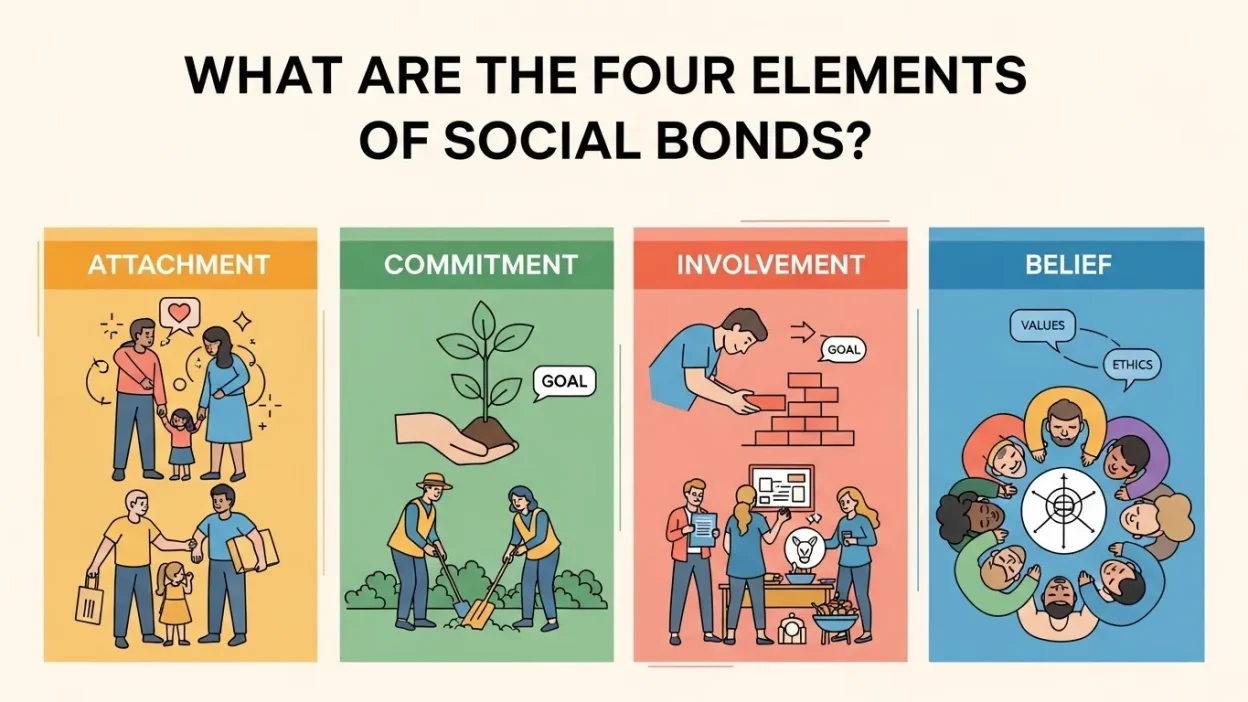
The Four Elements of Social Bond—attachment, commitment, involvement, and belief—explain why humans form strong, lasting connections. These elements strengthen trust, engagement, and collaboration in personal, professional, and community relationships, creating supportive and meaningful social networks.
Humans are naturally social, and our social relationships shape how we grow, thrive, and find meaning in life. Whether it’s with family, friends, or the wider community, the bonds we form influence our happiness, well-being, and sense of purpose. But what really holds these connections together and makes them strong, lasting, and meaningful?
Sociologist Travis Hirschi’s theory of social bonds gives us some answers. He identifies four key elements—attachment, commitment, involvement, and belief—that explain why we form deep connections and how we maintain them. Understanding these elements can help us nurture healthy relationships and stronger community bonds.
Even beyond personal connections, these ideas matter in areas like sustainability, green bonds, and bond issuance, where trust, collaboration, and shared values create a real social impact. By exploring these four elements, this blog will show you how to strengthen your social relationships and build meaningful, lasting connections in every part of life.
Understanding the Four Elements of Social Bond
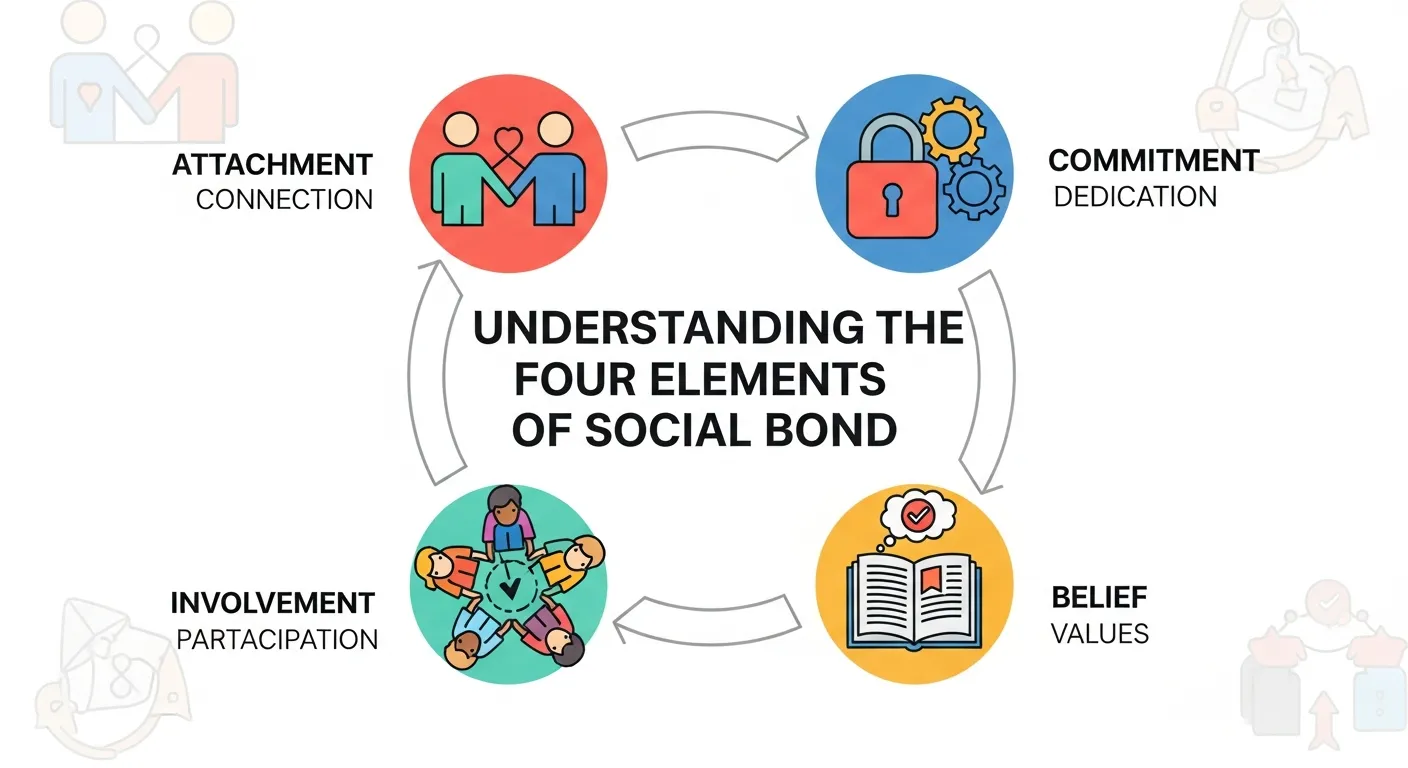
Sociologist Travis Hirschi identified four elements that explain why humans form strong connections: attachment, commitment, involvement, and belief. Each element plays a vital role in nurturing meaningful relationships in personal, professional, and community settings.
These elements help:
-
Strengthen trust and reliability among individuals
-
Encourage active engagement in positive activities
-
Align personal actions with shared values and ethics
By focusing on these four elements, you can intentionally cultivate healthier social relationships and stronger communities.
Attachment: The Heart of Emotional Connection
Attachment is the emotional glue that binds people together, forming the foundation for trust and care in every relationship. Strong attachments help individuals feel valued and understood, encouraging empathy and cooperation in personal and professional settings. When attachment is nurtured, it reduces conflicts, increases resilience, and promotes meaningful engagement with others.
- Practice active listening to understand others’ emotions and perspectives.
- Show genuine interest in the lives of family, friends, and colleagues.
- Maintain consistent communication to strengthen trust and reliability.
Attachment also plays a critical role in group dynamics. Teams or communities with strong emotional bonds are more likely to collaborate effectively, handle challenges gracefully, and maintain cohesion over time. The emotional support that comes from attachment can foster creativity, reduce stress, and enhance overall well-being.
Understanding the Framework of Social Bond
Before we break down each element, it’s important to outline why Hirschi’s framework is still relevant today. The theory first emerged as part of criminology to explain why individuals follow societal laws instead of engaging in deviant behaviors. Over time, it has served as a broader lens to understand what connects us as human beings, encouraging cooperation and reducing feelings of isolation.
By strengthening these elements in our communities, businesses, or schools, we can create environments where people feel valued, understood, and motivated to contribute positively.Continue Reading Understanding Culture Bonding
What are the four elements of social bonds?

Attachment
Attachment serves as the foundation of every meaningful relationship. It reflects the emotional ties we form with others, such as friends, family, colleagues, or mentors. These strong bonds instill care, empathy, and a sense of belonging, which motivate us to align with shared values or expectations.
Take, for example, the trust a parent and child build over time. This attachment fosters emotional security for the child and a sense of responsibility for the parent. Similarly, in the workplace, leaders who actively support their teams with empathy and understanding encourage their employees to remain engaged and loyal.
How to strengthen attachment:
- Foster emotional connections by practicing active listening and showing genuine interest in others’ lives.
- Build trust through consistent communication, reliability, and honest sharing of emotions.
Attachment: The Foundation of Connection
Attachment reflects emotional ties to family, friends, mentors, and colleagues. It creates a sense of care, empathy, and belonging, which motivates people to align with shared values.
How to strengthen attachment:
- Foster emotional connections through active listening and interest in others’ lives
- Build trust via consistent communication and reliability
- Share feelings honestly to deepen mutual understanding
Example: In a workplace, leaders who empathize and support employees encourage loyalty and engagement.
Commitment
While attachment reflects emotional connections, commitment focuses on our investment in long-term goals or relationships. It’s about dedicating effort and resources to achieve something worthwhile, be it a thriving marriage, a successful business project, or fulfilling academic goals.
Commitment often ties into our desire for stability and success. For instance, students who are committed to excelling in school are less likely to engage in behaviors that jeopardize their education. Likewise, in professional settings, employees who feel aligned with their organization’s goals tend to put forth their best effort and remain committed to the company’s vision.
How to foster commitment:
- Set shared goals: Whether in teams or personal relationships, having mutual objectives enhances commitment.
- Celebrate achievements: Recognizing milestones keeps individuals motivated and reinforces their dedication.
Commitment: Investing in Long-Term Relationships
Commitment represents the dedication we give to relationships, goals, and shared values. By investing effort and time into meaningful connections, individuals reinforce their loyalty, dependability, and sense of purpose. Commitment ensures that relationships remain strong even during difficult times, encouraging perseverance and mutual support.
- Set shared goals in teams, families, or communities to enhance mutual dedication.
- Recognize and celebrate milestones to reinforce continued engagement.
- Offer support consistently to show that the relationship is valued and dependable.
Long-term commitment also improves accountability and personal growth. When people feel responsible for nurturing their relationships or achieving collective goals, they are less likely to engage in harmful behavior and more likely to contribute positively to their environment.
Involvement
The third element, involvement, is closely tied to how we spend our time. It highlights the degree to which individuals actively participate in conventional, community-based activities or groups. The idea here is simple—the more engrossed we are in constructive tasks, the less time or inclination we have for harmful behaviors.
Think about adults who regularly volunteer in community programs or students who actively participate in extracurricular activities. These individuals are more likely to feel a sense of purpose and belonging compared to those who remain disengaged.
How to encourage involvement:
- Create opportunities for engagement: Offer access to clubs, mentorship programs, or community involvement initiatives that bring people together.
- Promote inclusivity: Ensure that everyone feels welcome to participate, fostering positive interactions across diverse groups.
Involvement: Active Participation Strengthens Bonds
Involvement reflects how actively individuals engage with their communities, social groups, and shared activities. By investing time in constructive and meaningful actions, people cultivate a sense of belonging, purpose, and mutual support. Greater involvement reduces social isolation and encourages collaborative growth.
- Encourage participation in group activities, volunteer programs, or collaborative projects.
- Promote inclusivity to ensure everyone feels welcome and valued.
- Regularly engage in hobbies or shared interests to strengthen interpersonal connections.
Involvement is not just about quantity but also quality. Even small, consistent contributions to family, school, or work communities can deepen trust and encourage reciprocal support, creating a more cohesive social environment.
| Level of Involvement | Examples | Social Benefits |
|---|---|---|
| Low | Occasional attendance at meetings | Limited sense of belonging |
| Moderate | Regular participation in activities | Improved trust and recognition |
| High | Leadership or mentoring roles | Strong community cohesion and personal growth |
Belief
Belief is the moral compass that underpins our actions. This element highlights how much we agree with and internalize societal norms, values, and laws. Having a strong belief in shared ethics or systems fosters unity while discouraging dishonesty, exploitation, or harm.
For example, someone who believes in honesty is less likely to commit fraud, even if an opportunity arises. Similarly, employees in organizations with strong ethical cultures are more likely to act with integrity, showing concern for customers and colleagues.
How to reinforce belief:
- Lead by example: Demonstrate moral principles through your actions, whether at work, school, or within family life.
- Teach ethical reasoning: Encourage open discussions about values and decision-making to align perspectives among peers or team members.
Belief: The Moral Compass of Social Bonds
Belief shapes our ethical framework and guides our behavior within relationships and communities. When individuals share common values and norms, it fosters trust, cooperation, and a sense of shared responsibility. A strong belief system reduces conflict and encourages accountability, aligning personal actions with the broader community’s expectations.
- Demonstrate integrity and ethical behavior in everyday interactions.
- Engage in conversations about shared values to strengthen understanding.
- Encourage transparency and fairness to reinforce mutual trust.
Belief also drives collective action and social responsibility. Communities grounded in shared principles are better equipped to address challenges, uphold justice, and support members in times of need. This alignment between personal ethics and societal norms strengthens both individual relationships and broader community bonds.
Attachment: The Foundation of Connection
Attachment reflects emotional ties to family, friends, mentors, and colleagues. It creates a sense of care, empathy, and belonging, which motivates people to align with shared values.
How to strengthen attachment:
- Foster emotional connections through active listening and interest in others’ lives
- Build trust via consistent communication and reliability
- Share feelings honestly to deepen mutual understanding
Example: In a workplace, leaders who empathize and support employees encourage loyalty and engagement.
What is the most important social bond element?
The most important element of any social bond is trust. Without trust, relationships struggle to grow and often break under stress. Trust means knowing that someone will be honest, reliable, and supportive. It is built slowly over time through small actions, like keeping promises, listening carefully, and being there when someone needs you. When trust is strong, people feel safe to share their thoughts and feelings. This creates deeper connections, stronger friendships, and better teamwork in both personal and professional life. Simply put, trust is the foundation on which all other social bonds are built.
Applying Social Bond Principles in Your Life
By now, you should have a clear picture of the four elements of green bond and why they’re crucial to maintaining a harmonious society. But how can you apply these principles in your own life?
- Strengthen personal relationships: Focus on active communication, shared experiences, and mutual trust to enrich your attachments.
- Commit to growth: Invest time and energy in your goals and encourage the same within your network.
- Engage in your community: Identify ways to participate in causes or activities that align with your values.
- Cultivate trust and ethics: Lead with integrity, showing others the value of moral actions.
Build Stronger Connections Starting Today

Understanding the four elements of social bond gives us a blueprint for fostering healthier relationships and stronger communities. Whether you’re a parent, team leader, or someone looking to deepen your social relationships, these principles can guide you toward meaningful change. By learning how to build social bonds, you not only strengthen individual connections but also contribute to a positive community environment.
Strong community bonds create a sense of belonging, encourage collaboration, and amplify social impact. When people feel connected, they are more likely to support each other, share resources, and take collective action toward causes like sustainability and social well-being. Healthy social relationships are essential for personal growth, emotional support, and fostering trust within a network of friends, colleagues, or neighbors.
If you’re ready to take the first step, focus on one connection at a time. Show empathy, communicate openly, and Increase Community Engagement. Even small efforts today can grow into lasting, healthy relationships and meaningful community bonds, ultimately creating a ripple effect of positive social impact for everyone involved.
Conclusion
Understanding the Four Elements of Social Bond provides a blueprint for building healthier relationships and resilient communities. Fostering attachment, commitment, involvement, and belief helps individuals nurture trust, ethical behavior, and shared responsibility. Applying these principles improves personal growth, teamwork, and social cohesion, enabling stronger connections at home, school, work, and in society.
FAQs: Four Elements of Social Bond
1. What are the Four Elements of Social Bond?
The Four Elements of Social Bond are attachment, commitment, involvement, and belief. They explain how humans form, maintain, and strengthen meaningful relationships that foster trust, cooperation, and social cohesion.
2. Who introduced the Four Elements of Social Bond?
Sociologist Travis Hirschi developed the theory as part of his social bond framework, originally to explain why individuals conform to societal norms, and later applied broadly to personal, professional, and community relationships.
3. What is attachment in social bonds?
Attachment refers to the emotional connection that builds empathy, care, and trust in relationships. It forms the foundation of healthy interactions in families, friendships, workplaces, and communities.
4. How does commitment work in social bonds?
Commitment is the dedication and investment in long-term goals, relationships, or shared values. It encourages loyalty, perseverance, accountability, and the willingness to support others even during challenges.
5. What does involvement mean in the context of social bonds?
Involvement emphasizes active participation in positive, constructive, or community-based activities. By engaging consistently, individuals reduce social isolation, develop a sense of purpose, and strengthen connections with others.
6. What is belief in social bonds?
Belief represents the internalization of shared values, ethics, and societal norms. It guides behavior, fosters trust, encourages cooperation, and reinforces accountability within relationships and communities.
7. Why is trust important in the Four Elements of Social Bond?
Trust is the cornerstone of social bonds. It ensures reliability, safety, and openness, allowing relationships to deepen, communication to flow freely, and collaborative efforts to succeed.
8. How do the Four Elements of Social Bond strengthen communities?
By promoting attachment, commitment, involvement, and belief, communities cultivate collaboration, mutual support, shared responsibility, and collective problem-solving, leading to stronger social cohesion.
9. Can the Four Elements of Social Bond improve workplace relationships?
Yes, applying these elements in workplaces encourages teamwork, ethical behavior, loyalty, and engagement, creating environments where employees feel supported, motivated, and connected.
10. How can students use the Four Elements of Social Bond?
Students can strengthen their peer networks, actively participate in school or community activities, commit to shared learning goals, and uphold ethical and collaborative behaviors that benefit the group.
11. How can families apply the Four Elements of Social Bond?
Families can nurture attachment by building emotional closeness, support each other’s commitments, encourage active involvement in shared activities, and reinforce shared values and ethical principles.
12. What is the long-term impact of practicing the Four Elements of Social Bond?
Regularly applying the four elements promotes emotional intelligence, leadership skills, resilience, effective collaboration, and the development of strong, supportive, and trustworthy social networks that last across life stages.