
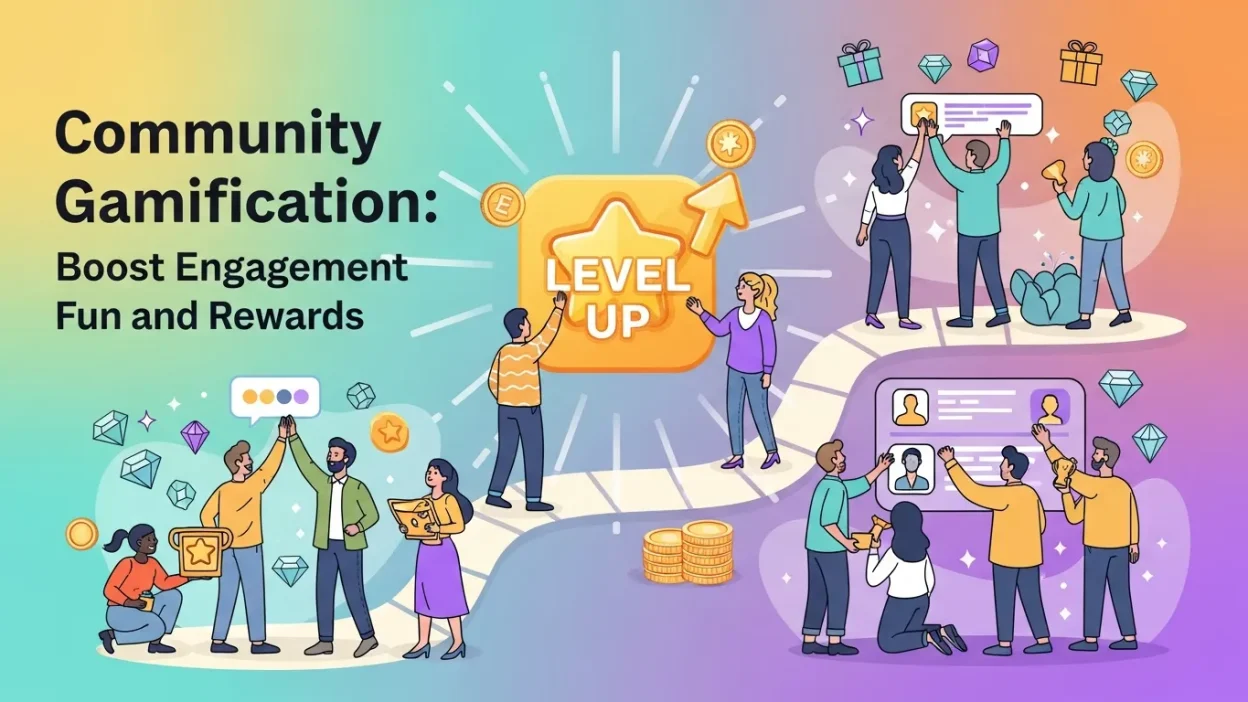
Community gamification is a powerful way to increase engagement, participation, and long-term loyalty in online communities. By using game-like elements such as points, badges, leaderboards, and challenges, community builders can motivate members to contribute more actively and consistently. When aligned with community goals and values, gamification strengthens relationships, improves retention, and transforms passive audiences into engaged, connected members.
Building a thriving community isn’t easy. At first, people join with excitement, but before long, activity slows down—posts get ignored, discussions lose momentum, and the energy you worked so hard to create begins to fade.
This is where community gamification makes a difference. By incorporating fun, game-like features—such as points, badges, leaderboards, and challenges—you can transform passive members into active participants. Tools such as Circle gamification make it simple to reward engagement, spark friendly competition, and create a sense of progress that keeps people coming back.
What Is Community Gamification?
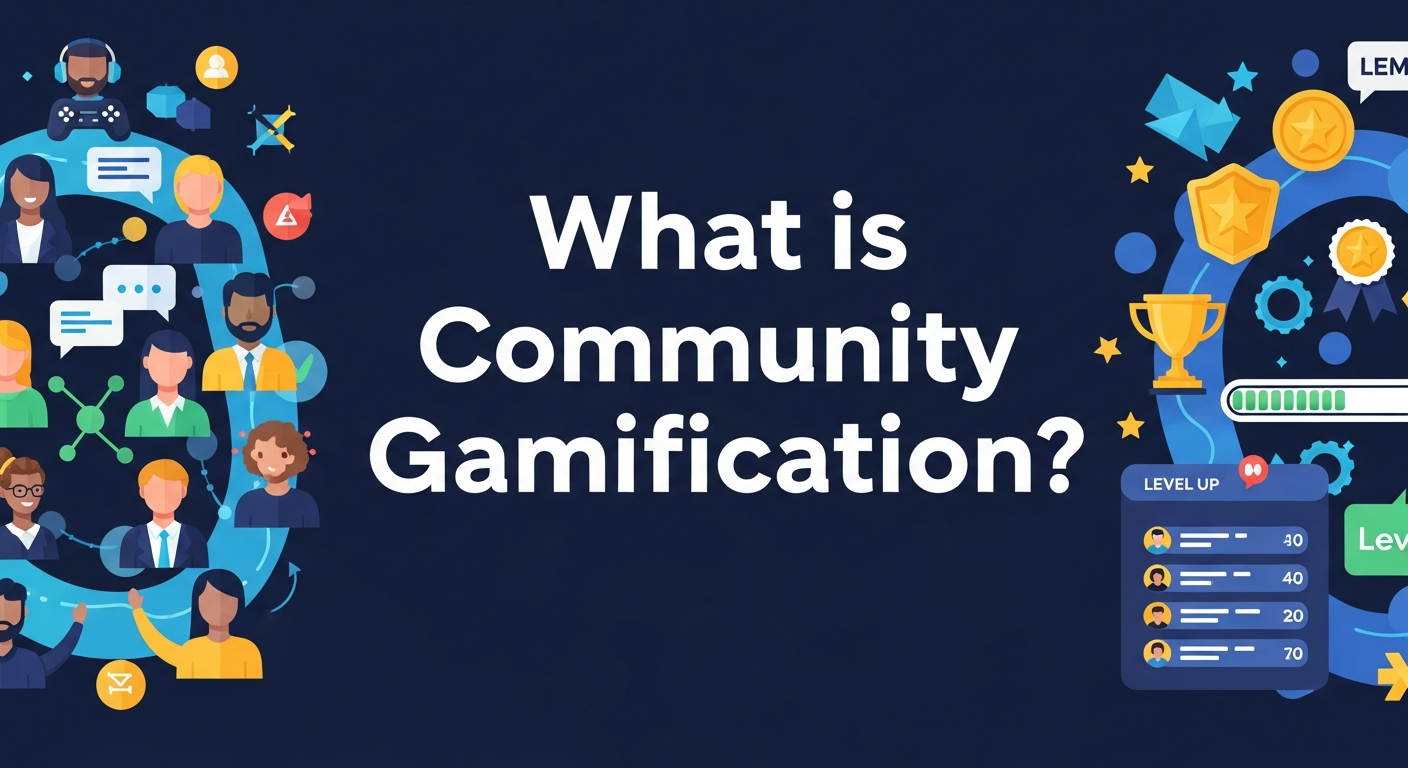
Community gamification is the practice of applying game design elements to online communities and other non-gaming environments to boost engagement, participation, and loyalty. Instead of turning your community into a game, it leverages psychological triggers—such as achievement, recognition, and progress—that make interactions more motivating and enjoyable.
Types of Community Gamification Models
Community gamification can be designed in different ways depending on your goals and audience. Not every community needs the same structure, and choosing the right model helps avoid burnout and shallow engagement.
Common gamification models include:
- Progress-based gamification
Members unlock levels, privileges, or access as they contribute consistently over time. This model works well for learning communities and membership platforms. - Competition-based gamification
Leaderboards, rankings, and time-based challenges motivate highly active members. This is effective in creator, fitness, or sales-driven communities. - Collaboration-based gamification
Rewards are tied to group achievements rather than individual scores. Ideal for communities focused on teamwork, support, or shared outcomes. - Recognition-based gamification
Focuses on public appreciation instead of points. Badges, shoutouts, and featured posts drive long-term loyalty and emotional connection.
Choosing the right model ensures your gamification strategy supports your community culture instead of disrupting it.
Key Elements of Community Gamification
The core elements include:
-
Point systems: Reward members for meaningful actions and contributions.
-
Achievement badges: Recognize milestones and accomplishments.
-
Leaderboards: Encourage friendly competition among members.
-
Progress bars: Visualize advancement and goals.
These mechanics succeed because they provide immediate feedback, clear objectives, and social recognition—features often missing in traditional online communities.
How to Implement Gamification Effectively
Effective community gamification goes beyond adding points or badges. It requires understanding your community’s unique culture, values, and member behaviors. The most successful strategies feel natural, enhancing the community experience rather than distracting from it. Tools like Circle gamification can help structure these systems, creating a self-sustaining ecosystem where members stay motivated, connected, and actively engaged.
The Psychology Behind Engagement Rewards
Engagement rewards work because they satisfy basic human psychological needs. The concept of variable rewards—similar to what makes social media addictive—creates anticipation and excitement around community participation. When members are unsure of when they’ll receive recognition or unlock new features, they’re more likely to stay engaged.
Social recognition plays a crucial role in driving continued participation. Public acknowledgment through badges, featured posts, or leaderboard rankings provides the social validation that many community members seek. This recognition often proves more motivating than monetary rewards because it builds reputation and status within the group.
Progress visualization helps members understand their journey within the community. Clear indicators of advancement—whether through experience points, completion percentages, or unlocked privileges—give members a sense of momentum and achievement. This transparency reduces the friction often associated with long-term community participation.
Intrinsic vs Extrinsic Motivation in Community Gamification
Understanding motivation is critical to designing sustainable community gamification. Engagement increases when rewards align with both intrinsic and extrinsic motivators.
Extrinsic motivation comes from external rewards like points, badges, and rankings. These are powerful for driving short-term action and onboarding new members.
Intrinsic motivation comes from internal satisfaction—helping others, learning, belonging, and status. This is what sustains long-term participation.
Balanced gamification strategies focus on:
-
Recognition over material rewards
-
Mastery and progress instead of constant competition
-
Purpose-driven challenges tied to community values
-
Social belonging through collaboration and shared wins
When intrinsic motivation is supported, members stay active even without constant rewards.
Effective Gamification Strategies for Communities
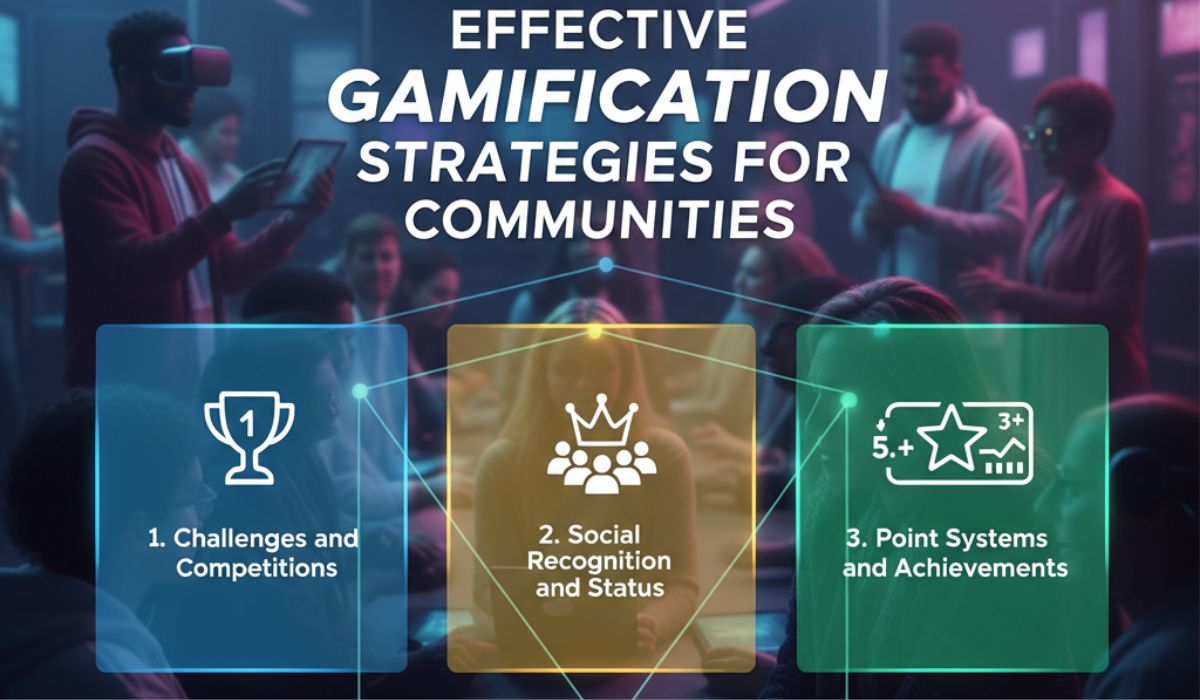
Point Systems and Achievements
Design point systems that reward behaviors you want to encourage. Award points for posting quality content, helping other members, participating in discussions, and completing profile information. Ensure the point values accurately reflect the difficulty and value of each action in relation to your community’s goals.
Create meaningful achievement badges that recognize different types of contributions. Consider badges for milestones like “First Post,” specialized knowledge areas like “Expert Helper,” or community values like “Supportive Member.” Each badge should feel earned rather than given away freely.
Social Recognition and Status
Implement leaderboards that highlight top contributors across different categories. Monthly recognition boards can showcase helpful members, creative contributors, or the most active participants. Rotate these categories to ensure various member types receive recognition.
Feature exceptional contributions through spotlight posts, member interviews, or dedicated showcase areas. This type of recognition often motivates higher-quality contributions better than points alone, as it provides meaningful exposure within the community.
Challenges and Competitions
Organize time-limited challenges that encourage specific behaviors. Photo contests, knowledge-sharing challenges, or collaborative projects can generate excitement and focused participation. These events create natural conversation starters and give less active members clear entry points for engagement.
Design team-based competitions that encourage collaboration over pure individual achievement. Group challenges foster relationships among members as they work toward shared goals, thereby strengthening overall community bonds.
Gamification Use Cases by Community Type
Different communities respond to different engagement mechanics. Tailoring gamification to your audience increases relevance and effectiveness.
| Community Type | Best Gamification Approach | Example Rewards |
|---|---|---|
| Professional / Career | Recognition & expertise-based | Expert badges, featured answers |
| Creator Communities | Challenges & collaboration | Creative challenges, spotlight posts |
| Learning Communities | Progress & mastery | Course levels, completion badges |
| Brand Communities | Loyalty & participation | Points, early access, VIP roles |
| Support Communities | Contribution & empathy | Helper badges, appreciation ranks |
Matching mechanics to community purpose prevents shallow engagement and keeps participation meaningful.
Circle Gamification: Building Connected Communities
Circle platforms and similar digital community tools make gamification easy to implement. These platforms offer built-in features like customizable point systems, achievement badges, leaderboard rankings, and automated member recognition. These mechanics are designed to boost engagement, increase activity, and strengthen online community interaction.
The secret to effective Circle gamification is matching the game mechanics to your community goals. If your platform supports professional development, reward activities like knowledge sharing, peer mentoring, posting helpful resources, or demonstrating new skills. For creative communities, focus on incentives for sharing artwork, offering feedback, joining group challenges, and contributing to collaborative projects.
Start with simple, clear mechanics. Introduce basic rewards and participation goals before adding advanced systems such as tiered badges or experience levels. Track what motivates members the most—whether it’s points, public recognition, or exclusive access—and adjust your structure based on behavior.
The strongest online communities constantly evolve. They refine rewards using member feedback, engagement analytics, and behavioral patterns, turning the platform into a motivating environment where people connect, contribute, and stick around longer. With the right strategy, Circle gamification transforms passive audiences into active communities built on trust, interaction, and shared value.
Common Mistakes to Avoid in Community Gamification
Even well-intentioned gamification can fail if implemented incorrectly. Avoiding common mistakes protects community trust and long-term engagement.
Key pitfalls to watch out for:
-
Rewarding quantity over quality
-
Overloading members with too many rules
-
Making rewards feel mandatory instead of optional
-
Ignoring less vocal but valuable contributors
-
Never updating or refreshing the system
Gamification should feel supportive, not controlling. If members feel manipulated, engagement drops quickly.
Measuring Success and Avoiding Pitfalls
To measure success, track meaningful metrics—not just surface-level engagement numbers. Look at the quality of member contributions, retention rates, referral activity, community growth, and participation distribution. Strong gamification should improve both the volume and value of interactions, creating deeper member involvement over time.
Avoid over-gamification. When game mechanics overpower authentic connection, the community experience becomes artificial or even manipulative. Gamification should support real relationships, knowledge sharing, and collaboration—not turn participation into a race for points. If members begin chasing badges instead of helping each other, it’s time to adjust your approach.
Regular audits are essential. Review your reward system to identify unintended outcomes. Sometimes people learn to game the system by posting low-effort comments or repetitive content just to earn points. This reduces the overall value of the community and weakens trust.
Successful community gamification focuses on long-term engagement, meaningful interaction, and community culture building. By aligning rewards with genuine contribution and continuously refining the mechanics, you can maintain a healthy, motivated, and high-quality online community.
Aligning Gamification with Community Goals
Gamification should never exist in isolation. Every reward system must connect directly to what success looks like for your community.
Ask these questions before designing mechanics:
-
What behaviors actually create value here?
-
Who do we want to empower more?
-
What does “healthy participation” look like?
-
How should members feel after engaging?
When goals are clear, gamification becomes a tool for growth—not just engagement.
Getting Started with Community Gamification
Begin by identifying your community’s most valuable behaviors and the current challenges to engagement. Survey active members to understand what motivates them and identify the barriers that prevent their participation. This research forms the foundation for an effective gamification strategy.
Start with one or two simple mechanics rather than implementing a complex system immediately. A basic point system for helpful posts or a “Member of the Month” recognition program can generate significant improvements in engagement without overwhelming your community management resources.
Test your gamification elements with a small group of engaged members before rolling out community-wide. Their feedback helps identify potential issues and ensures the system feels natural and motivating rather than forced or confusing.
Transform Your Community Through Strategic Gamification
Community gamification represents a powerful approach to solving engagement challenges that plague many online groups. When implemented thoughtfully, these systems create positive feedback loops that encourage continued participation and deeper member connections.
Success requires understanding your community’s unique culture and motivations. The most effective gamification feels natural and enhances existing community dynamics rather than imposing external game mechanics. Start small, measure results, and iterate based on member response to build a system that truly serves your community’s goals.
Investing in community gamification yields dividends through increased retention, higher-quality contributions, and stronger member relationships. It also strengthens overall community building, making your space a place members actively choose to spend time because the experience feels rewarding and meaningful.
Long-Term Sustainability of Gamified Communities
Short-term engagement spikes are easy. Sustained community growth is harder. Long-term gamification success depends on evolution and adaptability.
Sustainable communities:
-
Refresh challenges regularly
-
Retire outdated badges and rewards
-
Introduce seasonal or rotating recognition
-
Invite members to co-create reward ideas
-
Use data to fine-tune incentives
Gamification is not a one-time setup—it’s an ongoing conversation with your members.
Conclusion
Community gamification is more than a trend—it is a strategic approach to building vibrant, active, and sustainable communities. By tapping into human psychology through recognition, progress, and social connection, gamification encourages meaningful participation rather than surface-level activity. When implemented thoughtfully, it enhances authentic interaction, supports collaboration, and reinforces community culture.
The key to success lies in balance. Gamification should support real value creation, not replace it. By starting simple, measuring impact, and continuously refining reward systems, community leaders can create environments where members feel motivated, appreciated, and connected. Over time, this leads to stronger engagement, higher retention, and communities that people genuinely want to be part of.
Frequently Asked Questions (FAQs)
1. What is community gamification?
Community gamification is the use of game design elements—such as points, badges, and challenges—to encourage engagement and participation in online communities.
2. Why is gamification important for online communities?
Gamification helps keep members active, motivated, and involved by making participation more rewarding and enjoyable.
3. What are the most common gamification elements?
Common elements include point systems, achievement badges, leaderboards, progress tracking, and time-based challenges.
4. Can gamification improve member retention?
Yes. When members feel recognized and see progress, they are more likely to return and stay engaged over the long term.
5. Does gamification work for professional communities?
Absolutely. Professional communities benefit from expertise recognition, knowledge-sharing rewards, and reputation-based systems.
6. How do you avoid over-gamification?
Focus on meaningful rewards, limit unnecessary mechanics, and ensure gamification supports real interaction instead of replacing it.
7. Is gamification expensive to implement?
Not necessarily. Many platforms offer built-in tools, and non-monetary rewards like recognition and status are often most effective.
8. How long does it take to see results?
Initial engagement increases often appear within a few weeks, while long-term behavior change develops over a few months.
9. Can small communities use gamification effectively?
Yes. Even simple systems like member recognition or small challenges can significantly boost engagement in smaller groups.
10. What metrics should be used to measure success?
Look beyond activity volume. Track retention, quality of contributions, participation diversity, and community growth.
11. How often should gamification systems be updated?
Regular updates are important. Refresh rewards, rotate challenges, and adapt mechanics based on member feedback and behavior.
12. What is the biggest mistake in community gamification?
Rewarding low-quality activity. Gamification should encourage value creation, collaboration, and authentic engagement.