
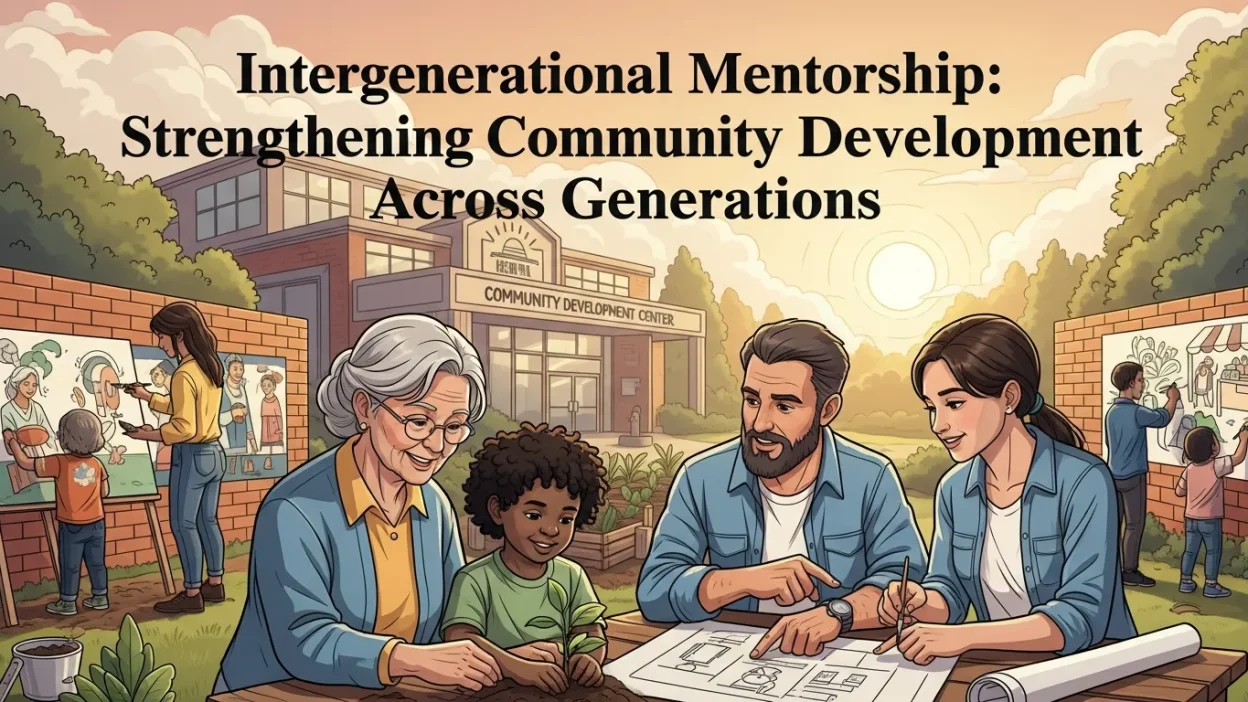
Intergenerational mentorship strengthens community development by connecting people across age groups through shared learning and leadership. By combining experience, innovation, and mutual respect, these programs build inclusive, resilient communities, support youth leadership, and foster long-term social cohesion.
Communities grow stronger when people of all ages learn from one another. Intergenerational mentorship creates space for cross-generational conversations, shared skills, and meaningful connections. In a time of fast technological change, social isolation, and shifting demographics, these mentoring relationships support healthier and more inclusive communities.
Intergenerational programs, including leadership accelerators and community-based accelerator programs, help older adults, millennials, and young people collaborate in practical ways. They also support youth leadership and intergenerational leadership by pairing diverse groups in mentorship programmes and reverse mentorship programs. This simple structure allows everyone to teach and everyone to learn.
Beyond basic networking, intergenerational mentorship builds trust and respect. It strengthens community bonds and helps people understand different viewpoints. From improving digital confidence to preserving cultural knowledge, these programmes make community development more effective across generations.
What Is Intergenerational Mentorship?
Intergenerational Mentorship is a structured mentoring relationship where people from different age groups learn from one another. It connects older adults, millennials, and young people in a supportive, cross-generational exchange of skills and experiences. This model goes beyond traditional mentoring. It focuses on shared growth and mutual respect.
In many communities, intergenerational programs create spaces where youth gain guidance, confidence, and practical skills. At the same time, older adults benefit from fresh ideas, digital knowledge, and new perspectives. This two-way support is often called reverse mentorship, and it helps both sides understand changing social and technological trends.
Intergenerational mentorship also strengthens intergenerational leadership. Young people develop stronger youth leadership skills, while older mentors refine their communication and problem-solving abilities. Many organizations now use this approach in their mentorship programme, accelerator programe, and leadership accelerator models to build well-rounded community leaders.
Because these mentoring relationships involve people with different backgrounds and experiences, they help reduce generational barriers. They encourage collaboration, respect, and active participation across all age groups. In simple terms, intergenerational mentorship creates a healthier, more united, and more informed community by bringing generations together to learn and grow side by side.
Role of Intergenerational Mentorship in Community Development
Intergenerational mentorship plays a vital role in strengthening community development by connecting people across age groups in meaningful and practical ways. By encouraging shared learning, mutual respect, and collaboration, these mentoring relationships help communities address social isolation, skills gaps, and leadership challenges. Older adults contribute experience and cultural knowledge, while younger participants bring innovation and digital skills. This exchange builds trust, supports inclusive decision-making, and creates stronger social networks. As a result, intergenerational mentorship not only develops individuals but also promotes resilient, engaged, and sustainable communities.
Why Intergenerational Connections Matter?
People from different generations often live in separate social worlds shaped by their experiences, education, and values. Intergenerational connections bring these worlds together, reduce stereotypes, and foster trust. By intentionally connecting young and older community members, communities can promote mutual learning, collaboration, and shared responsibility.
- Bridges Generational Gaps: Structured intergenerational mentorship helps close social and cultural gaps between age groups. It encourages understanding and meaningful relationships across cross-generational communities.
- Promotes Intergenerational Learning: These connections create opportunities for intergenerational learning, where both youth and adults exchange skills, knowledge, and life lessons.
- Balances Experience and Innovation: Older adults provide wisdom, historical context, and practical guidance, while younger members, including millennials, bring creativity, digital skills, and fresh ideas.
- Supports Structured Programs: Many intergenerational programs incorporate reverse mentorship programs, mentorship programmes, and cross-generational mentorship to foster productive mentoring relationships.
- Builds Intergenerational Leadership: Participants strengthen intergenerational leadership, enhance youth leadership, and benefit from structured frameworks like accelerator programs and leadership accelerator initiatives.
- Strengthens Communities: By pairing generations intentionally, communities leverage complementary strengths, promote teamwork, and encourage shared ownership of local development, enhancing long-term social cohesion.
Intergenerational Mentorship as a Driver of Community Development
Intergenerational mentorship is a powerful driver of community development because it brings together knowledge, skills, and leadership from different age groups. Thought Leadership structured mentorship programmes and reverse mentorship models, communities strengthen intergenerational learning, youth leadership, and inclusive participation. These mentoring relationships reduce generational gaps, improve digital literacy, preserve cultural knowledge, and build trust across communities. By supporting collaboration between older adults, millennials, and young people, intergenerational mentorship creates sustainable, people-centered Sustainable community development outcomes.
What are the benefits of intergenerational learning and mentorship?
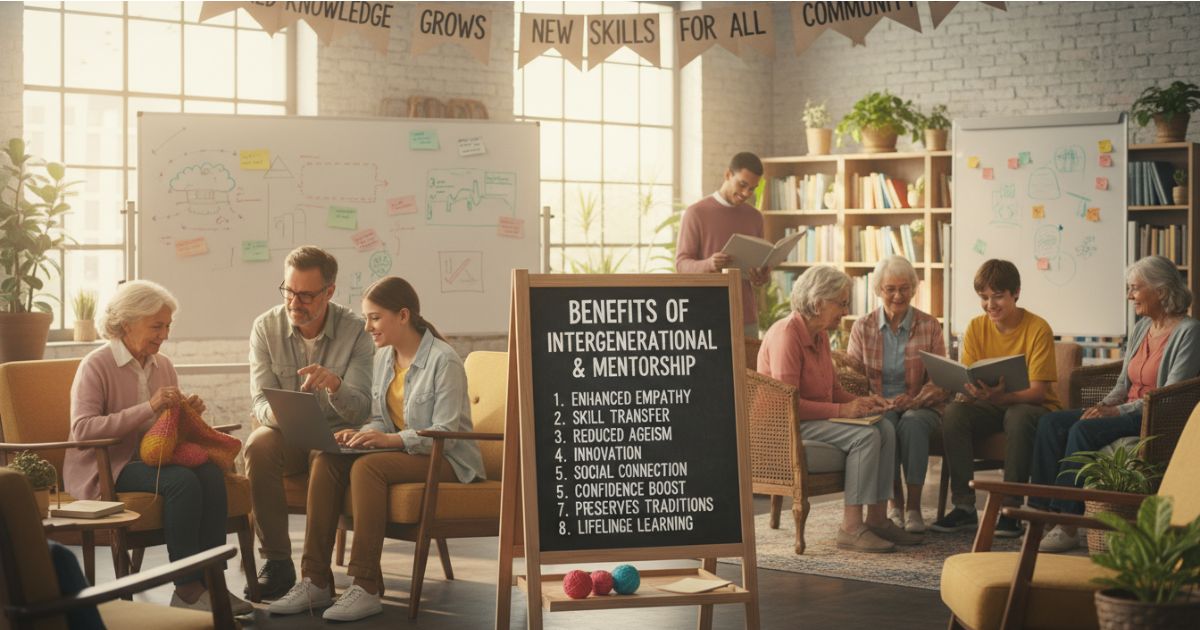
Intergenerational learning and mentorship create meaningful connections between people of different age groups. These relationships benefit individuals, communities, and organizations in multiple ways:
- Knowledge and Skill Sharing: Older adults share life experience, professional expertise, and cultural wisdom, while younger participants, including millennials, bring digital skills, creativity, and innovative problem-solving.
- Mutual Growth: Through reverse mentorship programs and cross-generational mentorship, both mentors and mentees learn new perspectives, enhancing personal and professional growth.
- Builds Intergenerational Leadership: Participants develop intergenerational leadership and youth leadership skills, improving communication, teamwork, and confidence across age groups.
- Strengthens Mentoring Relationships: Structured mentorship programmes foster meaningful mentoring relationships that promote trust, respect, and long-lasting connections.
- Supports Community and Organizational Development: Intergenerational programs, including accelerator programs and leadership accelerator initiatives, empower communities and organizations to leverage diverse strengths for problem-solving and local development.
- Promotes Inclusion and Collaboration: Encourages cross-generational engagement, ensuring all voices are heard and valued, which builds stronger, more cohesive communities.
- Preserves Knowledge and Cultural Heritage: These programs help pass down traditions, institutional knowledge, and life lessons, ensuring continuity while adapting to modern challenges.
Designing Effective Mentorship Programs
Creating a successful intergenerational mentorship program requires careful planning, clear objectives, and ongoing evaluation. When designed thoughtfully, these programs foster intergenerational learning, strengthen mentoring relationships, and build cross-generational collaboration within communities. Community leaders can follow these practical steps to ensure a lasting impact:
- Define Goals and Outcomes: Set a clear mission for the program, such as digital skills development, cultural preservation, workforce preparation, or social inclusion. Establish measurable outcomes to track progress.
- Conduct Needs Assessments: Survey community members to identify skills gaps, interests, and barriers. This ensures the program meets real needs and engages participants effectively.
- Recruit and Train Participants: Collaborate with schools, senior centers, libraries, local NGOs, and businesses to recruit mentors and mentees. Provide workshops on communication, goal-setting, and awareness of biases.
- Match Participants Thoughtfully: Use interest inventories, life experience questionnaires, and personality assessments to pair participants for maximum compatibility and growth.
- Provide Support Structures: Assign program coordinators, offer meeting spaces, digital platforms, and learning materials. Support systems help maintain engagement and effective mentoring relationships.
- Pilot and Refine: Begin with a small group, gather feedback, and make adjustments before scaling. Iterative refinement improves long-term program success.
- Promote Engagement: Organize workshops, group sessions, and showcase events to celebrate achievements and maintain motivation.
- Secure Sustainable Funding: Combine grants, sponsorships, volunteer contributions, and in-kind donations to ensure the program’s longevity and impact.
By following these steps, communities can develop intergenerational programs that foster youth leadership, enhance intergenerational leadership, and create a culture of lifelong learning and collaboration.
Case Studies of Successful Mentorship Programs
- Silver-Tech, Melbourne, Australia: Retirees learn digital literacy from high school students. Seniors report a 75% increase in confidence, while students develop teaching and empathy skills.
- Heritage Voices, New York, USA: Elders share oral histories in schools. Students improve research, writing, and presentation skills, and museum attendance rises by 30%.
- Green Guardian Mentors, Nairobi, Kenya: Experienced farmers teach urban youth sustainable agriculture. Crop yields increase by 40%, and young participants explore eco-entrepreneurship.
These examples show how mentorship initiatives can create social, economic, and cultural benefits.
Common Challenges and Solutions

- Communication Barriers: Differences in language or tech comfort.
Solution: Provide training on active listening, adaptive communication, and basic tech skills. - Time Constraints: Busy schedules may limit participation.
Solution: Offer flexible options, such as weekend workshops or virtual sessions. - Goal Misalignment: Conflicting expectations can cause frustration.
Solution: Use written mentorship agreements outlining roles and objectives. - Logistical Hurdles: Travel or inaccessible venues.
Solution: Use hybrid models or partner with libraries and community centers. - Avoiding Tokenism: Programs must be meaningful, not symbolic.
Solution: Co-create projects, set measurable milestones, and showcase participant-led initiatives.
Measuring Impact
To ensure sustainability and demonstrate value, programs should track both quantitative and qualitative outcomes:
- Quantitative Metrics: Number of mentor-mentee pairs, meeting frequency, retention rates, and skill assessments.
- Qualitative Feedback: Testimonials, focus groups, and personal growth stories.
- Community Indicators: Monitor volunteerism, employment, digital literacy, or local participation.
- Continuous Improvement: Use evaluation results to refine program design, introduce peer-led workshops, or alumni networks.
Best Practices for Successful Intergenerational Mentorship Programs
Creating impactful intergenerational mentorship programs requires thoughtful planning and consistent execution. Following these best practices ensures meaningful mentoring relationships, strengthens intergenerational leadership, and fosters cross-generational collaboration:
- Set Clear Goals and Objectives: Define the program’s mission, such as youth leadership development, digital skill enhancement, cultural preservation, or social inclusion.
- Recruit and Train Participants Effectively: Partner with schools, senior centers, local NGOs, libraries, and businesses. Provide training workshops on communication, empathy, bias awareness, and goal setting to ensure mentors and mentees are prepared.
- Pair Participants Thoughtfully: Use interest inventories, life experience questionnaires, and personality assessments to create compatible mentor-mentee pairs. Reverse mentorship programs can be particularly effective for knowledge exchange.
- Provide Ongoing Support: Assign program coordinators, offer dedicated meeting spaces, access to digital platforms, and learning materials. Structured support helps sustain engagement in mentorship programmes.
- Encourage Engagement and Interaction: Host group sessions, workshops, networking events, and showcase programs to celebrate achievements and maintain motivation.
- Monitor, Evaluate, and Adapt: Collect feedback regularly to assess program outcomes. Adjust strategies to improve effectiveness before scaling.
- Ensure Sustainability: Secure funding through grants, sponsorships, volunteer support, and in-kind donations to maintain long-term program success.
By implementing these practices, Community Building Activities intergenerational programs that promote intergenerational learning, foster collaboration across generations, and cultivate the next generation of intergenerational leaders.
Conclusion
Intergenerational mentorship strengthens communities by connecting people of all ages. Older adults share wisdom, cultural traditions, and life experiences, while younger participants, including millennials, contribute energy, creativity, and digital skills. This collaboration promotes intergenerational learning, knowledge sharing, and skill exchange across generations.
By thoughtfully designing, implementing, and evaluating intergenerational programs and mentorship programmes, community leaders can foster cross-generational mentorship and build strong mentoring relationships. Such initiatives enhance intergenerational leadership, encourage youth leadership, and support intergenerational community building, creating inclusive networks that benefit everyone.
Now is the time to start intergenerational mentorship initiatives that bridge generations, strengthen social cohesion, and unlock the full potential of communities for long-term growth and development.
FAQs
1. What is intergenerational mentorship?
Intergenerational mentorship is a structured mentoring relationship where people from different age groups learn from one another by sharing skills, experiences, values, and perspectives. It promotes mutual growth rather than one-way teaching.
2. How does intergenerational mentorship support community development?
It strengthens community development by building social cohesion, encouraging collaboration, preserving cultural knowledge, improving skills, and creating inclusive networks across generations.
3. What is the difference between traditional and intergenerational mentorship?
Traditional mentorship is usually one-directional, with an experienced mentor guiding a younger mentee. Intergenerational mentorship is two-way, allowing both participants to teach, learn, and grow together.
4. What is reverse mentorship?
Reverse mentorship is a form of intergenerational mentorship where younger participants mentor older adults, often in areas such as digital literacy, technology use, innovation, and changing social trends.
5. Who can participate in intergenerational mentorship programs?
People of all ages can participate, including students, youth, millennials, working professionals, adults, and seniors. Programs are strongest when participants come from diverse backgrounds and experiences.
6. How do intergenerational programs benefit youth leadership?
These programs help young people build confidence, communication skills, critical thinking, and leadership abilities while gaining guidance and real-world insights from experienced mentors.
7. How do older adults benefit from intergenerational mentorship?
Older adults benefit through increased social connection, improved digital skills, renewed purpose, and opportunities to pass on life experience, cultural knowledge, and professional expertise.
8. What types of organizations can run these programs?
Intergenerational mentorship programs can be run by community organizations, schools, NGOs, libraries, local governments, faith-based groups, and social enterprises.
9. Can intergenerational mentorship support economic development?
Yes. These programs enhance employability, career readiness, entrepreneurship skills, workforce participation, and professional networking across generations.
10. What challenges do intergenerational mentorship programs face?
Common challenges include communication differences, scheduling conflicts, unclear goals, and accessibility issues. These can be addressed through training, flexible formats, and clear program structure.
11. How is the impact of mentorship programs measured?
Impact is measured using participation data, skill improvement, leadership development, participant feedback, retention rates, and broader community development indicators.
12. Why are intergenerational connections important today?
In a time of rapid technological change, social isolation, and demographic shifts, intergenerational connections promote understanding, resilience, shared learning, and inclusive community development.