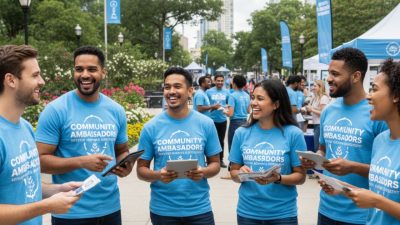

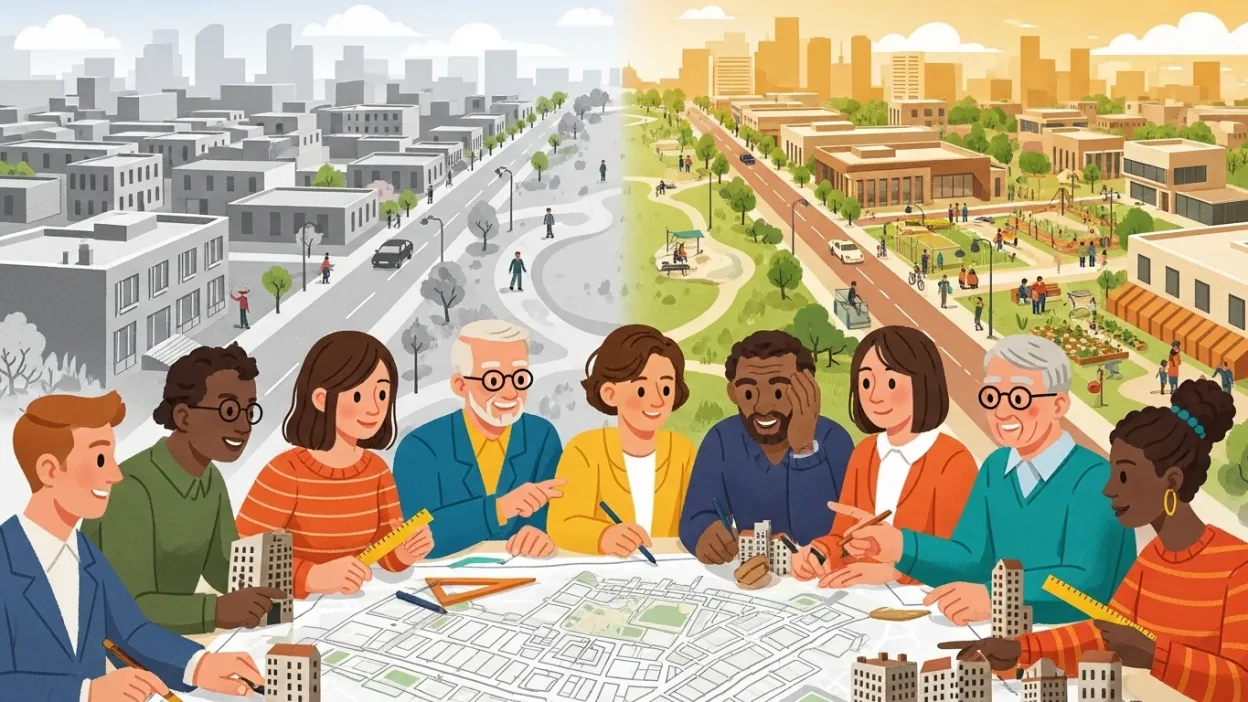
Community Led Urban Design puts people at the center of city-making. By involving residents, planners, and local stakeholders throughout the design process, it creates inclusive, sustainable, and meaningful public spaces that reflect real community needs, build trust, and strengthen local governance.
Across cities and towns worldwide, communities are stepping out of the sidelines and into the driver’s seat of neighborhood transformation. Gone are the days when urban designers worked in isolation, delivering top-down schemes that often missed local needs. Today, community led urban design empowers residents, planners, and stakeholders to co-create environments that reflect their collective vision and values. This collaborative approach fosters a sense of ownership, enhances social cohesion, and leads to more resilient and vibrant public spaces.
What Is Community Led Urban Design?
Community led urban design is a participatory planning approach where neighborhood residents, grassroots organizations, local businesses, and planning professionals work together throughout every stage of design and implementation. Rather than relying on a single consultant or top-down authority, this model treats the community as a core design partner with real decision-making power.
Residents actively contribute ideas based on their daily experiences, review and refine design concepts, provide feedback on prototypes, and in some cases participate directly in construction, activation, or long-term maintenance. This collaborative process ensures that urban spaces respond to real needs, cultural context, and local priorities rather than abstract assumptions.
Beyond physical improvements, community led urban design strengthens social connections, builds trust between citizens and public institutions, and fosters a sense of shared ownership. When people help shape the spaces they use, they are more invested in protecting, sustaining, and improving them over time—resulting in more resilient, inclusive, and vibrant neighborhoods.
The Importance of Local Knowledge in Urban Design Decisions
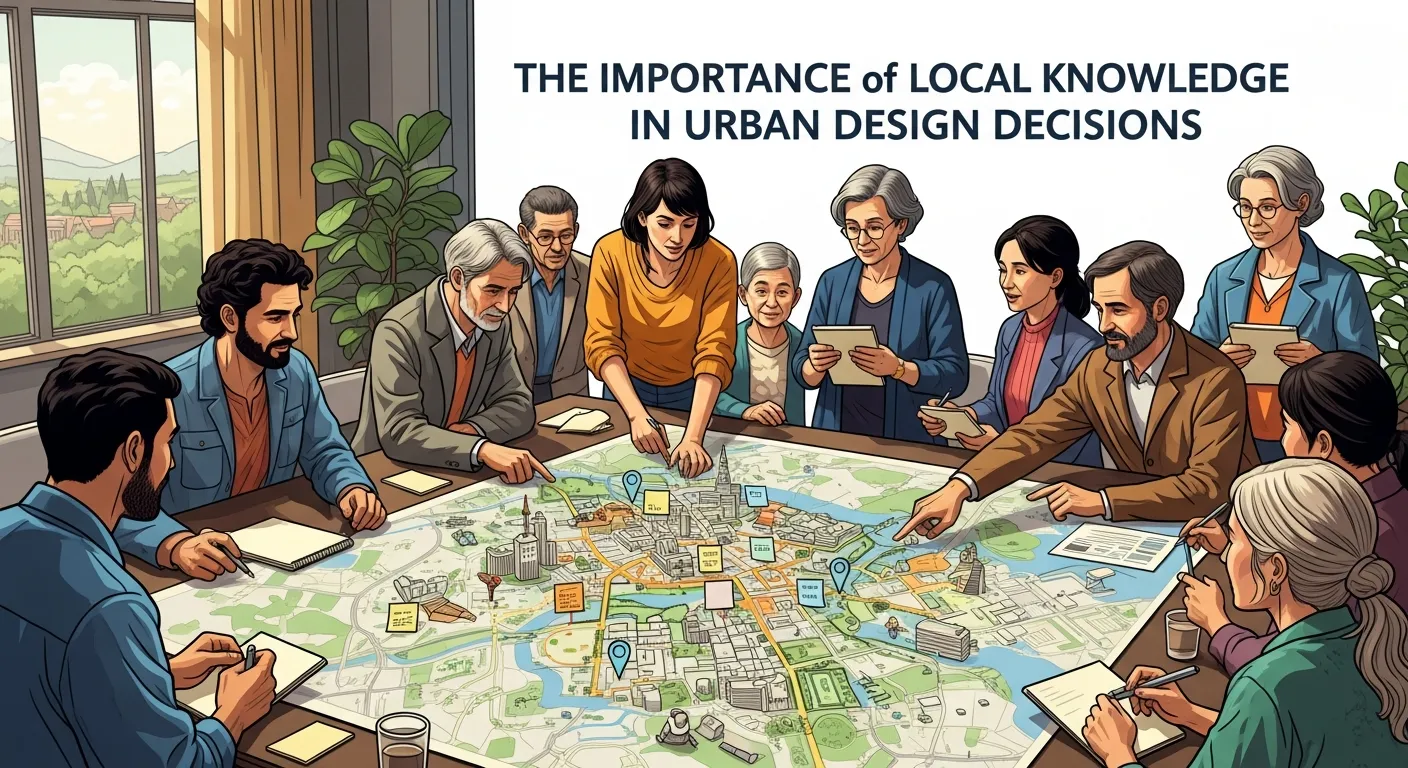
Local residents possess deep knowledge of how spaces function daily—where people gather, which routes feel unsafe, and what amenities are missing. Community Led Urban Design values this lived experience alongside technical expertise. By integrating local insights into planning, cities avoid costly design mistakes and create public spaces that are culturally relevant, practical, and widely used.
The Role of Local Knowledge in Community Led Urban Design
Local knowledge is one of the most valuable assets in community led urban design. Residents possess first-hand understanding of how spaces are actually used in daily life—where people naturally gather, which streets feel unsafe at certain times, how weather affects movement, and what services or amenities are missing. This lived experience often reveals insights that maps, data sets, or short-term site visits cannot capture.
By integrating local knowledge into planning and design decisions, urban solutions become more practical, culturally sensitive, and aligned with real community needs. Residents help identify design priorities, highlight historical and social context, and ensure that public spaces reflect local identity, traditions, and values. This bottom-up perspective also supports inclusive planning by giving voice to groups that are often overlooked in traditional processes.
Key Benefits
- Local ownership: When residents shape the outcome, they are more likely to protect and maintain it for the long term.
- Social capital: Collaborative design breaks down silos, forging connections among neighbors who might never have met.
- Contextual relevance: Solutions emerge from lived experience, ensuring better fit with cultural, economic, and environmental realities.
- Greater equity: Deliberate outreach elevates voices from underrepresented groups, balancing benefits across demographics.
- Flexibility: Iterative feedback loops enable rapid adjustments when unexpected issues arise.
Community Led Urban Design and Social Equity
Community led urban design plays a critical role in advancing social equity within cities. Traditional planning processes often overlook marginalized voices, leading to uneven access to safe streets, green spaces, and public services. A participatory design approach actively includes women, youth, low-income residents, and minority groups in decision-making. As a result, urban spaces are designed to serve diverse populations more fairly, promoting inclusion, accessibility, and long-term community wellbeing.
Core Principles for Success
To harness these benefits, follow five guiding principles:
- Early Engagement: Invite diverse stakeholders from project inception, not after key decisions are made.
- Transparency: Share budgets, timelines, and constraints openly to build trust.
- Inclusivity: Use multiple outreach channels—online surveys, door-to-door visits, pop-up workshops—to reach seniors, youth, renters, and non-English speakers.
- Iterative Design: Prototype in phases—mockups, digital renders, small-scale pilot installations—then refine based on community feedback.
- Capacity Building: Invest in training residents on design fundamentals, facilitation skills, and project management, enabling them to lead future initiatives.
The Role of Trust and Collaboration in Community Led Urban Design
Community Led Urban Design depends heavily on trust between residents, planners, and local authorities. When communities believe their voices genuinely influence outcomes, participation increases and collaboration becomes more meaningful. Open dialogue, consistent follow-ups, and visible implementation of community ideas help build long-term trust. This trust encourages residents to remain engaged beyond a single project, strengthening local governance and shared responsibility for public spaces.
How Community Led Urban Design Strengthens Local Governance
Beyond physical transformation, community led urban design strengthens local governance by improving trust between citizens and public institutions. When residents collaborate with planners and local authorities, decision-making becomes more transparent and accountable. This shared process reduces conflict, increases public support for urban projects, and encourages long-term civic participation. Over time, collaborative planning fosters a culture of cooperation that benefits future development initiatives.
Tools and Methods
A range of techniques makes community-led design practical and engaging:
- Design Charrettes: Multi-day workshops where small teams rotate through stations to brainstorm, sketch, and vote on concepts.
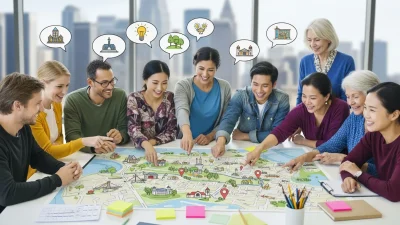
- Community Mapping: Residents map assets, challenges, and desired improvements on printed or digital maps.
- Pop-Up Interventions: Temporary placemaking—parklets, street murals, guerrilla gardens—to test ideas in real time.
- Online Platforms: Interactive websites or apps where users annotate plans, leave comments, and view 3D models.
- Mobile Workshops: On-the-move engagement—walking tours, bike tours, mobile design labs—that meet people where they live.
Key Stakeholders in Community Led Urban Design
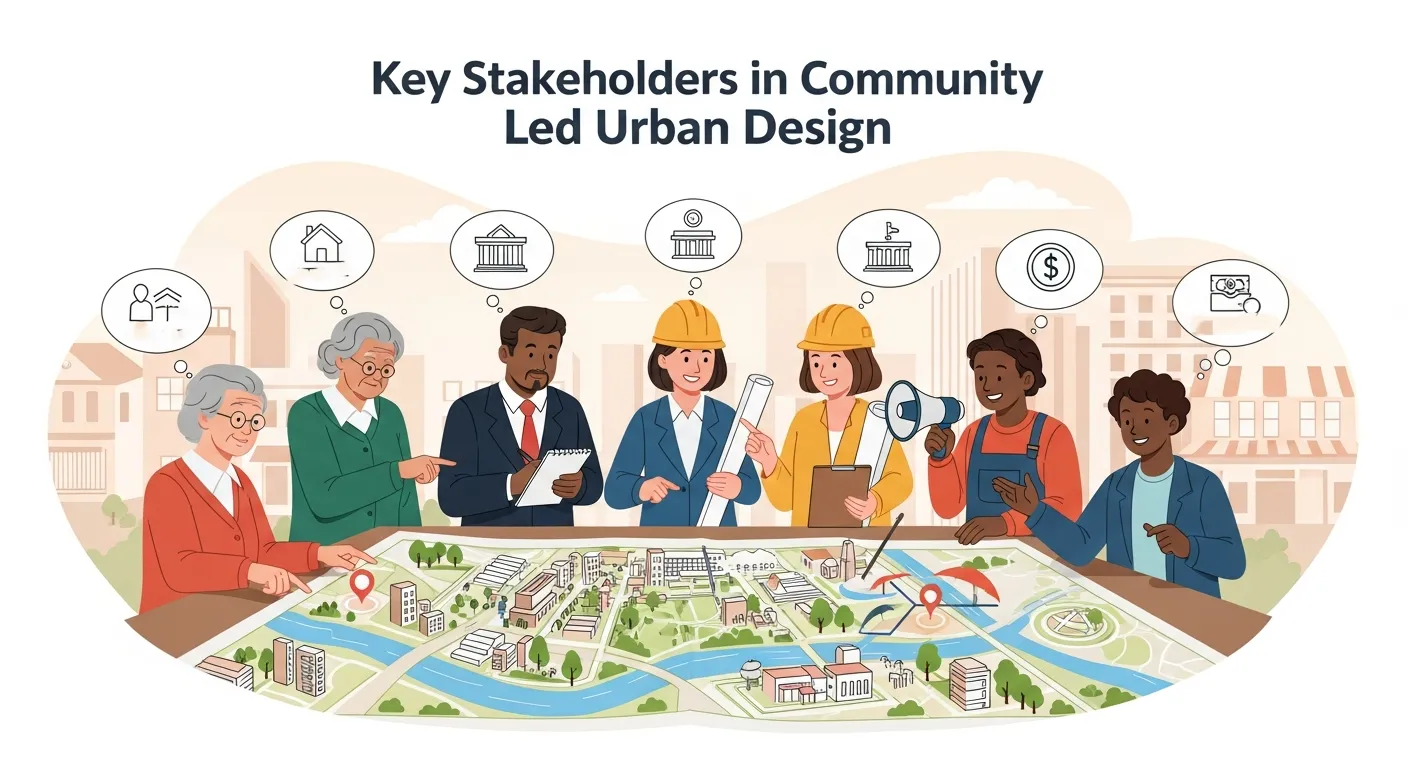
- Local Residents: Provide lived experience, identify daily challenges, and define priorities for public spaces.
- Urban Planners & Designers: Translate community ideas into feasible, safe, and sustainable design solutions.
- Local Government & Authorities: Offer policy support, approvals, funding, and long-term maintenance structures.
- Community Organizations & NGOs: Act as trusted intermediaries, ensuring inclusive participation and outreach.
- Local Businesses: Contribute economic insights and support activation of public spaces through services and events.
A Step-by-Step Roadmap
Follow these stages to guide your community through a structured yet flexible process:
- Scoping: Define goals, budget, timeline, and key stakeholders. Conduct a baseline survey of physical assets and social networks.
- Engagement Plan: Craft a strategy for in-person and digital outreach. Set measurable targets for participation and demographic representation.
- Ideation: Host charrettes, mapping exercises, and informal meet-ups to generate concepts. Document all ideas, even those that seem impractical—they may spark other innovations.
- Prototyping: Select top ideas for low-fidelity testing. Use cardboard models, chalk, or digital renders to illustrate form and function.
- Refinement: Collect feedback via surveys and pop-ups. Iterate designs until consensus emerges on core elements.
- Implementation: Mobilize funding, permits, and volunteers. Schedule construction during windows that minimize disruption.
- Activation: Launch with a community festival, workshops, or storytelling events to celebrate the new space and honor contributors.
- Evaluation: Measure success against KPIs—use counts, survey responses, maintenance logs—and share results transparently.
Overcoming Common Challenges
Even the best-intentioned projects can face hurdles. Here’s how to address them:
- Resource Constraints: Leverage partnerships with local businesses, universities, or nonprofits to secure in-kind donations, volunteers, and pro bono services.
- Conflicting Opinions: Use design ballots or dot-voting to quantify preferences and move decisions forward democratically.
- Technical Complexity: Break projects into manageable phases. Build simple prototypes first, then scale up.
- Maintaining Momentum: Appoint community stewards to oversee upkeep and plan regular events that keep the space active.
Real-World Examples
Barcelona’s Superblocks transformed city grids by restricting traffic in clusters of blocks, opening streets for play and commerce. Local councils collaborated with residents through workshops and digital platforms to redefine public space. Today, superblocks contribute to reduced air pollution, safer streets, and thriving micro-economies.
Detroit’s Green Alley Project turned neglected backstreets into rain-absorbing, community-managed green corridors. Neighbors planted native vegetation, installed permeable paving, and organized maintenance days. The result: improved stormwater management and stronger neighborhood bonds.
Measuring Impact
Quantify your project’s success with metrics such as:
- Participation Rates: Number of unique participants in workshops, surveys, and events.
- User Satisfaction: Survey scores on perceived safety, comfort, and sense of belonging.
- Foot Traffic: Counts are taken before and after activation, using either manual tallies or sensor data.
- Maintenance Records: Frequency of repairs or volunteer clean-ups as an indicator of pride of place.
- Economic Indicators: Changes in local business revenues, property values, or new storefront openings.
Why Community Led Urban Design Supports Sustainable Cities
Community led urban design directly supports sustainable city development by aligning environmental goals with community priorities. Residents often advocate for green spaces, walkable streets, climate-resilient infrastructure, and locally managed resources. Because communities are involved from the start, sustainable features are more likely to be maintained and adapted over time. This approach creates urban environments that are not only eco-friendly but also socially and economically resilient.
How NFT Marketing Can Support Community Led Urban Design
In recent years, nft marketing has emerged as a digital engagement and funding approach that can complement community led urban design initiatives. When used thoughtfully, it helps communities share their vision, document collective creativity, and attract broader support without undermining participatory values.
Through nft marketing, community groups and local authorities can present neighborhood stories, public space concepts, or community-created artworks as digital assets. These assets can represent shared ideas and milestones in the design process, reinforcing a sense of recognition and ownership among residents.
Nft marketing can also enable alternative funding pathways for community-led projects. Communities may use NFT-based campaigns to support public art, small-scale urban interventions, or place-based initiatives. The transparent nature of digital ownership can strengthen trust—an essential foundation of community led urban design.
When aligned with inclusive participation, nft marketing should function as a supporting tool rather than a replacement for in-person engagement. Used responsibly, it extends the reach of local projects while keeping decision-making power rooted within the community.
Looking Ahead: Future Trends

Community led urban design is evolving with technology and new social models:
- Digital Twins: Interactive 3D simulations that allow residents to explore design scenarios before construction.
- Augmented Reality: Mobile apps that overlay proposed streetscape changes onto real-world views.
- Participatory Budgeting: Online voting on funding allocations to empower residents with direct financial decisions.
- Temporary Urbanism: Rapid deployment of pop-ups and modular elements that adapt seasonally.
Community Led Urban Design vs Traditional Urban Design
| Aspect | Community Led Urban Design | Traditional Urban Design |
|---|---|---|
| Decision-Making | Shared with residents and stakeholders | Controlled by experts or authorities |
| Community Role | Active co-creators | Passive recipients |
| Design Process | Iterative and feedback-driven | Linear and top-down |
| Social Equity | Prioritizes inclusion and diverse voices | Often overlooks marginalized groups |
| Long-Term Impact | Strong ownership and sustainability | Higher risk of neglect or resistance |
Conclusion
By putting people at the center of design, we can build stronger, happier, and more connected neighborhoods. Community-Driven Urban Design is not just about parks or streets—it’s about shaping spaces where everyone feels they belong. Whether it’s a small public garden, a local market, or a full neighborhood plan, collaboration turns ideas into reality. When residents, planners, and local governments work together, cities become more inclusive, sustainable, and vibrant.
Now is the time to bring your community’s vision to life. Invite your neighbors, share ideas, and co-create spaces that reflect your shared values. Together, we can transform everyday places into thriving, people-powered environments.
FAQs: Community Led Urban Design
1. What is Community Led Urban Design?
Community Led Urban Design is a collaborative planning approach where residents actively participate in designing, shaping, and improving their neighborhoods alongside urban planners, designers, and local authorities. It emphasizes co-creation rather than top-down decision-making.
2. Why is Community Led Urban Design important?
It ensures that urban spaces reflect real local needs and lived experiences. This approach increases social cohesion, builds trust between communities and governments, and results in more sustainable, inclusive, and well-used public spaces.
3. How is Community Led Urban Design different from traditional urban design?
Traditional urban design is usually expert-led and top-down, with limited public input. Community led urban design is participatory, inclusive, and feedback-driven, allowing residents to influence decisions throughout the entire process.
4. Who participates in Community Led Urban Design?
Participants typically include local residents, community organizations, urban planners, architects, local governments, NGOs, and sometimes local businesses. Each group contributes unique knowledge, skills, and perspectives.
5. What role does local knowledge play in Community Led Urban Design?
Local knowledge provides insight into how spaces are used daily, where safety issues exist, and what amenities are missing. Integrating this lived experience helps avoid design mistakes and creates spaces that are culturally and socially relevant.
6. How does Community Led Urban Design promote social equity?
It actively includes marginalized and underrepresented groups in decision-making. By amplifying diverse voices, this approach helps ensure fair access to public spaces, services, and infrastructure across different communities.
7. What tools are commonly used in the community-led design process?
Common tools include design charrettes, community mapping exercises, pop-up interventions, online engagement platforms, mobile workshops, surveys, and public forums that encourage inclusive participation.
8. Can Community Led Urban Design work in small communities?
Yes, Community Led Urban Design is highly scalable. It works effectively in small towns, neighborhoods, schools, informal settlements, and community-based projects with limited budgets.
9. What challenges does Community Led Urban Design face?
Key challenges include limited funding, conflicting community opinions, technical complexity, time constraints, and maintaining long-term engagement. Clear communication and structured processes help address these issues.
10. How does Community Led Urban Design strengthen local governance?
It improves transparency, accountability, and trust between citizens and authorities. Shared decision-making encourages civic participation and leads to stronger public support for urban development initiatives.
11. Does Community Led Urban Design support sustainability goals?
Yes, it promotes walkability, green spaces, climate-resilient infrastructure, and responsible resource use. Community involvement increases long-term maintenance and environmental stewardship.
12. What is the future of Community Led Urban Design?
The future includes greater use of digital tools such as digital twins, augmented reality, participatory budgeting platforms, and temporary urbanism to make collaboration more accessible and adaptive.