
Master Community Onboarding is essential for building a strong, engaged, and long-lasting community. A well-structured onboarding experience helps new members feel welcomed, confident, and motivated to participate from the start. By focusing on early engagement, personalization, clear guidance, and the right tools, communities can improve retention, strengthen relationships, and turn newcomers into active contributors and long-term advocates.
Effective community onboarding is the first step to building lasting connections with your members. Whether welcoming users to an online forum, a local group, or a professional network, the initial experience shapes trust, loyalty, and long-term participation. A well-designed new member experience guides people through each stage of the onboarding funnel, boosting member engagement and retention.
In this guide, we’ll cover why community onboarding matters, share proven best practices, highlight helpful tools, and explain how to measure success. By following these strategies, you can transform newcomers into active, committed participants and foster a thriving, engaged community.
What Is Community Onboarding?
Community onboarding refers to the structured process that welcomes new members, familiarizes them with your group’s culture and rules, and motivates them to take that critical first action—whether it’s introducing themselves, completing a profile, or joining a conversation. Think of it like orientation for a new job or club: a successful onboarding journey reduces confusion, accelerates comfort, and sets clear expectations for engagement.
Why Master Community Onboarding Matters
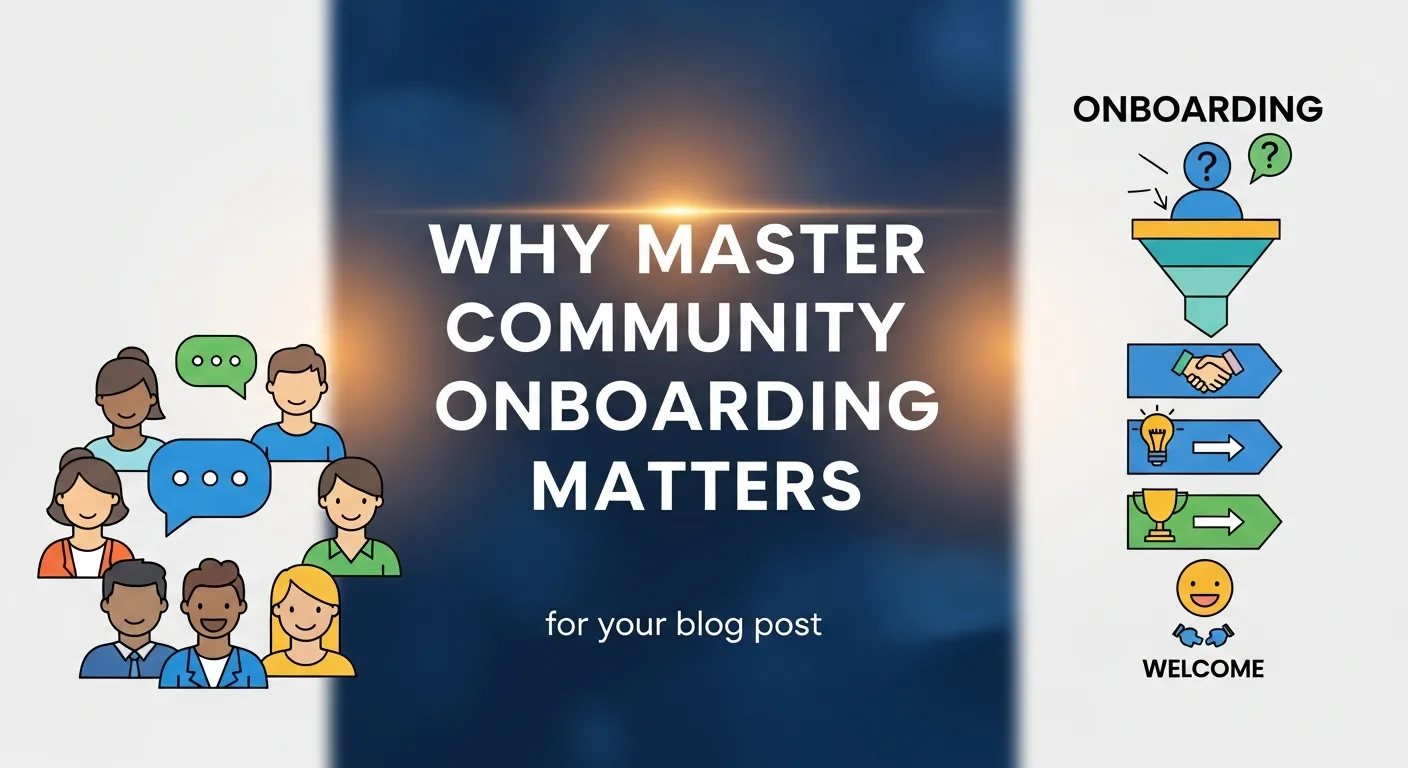
Master Community Onboarding is the foundation of a strong and sustainable community. When new members clearly understand the purpose of the community and how they can participate, they feel confident and motivated to engage. A well-planned onboarding experience reduces uncertainty, builds trust, and encourages early interaction, which plays a critical role in long-term member retention.
The Psychology Behind Master Community Onboarding
Master Community Onboarding works best when it aligns with human psychology. New members often join a community with excitement—but also uncertainty. They wonder if they belong, what behavior is acceptable, and whether their participation will be valued. A thoughtful onboarding experience reduces this anxiety and replaces it with confidence.
By clearly setting expectations, offering social proof, and encouraging small early actions, Creating Community Experiences a sense of psychological safety. When members feel safe and understood, they are far more likely to engage, share ideas, and build lasting relationships.
The Onboarding Funnel: Four Critical Stages
Designing your onboarding funnel as a series of intentional stages helps you guide newcomers from passive observers to active participants. The four critical stages are:
- Attraction: Capture attention through targeted messaging, social proof, and enticing value propositions.
- Welcome: Personalize the first touchpoint—automated emails, welcome videos, or one-on-one messages that acknowledge the new member by name.
- Engagement: Encourage an initial action, such as posting a comment, filling out a profile, or attending an introductory event.
- Empowerment: Provide resources, mentorship, and roles that enable members to contribute meaningfully and feel a sense of ownership within the community.
By mapping each touchpoint, you can identify gaps—moments when newcomers drop off—and optimize accordingly.
Creating Confidence Through Early Member Experience
The success of master community onboarding depends on how members feel during their first interactions. A welcoming and structured onboarding journey helps newcomers feel supported instead of overwhelmed. When people feel valued from the beginning, they are more likely to participate, share ideas, and form meaningful connections within the community.
First 72 Hours: The Most Critical Phase of Community Onboarding
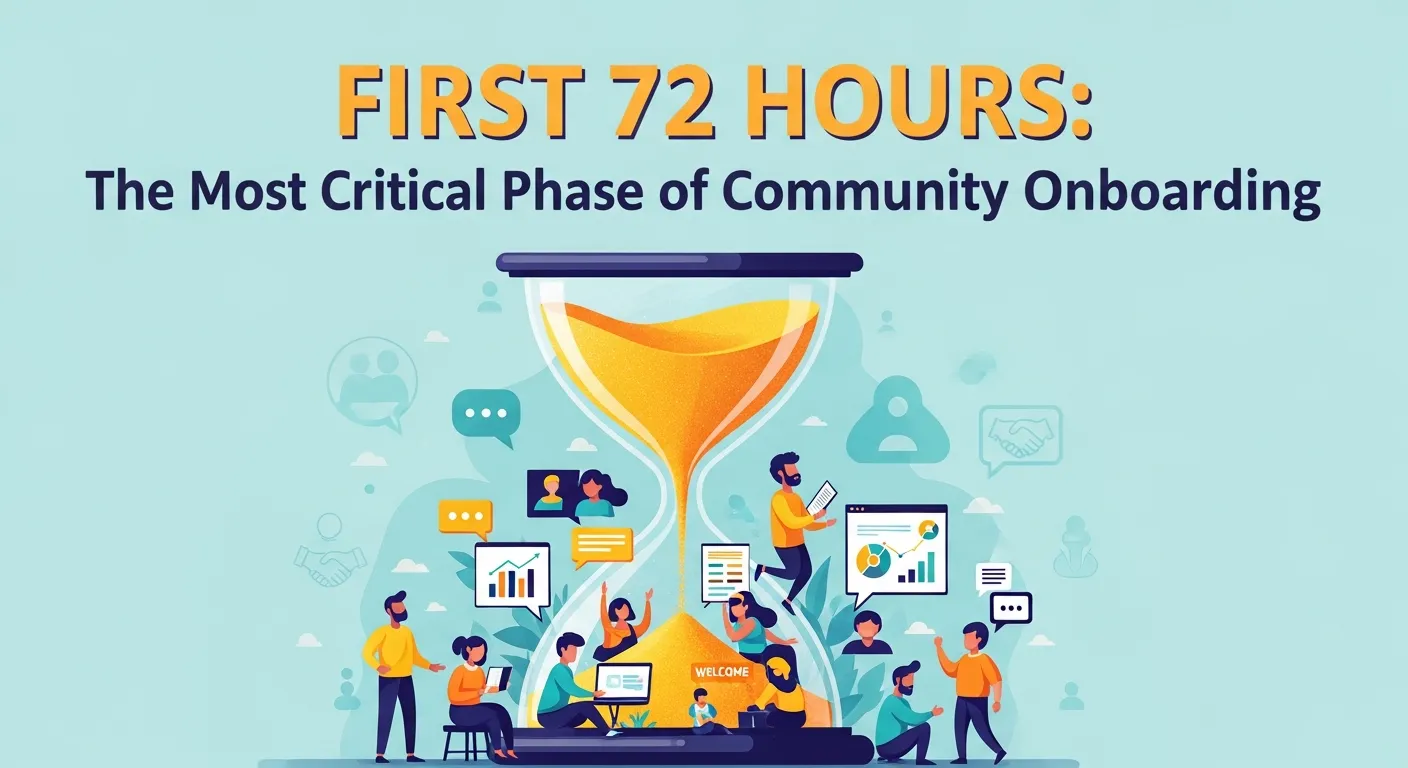
The first 72 hours after signup are crucial to master community onboarding. This short window determines whether a new member becomes active or silently disengages. Communities that guide members step-by-step during this phase dramatically increase engagement and retention.
During the first three days, your onboarding should focus on clarity, encouragement, and quick wins.
What to prioritize in the first 72 hours:
- A warm, immediate welcome message
- A single, clear first action (intro post, profile setup)
- Social proof from existing members
- Easy access to help or support
- Gentle reminders to re-engage
Best Practices for Effective Onboarding
Adopt these proven strategies to enhance each stage of your onboarding funnel and boost retention rates:
- Personalization at Scale: Use dynamic tokens in messages to address members by name, tailor content based on their interests, or reference how they found your community. Even automated interactions feel warmer when individualized.
- Clear Value Pathways: Articulate what members will gain—knowledge, connections, opportunities—and outline a simple roadmap of next steps. A short “first week checklist” can reduce uncertainty.
- Guided Tours and Tutorials: Interactive walkthroughs highlight key features: profile setup, discussion boards, resource libraries, or event calendars. Embed tooltips or videos that appear when a user first visits a page.
- Community Mentors and Ambassadors: Pair newcomers with veteran members who can answer questions, make introductions, or invite them to group activities. Human connections accelerate trust more than any automated message.
- Gamification Elements: Introduce badges, points, or progress bars to recognize completion of onboarding tasks. Visible milestones spur motivation and reinforce small wins.
- Accessible Documentation: Maintain a well-organized help center, FAQ section, or knowledge base—link to specific articles from welcome messages to address recurring questions.
- Feedback Loops: Solicit feedback immediately after onboarding tasks: Did the welcome email feel friendly? Was the tutorial helpful? Use short, embedded surveys to collect insights in real time.
- Multi-Channel Outreach: Reinforce your welcome sequence via email, in-app notifications, SMS, or even phone calls—depending on the community’s nature. Redundancy ensures newcomers don’t miss critical information.
Small Actions That Drive Big Engagement
Master Community Onboarding works best when new members are guided toward simple and achievable first steps. Actions such as introducing themselves, completing a profile, or engaging with a post create early momentum. These small wins help members feel included and comfortable, leading to deeper engagement over time.
How to Master Community Onboarding for Long-Term Engagement
Master Community Onboarding requires more than just a welcome message—it demands a thoughtful, user-centric journey that helps members feel confident, valued, and motivated from day one. When onboarding is done right, new members understand where they belong, what actions to take, and how they can contribute meaningfully to the community.
A strong onboarding strategy removes friction, reduces overwhelm, and builds emotional connection early. Communities that master onboarding consistently see higher engagement, stronger relationships, and improved long-term retention.
Key elements of mastering community onboarding include:
- Clear first-action guidance that tells members exactly what to do next
- Friendly tone and human touchpoints that build trust quickly
- Visible community norms and values to reduce uncertainty
- Simple navigation and easy access to important resources
Tools and Techniques to Streamline Onboarding
Technology can automate repetitive tasks, personalize interactions, and provide data-driven insights. Here are some categories to consider:
- Email Automation Platforms: Email automation Services like Mailchimp, Drip, or ConvertKit enable you to build drip campaigns, segment new users, and trigger messages based on user behavior.
- In-App Guidance Software: Tools such as Appcues, WalkMe, or Pendo overlay interactive tours, tooltips, and launchers that guide members through your platform’s interface.
- Community Platforms with Native Onboarding: Solutions like Tribe, Mighty Networks, or Discourse often include welcome modules, profile prompts, and gamification features out of the box.
- Chatbots and AI Assistants: Deploy AI chatbots on your website or within the community to answer FAQs, route users to resources, or escalate more complex requests to human moderators.
- Webinar and Event Software: Host live orientation sessions with Zoom, Hopin, or Crowdcast. Record these for on-demand viewing and link them in your welcome series.
- Mentorship Management Tools: Platforms like Together or MentorcliQ facilitate mentor pairing, meeting scheduling, and progress tracking to ensure 1:1 support for newbies.
Integrations between these tools ensure data flows smoothly—new signups trigger welcome emails, which track click rates to determine who needs a follow-up message or a personal outreach.
Why Master Community Onboarding Improves Retention and Growth
Master Community Onboarding directly impacts both retention and organic community growth. Members who feel supported during their first few days are more likely to return, participate, and recommend the community to others.
An effective onboarding experience creates momentum—turning curiosity into commitment and passive members into contributors.
Benefits of mastering community onboarding include:
- Higher early-stage retention rates
- Faster time to first meaningful action
- Increased participation in discussions and events
- Stronger emotional connection to the community
- More referrals through word-of-mouth advocacy
Onboarding Actions vs Member Outcomes
To master community onboarding, it’s important to understand how specific onboarding actions influence member behavior. The table below highlights common onboarding actions and their direct impact on member outcomes.
| Onboarding Action | Member Impact |
|---|---|
| Personalized welcome message | Higher trust and belonging |
| First-action checklist | Faster activation |
| Mentor or buddy system | Increased confidence |
| Gamified milestones | Higher engagement |
| Early feedback surveys | Improved onboarding flow |
This alignment helps optimize onboarding efforts for measurable results.
Measuring Onboarding Success
No onboarding strategy is complete without KPIs that reveal how well you’re converting newcomers into active members. Track metrics such as:
- Activation Rate: Percentage of new members who complete at least one core onboarding action (profile completion, first post, event attendance) within X days.
- Time to First Action: Average time between signup and the first meaningful interaction. Shorter times generally predict higher long-term retention.
- Drop-Off Points: Identify stages with high abandonment—do welcome emails go unopened? Are tutorials left incomplete? Pinpoint bottlenecks to refine your flow.
- Early Retention Rate: Percentage of members still active after 7, 14, and 30 days. Strong onboarding often correlates with improved retention curves.
- Feedback Scores: Average satisfaction rating from embedded surveys or NPS for the onboarding experience.
Regularly review these metrics in a dashboard to spot trends, test new approaches, and iterate on your onboarding sequence for continuous improvement.
Community Onboarding Stages and Success Metrics
To truly master community onboarding, it’s important to align each onboarding stage with clear success metrics. Tracking the right KPIs helps you understand where members engage—and where they drop off—so you can continuously optimize the experience.
Below is a simple framework linking onboarding stages with measurable outcomes:
| Onboarding Stage | Goal | Key Metric to Track |
|---|---|---|
| Attraction | Generate interest and signups | Signup conversion rate |
| Welcome | Make members feel recognized | Welcome email open rate |
| Engagement | Encourage first action | Activation rate |
| Empowerment | Build long-term participation | 30-day retention rate |
Using this structure makes onboarding measurable, repeatable, and scalable.
Conclusion
Community onboarding is the key to a strong and active community. A clear onboarding process helps new members feel welcome and engaged. Personalizing their experience makes them more likely to participate and stay. Utilizing the right tools and tracking success with straightforward metrics can enhance retention and satisfaction. By focusing on onboarding, you can turn first-time visitors into loyal members, active participants, and community advocates. Start improving your onboarding today and see your community grow.
FAQs
1. What is community onboarding?
Community onboarding is the structured and intentional process of welcoming new members into a community, introducing them to its purpose, rules, and culture, and guiding them toward their first meaningful interaction. A strong onboarding experience helps members feel comfortable, reduces confusion, and sets clear expectations for participation from the beginning.
2. Why is master community onboarding important?
Master community onboarding is important because it builds trust early, removes uncertainty, and encourages immediate engagement. When new members understand how the community works and feel supported, they are more likely to stay active, participate regularly, and contribute to long-term community growth.
3. What is the main goal of community onboarding?
The primary goal of community onboarding is to help new members feel confident, welcomed, and ready to engage. By providing clear guidance and early support, onboarding transforms passive sign-ups into active participants who understand their role within the community.
4. What are the key stages of the community onboarding funnel?
The community onboarding funnel consists of four key stages: attraction, where interest is created; welcome, where members feel recognized; engagement, where the first meaningful action occurs; and empowerment, where members begin contributing consistently and taking ownership within the community.
5. Why are the first 72 hours critical in onboarding?
The first 72 hours are critical because they strongly influence whether a new member becomes engaged or disengages silently. During this time, members are most curious and open to guidance. Clear direction, encouragement, and quick wins during this phase significantly improve activation and retention.
6. How does personalization improve community onboarding?
Personalization improves community onboarding by making new members feel seen and valued as individuals. Addressing members by name, tailoring content to their interests, and acknowledging their goals increases trust, emotional connection, and motivation to participate.
7. What are common mistakes in community onboarding?
Common onboarding mistakes include overwhelming new members with too much information, failing to provide a clear first action, using generic or impersonal messaging, and relying solely on automation without human interaction. These issues often lead to early drop-offs and low engagement.
8. How do small actions help in master community onboarding?
Small actions such as introducing oneself, completing a profile, or reacting to a post help create early momentum. These simple steps make members feel included and reduce hesitation, making it easier for them to participate more actively over time.
9. What tools can help streamline community onboarding?
Tools like email automation platforms, in-app guidance software,online community platforms with built-in onboarding features, chatbots, live webinars, and mentorship tools can significantly streamline onboarding. These tools help automate workflows while maintaining a personalized experience.
10. How can communities measure onboarding success?
Communities can measure onboarding success by tracking key metrics such as activation rate, time to first meaningful action, early retention rates, onboarding drop-off points, and feedback scores. Regular analysis of these metrics helps optimize the onboarding experience.
11. How does community onboarding impact retention?
Effective community onboarding increases retention by creating early engagement and emotional connection. Members who feel supported and confident during onboarding are more likely to return, participate consistently, and remain loyal to the community over time.
12. What is the long-term benefit of mastering community onboarding?
The long-term benefit of mastering community onboarding is sustainable community growth. Strong onboarding turns new members into active contributors, community advocates, and long-term participants who help strengthen culture, engagement, and overall community health.