

Micro-Communities Small Groups are focused, intimate spaces within or alongside larger digital communities where members feel seen, heard, and valued. Unlike massive online groups that often feel noisy and impersonal, these smaller communities foster deeper conversations, stronger relationships, and higher engagement. Rooted in human psychology, Micro-Communities Small Groups prioritize connection over scale, making them essential for meaningful interaction in today’s crowded digital world.
Have you ever joined a massive online community only to feel completely invisible? You post once or twice, scroll endlessly, and slowly disappear without anyone noticing. Your message sinks under hundreds of new posts, reactions are rare, and conversations feel impersonal. If this sounds familiar, you’re definitely not alone.
This experience has become increasingly common as digital communities grow larger every day. While scale brings reach, it often removes the human element. This is exactly why Micro-Communities Small Groups are becoming essential in today’s digital ecosystem.
Micro-Communities Small Groups are smaller, focused groups that exist within or alongside larger communities. They create meaningful spaces where real conversations happen, relationships develop naturally, and members feel seen and valued.
Think of Micro-Communities Small Groups as quiet neighborhoods inside busy digital cities. The city gives you access to resources and diversity, but the neighborhood gives you belonging. These are places where people recognize your name, understand your interests, and notice when you show up—or when you don’t.
Why Micro-Communities Small Groups Matter More Than Ever

Our digital world is louder, faster, and more crowded than ever before. Every day, new platforms, social networks, Discord servers, Facebook groups, and Slack communities compete for our attention. Notifications never stop, feeds refresh endlessly, and meaningful interaction often gets lost in the noise.
Large communities usually prioritize growth and visibility. While this approach increases numbers, it often sacrifices depth. Conversations move too fast, posts get buried within minutes, and genuine engagement becomes rare. Members may be present, but emotionally, they remain disconnected.
This is where Micro-Communities Small Groups make a powerful difference. By narrowing the focus and limiting size, these groups allow members to slow down, listen, and be heard. Instead of shouting into the void, people participate in conversations that actually continue.
Research published in the Journal of Computer-Mediated Communication confirms this shift. Studies show that smaller online groups lead to stronger social bonds, higher participation rates, and greater overall satisfaction. This research reinforces why Micro-Communities Small Groups are not just a trend, but a long-term solution to digital disengagement.
The Psychology Behind Micro-Communities Small Groups
Humans are not wired for endless connections. Our brains evolved to manage relationships within relatively small social circles. As communities grow too large, psychological distance increases, emotional investment weakens, and individuals begin to feel anonymous.
Micro-Communities Small Groups align naturally with human psychology. In these smaller environments, members feel a sense of responsibility toward one another. They are more likely to contribute, respond, and offer support because their participation is visible and genuinely valued.
Within Micro-Communities Small Groups, people also experience a higher level of psychological safety. Members feel comfortable sharing ideas, asking questions, and even expressing vulnerability without fear of being ignored or judged. This level of trust and openness is extremely difficult to achieve in massive, fast-moving, and anonymous communities.
How Micro-Communities Small Groups Create Deeper Connections
The true strength of Micro-Communities Small Groups lies in their intentional design. Unlike massive communities built for broadcasting, these groups are built for interaction.
Members begin to recognize familiar names and personalities. Conversations stretch across days or weeks instead of disappearing instantly. Inside jokes form, Online Communities with Shared Experiences accumulate, and trust grows over time.
Because Micro-Communities Small Groups are centered around shared interests, values, or goals, engagement feels natural rather than forced. Whether it’s writers improving their craft, startup founders exchanging insights, fitness challengers holding each other accountable, or local volunteers coordinating efforts, common ground fuels authentic discussion.
Over time, these deeper connections transform casual members into committed participants.
The Core Elements of Successful Micro-Communities Small Groups
Not all small groups automatically succeed. Thriving Micro-Communities Small Groups share several essential building blocks that sustain long-term engagement.
Clear Purpose and Identity
Every successful Micro-Community Small Group has a clearly defined reason to exist. Members immediately understand why the group exists and what makes it different from the larger network.
A focused purpose—such as learning, accountability, emotional support, skill-building, or collaboration—gives people a reason to join and an even stronger reason to stay.
Optimal Group Size
Size is critical. Most effective Micro-Communities Small Groups maintain between 50 and 150 members. This range aligns with Dunbar’s Number, the theory that humans can only maintain a limited number of meaningful social relationships.
Within this size range, members recognize each other, remember past conversations, and feel socially accountable. Larger than this, intimacy begins to fade.
Active Facilitation and Leadership
Strong facilitation is the backbone of Micro-Communities Small Groups. Community leaders or moderators play a crucial role by welcoming new members, initiating discussions, and gently guiding conversations.
Without facilitation, even small groups can become inactive or chaotic. With thoughtful leadership, Micro-Communities Small Groups remain vibrant, inclusive, and emotionally safe.
Real-World Results of Micro-Communities Small Groups
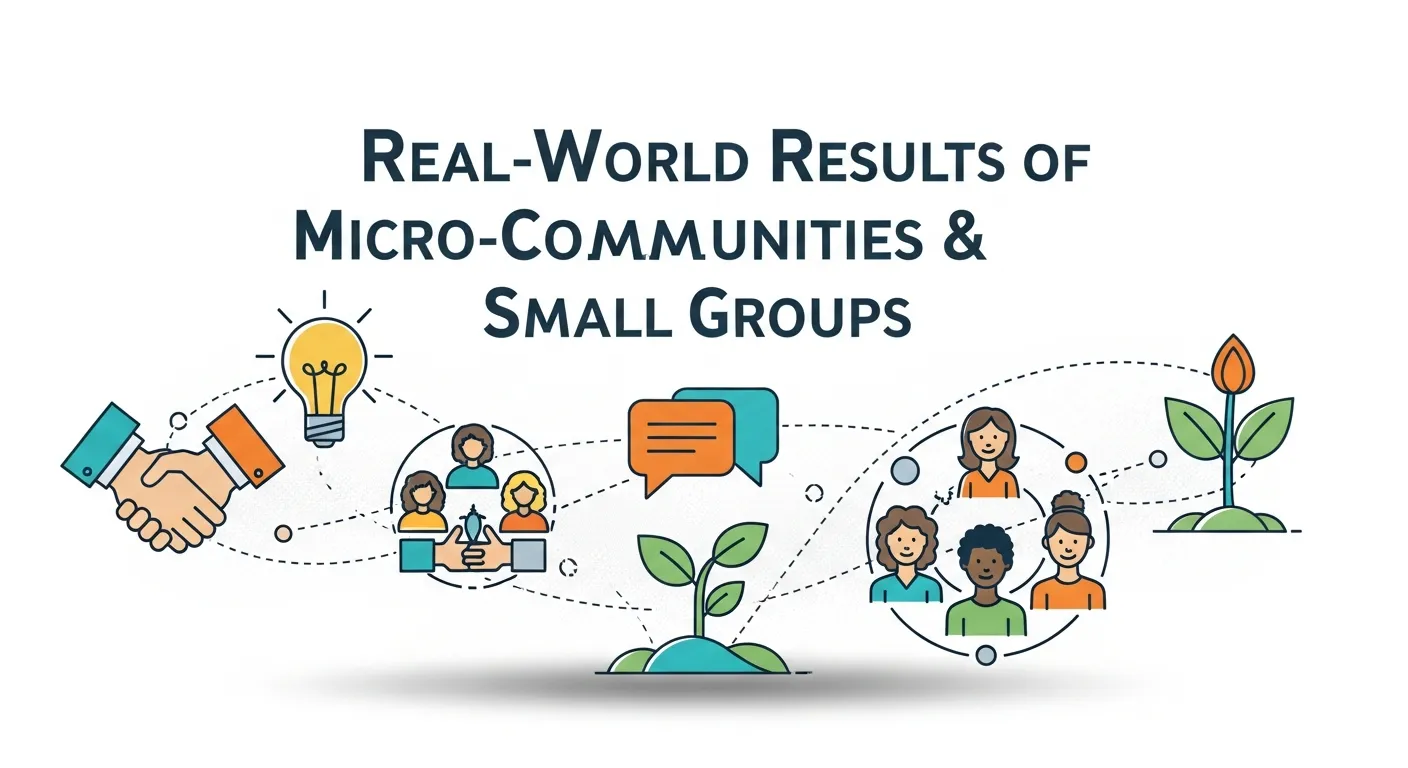
The impact of Micro-Communities Small Groups goes far beyond theory. Across industries, organizations are seeing measurable results.
A global technology company discovered that its customer support forum became far more effective after dividing one massive community into product-specific Micro-Communities Small Groups. Questions were answered faster, responses were more accurate, and customer satisfaction increased significantly.
A health and wellness platform reported a 78% increase in challenge completion rates after replacing a single large support group with smaller accountability-based Micro-Communities Small Groups. Participants felt more motivated because others noticed their progress.
Educational platforms, creator communities, and even neighborhood associations report higher engagement and retention when they shift from one-size-fits-all communities to focused Micro-Communities Small Groups.
Micro-Communities Small Groups in Business and Brands
Brands and organizations are increasingly using Micro-Communities Small Groups to build loyalty and trust. Instead of broadcasting marketing messages, they create spaces for conversation.
These groups allow customers to share feedback, exchange experiences, and feel personally connected to the brand. This emotional connection often leads to higher retention, stronger advocacy, and long-term growth.
For businesses, Micro-Communities Small Groups transform audiences into relationships. Reading continue The Economics of Community
Balancing Micro-Communities Small Groups with Larger Networks
The real power of Micro-Communities Small Groups emerges when they are intentionally connected to a larger community ecosystem. Rather than existing in isolation, these small groups work best when they complement and strengthen the broader network.
Community strategist Richard Millington describes this connection through the concept of “bridging content.” This approach allows Micro-Communities Small Groups to share insights, success stories, and collective learnings with the wider community—without sacrificing the intimacy that makes them effective.
Through this balance, members experience the best of both worlds. They build deep, trusting relationships inside Micro-Communities Small Groups while still gaining access to wider resources, visibility, and opportunities available across the larger network.
How to Start Your Own Micro-Communities Small Groups
Building effective Micro-Communities Small Groups requires intention, not just reducing numbers.
Start by defining a compelling value proposition. Ask yourself: why should someone join this Micro-Community Small Group instead of staying in the larger community?
Establish clear boundaries. Who is this group for? What unites members beyond a general interest?
Choose communication tools that match your group’s needs and personality. Many Micro-Communities Small Groups thrive on simple platforms that encourage conversation rather than distraction.
Most importantly, plan for facilitation. Decide who will welcome newcomers, encourage participation, resolve conflicts, and nurture the group’s culture over time.
Common Mistakes to Avoid with Micro-Communities Small Groups
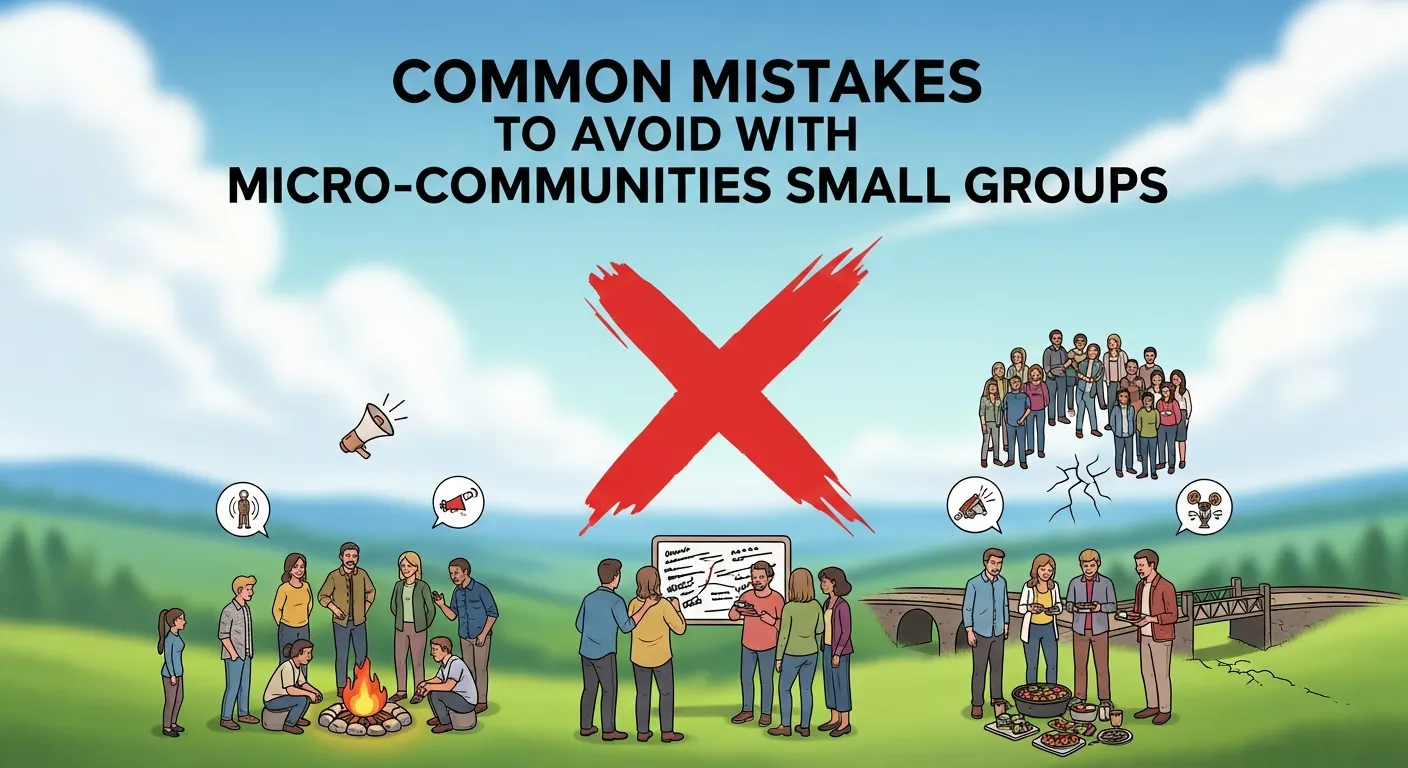
One of the most common mistakes with Micro-Communities Small Groups is neglecting leadership. Even though these groups are small, they still require active facilitation. Without clear guidance, conversations lose direction, participation drops, and members slowly disengage.
Another major mistake is having an unclear purpose. Micro-Communities Small Groups thrive on focus. When members don’t understand why the group exists or what value it provides, engagement fades quickly and the group becomes inactive.
Finally, trying to scale too fast can damage the intimacy that makes Micro-Communities Small Groups effective. Rapid growth often leads to weaker relationships and reduced trust. Healthy Micro-Communities Small Groups grow slowly and intentionally, prioritizing connection over numbers.
The Future Belongs to Micro-Communities Small Groups
As digital spaces continue to expand, people crave genuine connection—not constant noise and endless scrolling. The more crowded online platforms become, the more individuals seek spaces where their voices truly matter.
Micro-Communities Small Groups offer a human-centered response to digital overwhelm. They create intentional environments where people feel recognized, respected, and emotionally connected rather than lost in anonymity. In these smaller spaces, conversations slow down, trust grows, and relationships develop naturally.
In a world obsessed with scale and visibility, Micro-Communities Small Groups prove that smaller can be stronger, deeper, and far more meaningful. They remind us that real engagement isn’t measured by numbers, but by connection.
The question isn’t whether Micro-Communities Small Groups will shape the future of online communities—it’s which one you’ll choose to build, nurture, or belong to.
Frequently Asked Questions (FAQs)
1. What are Micro-Communities Small Groups?
Micro-Communities Small Groups are small, focused groups—often online—designed to promote meaningful interaction, trust, and long-term relationships. They bring people together around shared interests, goals, or values, creating a stronger sense of belonging than large communities.
2. How are Micro-Communities Small Groups different from large online communities?
Large communities prioritize growth, reach, and visibility, which often leads to shallow interaction. Micro-Communities Small Groups focus on depth, conversation, and personal connection, allowing members to feel seen, heard, and valued.
3. Why do people feel invisible in large online communities?
In large communities, content moves quickly and competition for attention is high. Posts are easily buried, responses are limited, and personal recognition is rare, making members feel disconnected and unnoticed.
4. What is the ideal size for Micro-Communities Small Groups?
The most effective Micro-Communities Small Groups typically have between 50 and 150 members. This size supports recognition, accountability, and meaningful interaction without overwhelming participants.
5. Are Micro-Communities Small Groups only for online platforms?
No. Micro-Communities Small Groups can exist both online and offline, including workplaces, classrooms, professional networks, and local neighborhood groups.
6. Do Micro-Communities Small Groups need moderators?
Yes. Moderators or facilitators play a vital role in welcoming members, encouraging participation, setting boundaries, and maintaining a positive and respectful environment.
7. Can businesses benefit from Micro-Communities Small Groups?
Absolutely. Businesses use Micro-Communities Small Groups to build stronger customer relationships, collect authentic feedback, improve retention, and turn audiences into loyal advocates.
8. What platforms work best for Micro-Communities Small Groups?
Platforms that support ongoing conversation work best, such as Slack, Discord, private forums, WhatsApp, or niche community platforms that minimize distractions.
9. How do Micro-Communities Small Groups increase engagement?
Because members feel recognized and socially accountable, they are more likely to participate, respond to others, and stay active over time.
10. Can Micro-Communities Small Groups scale?
Yes, but scaling works best by creating multiple small groups rather than expanding one group too large. This preserves intimacy while supporting growth.
11. What are common mistakes when building Micro-Communities Small Groups?
Common mistakes include unclear purpose, lack of leadership, poor onboarding, and trying to grow too quickly without nurturing relationships.
12. Are Micro-Communities Small Groups a long-term trend?
Yes. As digital overload increases, people are actively seeking smaller, more meaningful spaces where real connection and trust can develop.