

Micro-communities solve the problem of disconnection in large online spaces by creating smaller, intentional groups where members feel seen and valued. By aligning with natural human social limits, micro-communities increase engagement, trust, and long-term retention. They allow communities to scale without sacrificing meaningful connection, turning platforms into living ecosystems built on belonging.
Have you ever felt lost in a large online community? That sense of being just another username in a sea of avatars is all too common. This disconnection is the very problem micro-communities solve so effectively.
The Paradox of Growth
As communities grow, meaningful connections often diminish. It’s a painful irony—success in attracting members can weaken the very bonds that made the community attractive in the first place.
Traditional approaches to community building typically prioritize overall growth metrics. More members equals success, or so the thinking goes. Yet this overlooks a fundamental human need: we crave belonging in intimate circles where we’re truly known.
At Build Bonding we’ve observed this pattern repeatedly. The communities that thrive long-term aren’t necessarily the largest—they’re the ones that have mastered the art of feeling small even as they grow.
How Micro-Communities Solve the Engagement Problem
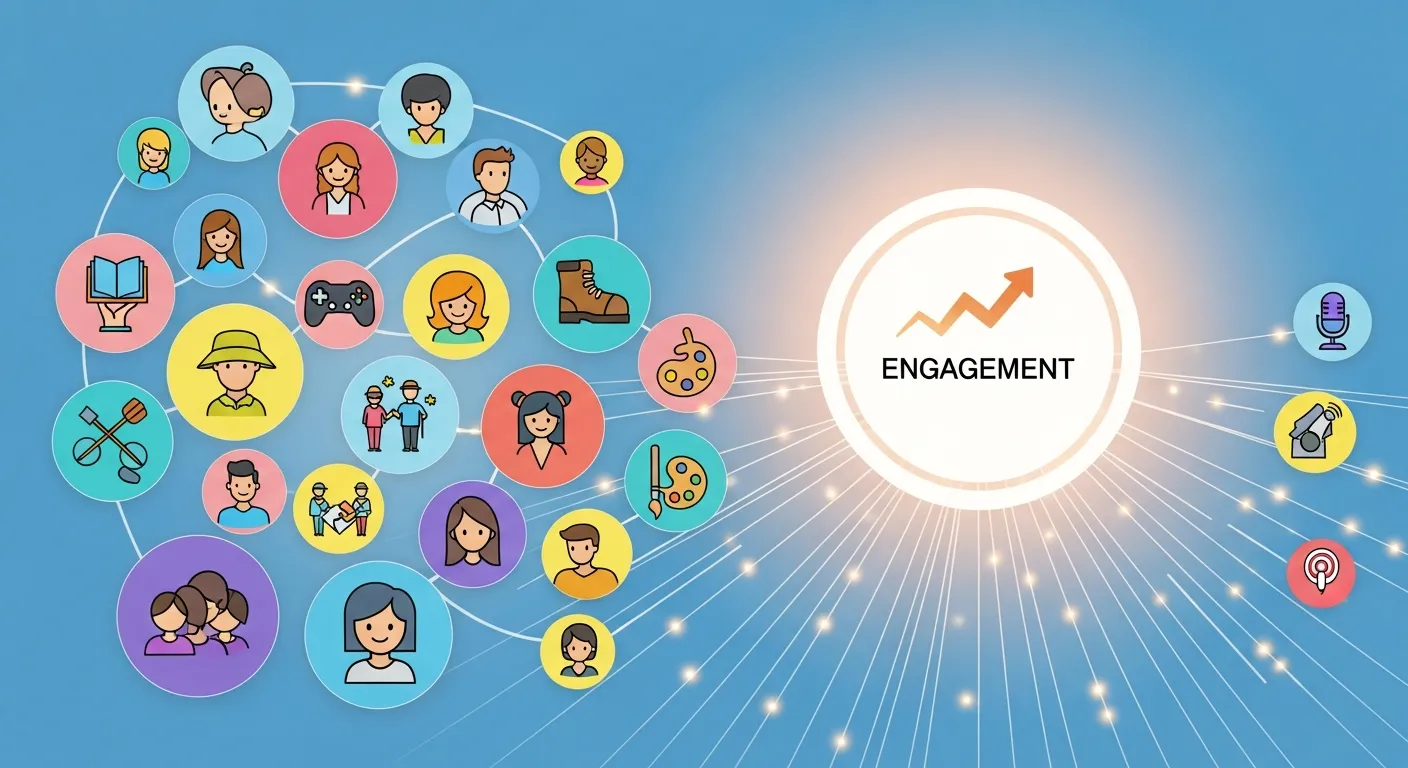
Large communities often struggle with silent members who consume content but rarely participate. This happens because people feel invisible when too many voices compete for attention. Micro-communities solve this engagement gap by shrinking the social space.
- Members feel social accountability to participate
- Conversations feel safer and less intimidating
- Feedback loops become faster and more meaningful
- Participation shifts from optional to natural
When people feel noticed, they show up more consistently.
That consistency is what transforms communities from platforms into living ecosystems.
What Are Micro-Communities?
Micro-communities are intentionally designed small groups that exist within a larger community. Think of them as neighborhoods within a city—each with its own identity, shared experiences, inside jokes, and familiar faces. While the larger community provides reach and diversity, micro-communities create the intimacy where real relationships form.
These sub-groups typically include 5 to 150 members, a range that aligns with Dunbar’s number—the cognitive limit on how many stable social relationships humans can maintain. Within this size, members can recognize one another, track ongoing conversations, and build trust naturally. Once a group grows beyond this threshold, relationships often become surface-level, and meaningful engagement starts to fade.
By keeping groups intentionally small, micro-communities make participation feel safer, more personal, and more rewarding—turning passive members into active contributors and strengthening the overall community ecosystem.
Different Types of Micro-Communities
Not all micro-communities are built the same. Their structure depends on the purpose they serve within the larger ecosystem. Understanding these types helps community builders design more intentional spaces.
- Interest-based micro-communities focused on shared passions
- Goal-oriented groups built around outcomes or challenges
- Geographic Communities in a Digital Age members
- Experience-level groups for beginners, intermediates, or experts
Each type creates belonging through relevance.
When members feel “this group is for people like me,” connection deepens naturally.
Why Micro-Communities Feel More Human

Micro-communities succeed because they align with how humans naturally build relationships. In smaller groups, members feel seen, heard, and valued rather than lost in a crowd. This sense of recognition creates emotional safety, which is essential for meaningful participation.
- Members recognize names and personalities quickly
- Conversations feel personal rather than performative
- Trust forms faster through repeated interactions
- Engagement happens naturally, not forcefully
Unlike large communities that rely on announcements and broadcasts, micro-communities thrive on dialogue.
This human-scale interaction is what transforms passive members into active contributors.
The Architecture of Intimacy
Successful micro-communities aren’t created by accident. They require thoughtful structure and intentional design:
Identity anchors give each micro-community its unique character. This might be a shared interest, goal, geographic location, or experience level.
Permeable boundaries allow members to primarily belong to one micro-community while visiting others. This balance prevents isolation while maintaining the core benefit of intimate connection.
Dedicated spaces—whether virtual channels or physical meeting locations—give each micro-community a “home” where members can reliably find their people.
Psychology Behind Micro-Communities
The effectiveness of micro-communities is deeply rooted in social psychology. Humans are wired to form bonds in limited circles where social cues, accountability, and empathy are easier to maintain. Smaller Emotions Shape Group Dynamics naturally encourage participation and cooperation.
- Reduced social anxiety compared to large groups
- Higher sense of responsibility toward fellow members
- Stronger emotional attachment to the group
- Increased willingness to share ideas and challenges
Because members feel psychologically safe, micro-communities unlock more authentic engagement.
This emotional investment is what sustains communities long after novelty fades.
Real-World Success Stories
The concept isn’t merely theoretical. Companies like Airbnb have created host clubs in major cities, allowing property owners to exchange local insights while building personal connections.
Fitness communities like Peloton have mastered this approach by forming age-based or interest-based sub-groups where members encourage each other toward their goals.
Even professional networks like LinkedIn Group demonstrate how career-focused communities can break down into industry-specific or role-based micro-communities where deeper networking occurs.
Micro-Communities in Digital-First Platforms
Online platforms benefit massively from micro-community design. In purely digital environments, intimacy doesn’t happen by accident—it must be engineered intentionally.
- Discord servers using role-based channels
- Slack communities divided by topic or skill
- Learning platforms using cohort-based groups
- Creator communities forming inner circles
These structures reduce noise and increase signal.
Micro-communities ensure digital spaces feel personal, not overwhelming.
Scaling Without Sacrificing Connection
The brilliance of micro-communities lies in their fractal nature. As your main community grows, you simply create more sub-groups rather than expanding existing ones beyond their natural capacity.
This approach creates an elegant solution to scaling problems. Your community can reach thousands or even millions of members while ensuring each person still experiences the intimacy of a small group.
Why Micro-Communities Increase Retention
Retention is one of the strongest indicators of community health. Micro-communities improve retention because leaving a small group feels like leaving people—not just a platform.
- Emotional bonds discourage silent drop-offs
- Members feel missed when inactive
- Shared rituals create attachment
- Peer relationships replace platform dependency
When relationships form, churn drops naturally.
This makes micro-communities one of the most powerful long-term retention strategies. Reading more Modern Community Builders
Micro-Communities vs Large Communities
Understanding the difference between micro-communities and traditional large communities clarifies why this model works so well.
| Aspect | Large Communities | Micro-Communities |
|---|---|---|
| Member Visibility | Low | High |
| Engagement Style | Broadcast-based | Conversation-driven |
| Trust Building | Slow | Fast |
| Sense of Belonging | Weak | Strong |
| Retention Rate | Lower | Higher |
This comparison highlights why micro-communities scale connection, not just numbers.
They maintain intimacy while still being part of a larger ecosystem.
The Role of Leaders in Micro-Communities
Leadership within micro-communities looks different from traditional community management. Instead of controlling conversations, leaders act as facilitators who nurture relationships and maintain a welcoming atmosphere.
- Encouraging quieter members to participate
- Setting positive behavioral norms
- Resolving conflicts early and empathetically
- Keeping discussions aligned with shared purpose
Strong micro-community leaders multiply connection rather than authority.
Their presence ensures the group remains inclusive, focused, and emotionally healthy.
Getting Started With Micro-Communities
Ready to implement this approach in your own community? Begin by identifying natural affinity groups that already exist. Look for clusters of members who interact frequently or share specific characteristics.
Create simple structures that formalize these connections without overcomplicating them. Often, a dedicated communication channel and light facilitation are all that’s needed initially.
Empower volunteer leaders who naturally draw others together. The most effective micro-community facilitators aren’t necessarily formal leaders but those with natural talent for making others feel welcome.
Measuring What Matters
When evaluating the success of micro-communities, traditional growth metrics only tell part of the story. Member counts and sign-ups may show reach, but they don’t reveal whether real connections are forming. To understand true community health, it’s essential to measure depth—not just scale.
Key indicators include conversation frequency within each sub-group, member retention over time, and cross-participation between different micro-communities. Just as important is qualitative feedback that reflects how members feel—whether they experience belonging, trust, and meaningful connection.
Together, these deeper signals provide a far more accurate picture of engagement and long-term sustainability than raw membership numbers alone.
Metrics That Matter in Micro-Communities
Traditional growth metrics fail to capture the real value of micro-communities. Instead, success should be measured by depth, consistency, and emotional connection.
| Metric | Why It Matters |
|---|---|
| Active Member Ratio | Indicates real participation |
| Repeat Conversations | Shows relationship continuity |
| Member Longevity | Reflects long-term belonging |
| Peer-to-Peer Interaction | Measures community independence |
| Qualitative Feedback | Captures emotional health |
These indicators reveal whether micro-communities are truly alive.
Numbers matter—but relationships matter more.
Why Micro-Communities Are the Future of Online Belonging
As digital spaces continue to expand, people increasingly seek depth over scale. Micro-communities provide the balance modern users crave—access to large networks combined with the warmth of small circles.
- Better long-term retention than large forums
- Stronger peer-to-peer support systems
- Higher contribution and collaboration rates
- More resilient communities during periods of change
In an era of digital overload, micro-communities stand out as spaces of clarity and connection.
They don’t just grow audiences—they cultivate belonging.
The Future of Connection

As our digital lives grow increasingly complex, the human need for belonging becomes more crucial. Micro-communities offer a pathway to reconcile scale with intimacy—allowing us to build vast networks without sacrificing the deep connections that make community worthwhile.
By embracing this architectural approach to community building, we can create spaces that grow without losing their soul—preserving the magic of intimate connection while extending it to more people than ever before.
Conclusion
Growth doesn’t have to come at the cost of connection. Micro-communities prove that it’s possible to scale while staying human. By designing smaller, purpose-driven groups within larger networks, community builders can foster trust, participation, and emotional investment. In a digital world overwhelmed by noise, micro-communities offer something rare and powerful: a true sense of belonging. Communities that embrace this model don’t just grow bigger—they grow stronger.
Frequently Asked Questions (FAQs)
1. What is a micro-community?
A micro-community is a small, purpose-driven group within a larger community where members can interact regularly, build trust, and develop deeper, more meaningful relationships.
2. Why do large communities often feel disconnected?
As communities grow, conversations become crowded and impersonal, causing individual members to feel unseen, unheard, and less motivated to engage.
3. How do micro-communities improve engagement?
Smaller group sizes increase social accountability, reduce intimidation, and encourage open dialogue, making participation feel natural rather than forced.
4. What is the ideal size of a micro-community?
Most micro-communities work best with 5 to 150 members, which aligns with human limits for maintaining stable social relationships and trust.
5. What types of micro-communities exist?
Micro-communities can be interest-based, goal-oriented, geographic, experience-level, or identity-based, depending on what brings members together.
6. Why do micro-communities feel more human?
Members quickly recognize names, personalities, and stories, allowing conversations to feel personal, supportive, and emotionally safe.
7. Are micro-communities only useful online?
No. Micro-communities are effective both online and offline, though they are especially valuable in digital spaces where intimacy must be intentionally designed.
8. How do micro-communities help with member retention?
Strong personal bonds make members feel valued and missed, reducing silent drop-offs and increasing long-term commitment to the community.
9. Can micro-communities scale as a community grows?
Yes. Growth happens by creating more micro-communities rather than enlarging existing ones, preserving intimacy while expanding reach.
10. What role do leaders play in micro-communities?
Leaders act as facilitators who guide conversations, encourage quieter voices, maintain psychological safety, and reinforce shared values.
11. How can a community start using micro-communities?
Start by identifying natural affinity groups, creating dedicated spaces for them, and empowering members who naturally bring people together.
12. Why are micro-communities considered the future of online belonging?
They combine the reach of large networks with the warmth of small groups, creating meaningful connection in an increasingly crowded digital world.