
Circular Economy Communities use sharing, repair, and reuse to reduce waste, strengthen local connections, support green jobs, and build resilient neighborhoods through practical, community-led sustainability initiatives.
Many communities today are turning to the circular economy to reduce waste and protect the environment. Instead of the old method of “take, make, dispose,” the circular model focuses on reuse, repair, recycling, and sharing. It helps people use resources wisely and avoid unnecessary waste.
What Is the Circular Economy and Why It Matters
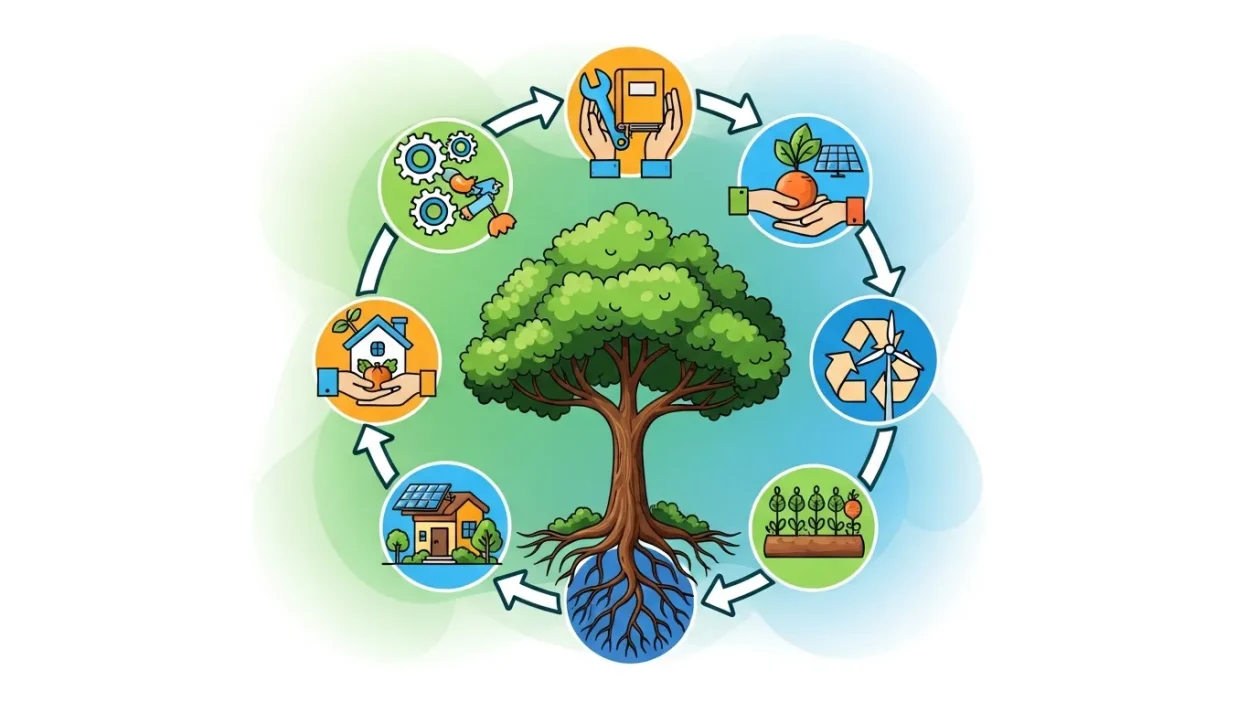
The circular economy is a new way of thinking about production, consumption, and waste. Instead of following the traditional linear model of “take, make, dispose,” the circular model encourages us to reuse, repair, recycle, and regenerate. The idea is to keep materials in use for as long as possible so we waste less and get more value from every product.
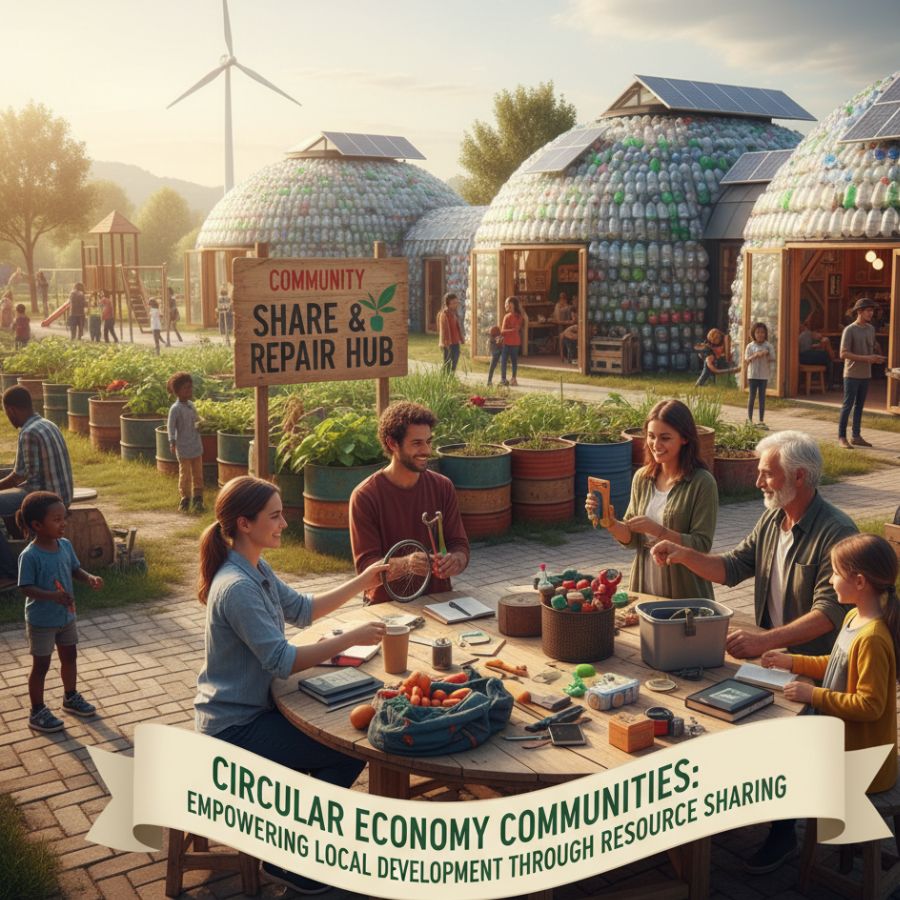
In communities, the circular economy becomes practical and visible. It means sharing items instead of buying new ones, repairing broken products instead of throwing them away, and finding creative ways to give old materials a second life. Community-led projects like repair cafés, sharing hubs, tool libraries, community fridges, and upcycling workshops make these ideas easy for everyone to take part in.
These projects help people save money, reduce waste, and use fewer natural resources. They also build local resource loops, meaning a neighborhood can rely less on long supply chains and more on what is already available within the community. This is especially important during economic disruptions or shortages, when access to new products becomes difficult.
The circular economy also provides social and economic benefits. It creates green jobs, supports local artisans and repair experts, and encourages small businesses that focus on reuse and sustainable services. At the same time, it strengthens social bonds because people work together, share tools, exchange knowledge, and support each other.
By adopting circular practices, communities become more resilient, more connected, and more environmentally responsible. It is a practical way for neighborhoods to contribute to climate action, reduce their carbon footprint, and create a healthier and more sustainable future for everyone.
Benefits for Community Development
Circular economy practices bring many valuable benefits to community development. They help reduce household waste and lower municipal disposal costs, which eases pressure on local landfills. These practices also strengthen social connections by encouraging neighbors to share, repair, and reuse items together.
Circular economy projects support local green entrepreneurship. They create opportunities for repair cafés, upcycling workshops, community makerspaces, and tool libraries to grow as small businesses or volunteer programs. This boosts the local economy while promoting sustainable habits.
Circular systems also improve community resilience. When people share resources and maintain local repair skills, communities become less dependent on global supply chains. This helps residents access essential items during economic challenges, emergencies, or supply shortages.
Overall, circular economy initiatives make communities more connected, more resource-efficient, and better prepared for the future.
Policy Support and Local Governance in Circular Economy Communities
Strong policy support and local governance play a crucial role in the success of Circular Economy Communities. Local governments can enable circular initiatives by providing shared spaces, offering small grants, simplifying permits, and supporting pilot programs. Policies that encourage repair, reuse, and resource sharing—such as right-to-repair laws or waste reduction incentives—create an environment where circular projects can thrive. When municipalities work alongside residents, nonprofits, and local businesses, Circular Economy Communities become more scalable, trusted, and long-lasting. This collaboration ensures that circular initiatives move beyond short-term projects and become integrated into local development strategies.
Key Resource Sharing Models
Communities can bring circular economy ideas to life through several practical sharing models. These models reduce waste, lower costs, and strengthen local connections.
Tool Libraries:
Residents borrow tools such as drills, saws, or gardening equipment for free or with a small membership fee. This reduces the need for every household to buy expensive tools they rarely use.
Repair Cafés:
Skilled volunteers help people fix broken items like electronics, clothing, and bicycles. This extends product life, builds repair skills, and keeps usable items out of landfills.
Community Fridges & Pantries:
Shared fridges or shelves allow neighbors to donate surplus food. Anyone can take what they need. This reduces food waste and supports families facing food insecurity.
Clothing Swaps:
These simple events let people exchange gently used clothing. They promote reuse, cut textile waste, and reduce dependence on fast fashion.
Makerspaces & Upcycling Workshops:
Shared creative spaces provide tools and materials for making new items from discarded materials. People learn DIY skills, create eco-friendly products, and support local circular innovation.
Step-by-Step Guide to Launching a Resource Sharing Initiative
Launching a successful circular economy project requires careful planning and community buy-in. Follow these steps:
- Assess Local Needs and Assets: Conduct surveys or focus groups to identify which resources are in demand and what skills volunteers can offer.
- Form a Steering Group: Recruit local champions, nonprofit partners, business owners, and municipal representatives to guide the project.
- Secure a Location and Funding: Look for donated space, grants, sponsorships, or crowdfunding to cover rent, equipment, and insurance.
- Develop Policies and Procedures: Create membership guidelines, safety protocols, booking systems, and liability waivers.
- Recruit Volunteers and Staff: Train facilitators for repair stations, librarians for tool checkout, and social media managers for promotion.
- Launch a Pilot Program: Start small, gather feedback, and refine processes before scaling up.
- Promote Widely: Use local news outlets, social media, flyers, and word of mouth to attract members and donors.
Case Studies in Circular Community Success
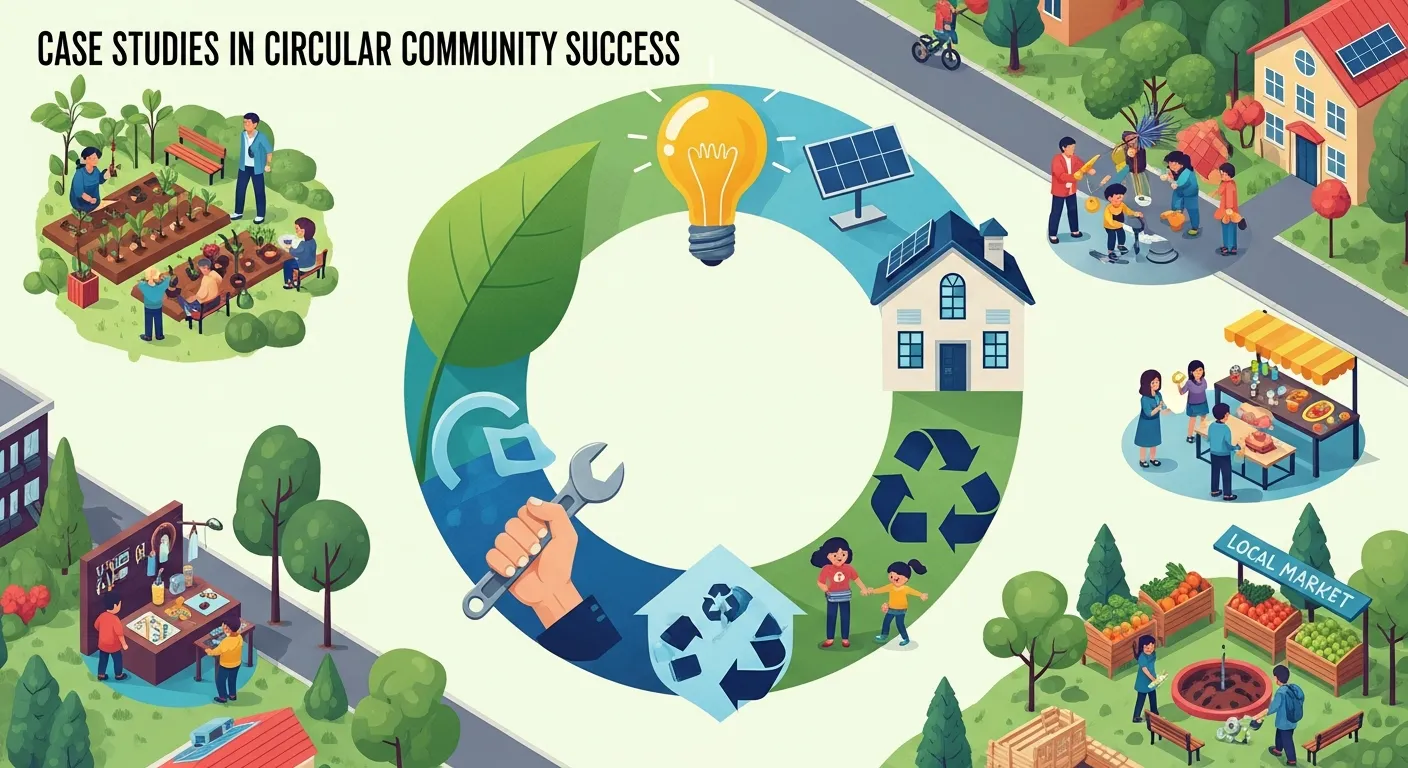
1. Greenfield Tool Library (USA): In a city of 100,000 residents, volunteers converted a vacant storefront into a fully stocked tool library. Within six months, 500 members borrowed over 2,000 tools, saving an estimated $150,000 in retail purchases and reducing community waste by 20 tons of unused equipment.
2. Repair Café Amsterdam (Netherlands): What began as a grassroots meetup evolved into a citywide network hosting weekly repair events. Over three years, volunteers fixed more than 10,000 items, cutting CO2 emissions by 58 metric tons and fostering civic pride and skill development among participants.
Measuring Impact and Success
Tracking performance is crucial for sustainability and funding. Key metrics include:
- Membership Growth: Number of active users and repeat participants.
- Items Reused or Repaired: Total volume or weight of goods diverted from landfill.
- Cost Savings: Estimated dollars saved by members versus retail prices.
- Volunteer Engagement: Hours contributed and retention rates among volunteers.
- Environmental Benefits: Reduced carbon footprint, waste diverted, and resources conserved.
The Role of Education and Awareness in Circular Economy Communities
Education and awareness are essential for the success of Circular Economy Communities. Many people are unfamiliar with concepts like repair culture, sharing systems, or reuse-based living. Workshops, school programs, community demonstrations, and storytelling help residents understand the value of circular practices. When people see real-life benefits—such as saving money, reducing waste, or learning new skills—they are more likely to participate. Awareness campaigns also help shift mindsets from ownership to access, making circular economy initiatives more widely accepted and sustainable in the long term.
Building Trust and Long-Term Participation in Circular Economy Communities
Trust is the foundation of successful Circular Economy Communities. Resource sharing depends on people feeling confident that shared items will be respected, systems will be fair, and contributions will be valued. Transparent rules, clear communication, and community-led decision-making help build this trust. Regular events, open meetings, and shared success stories strengthen relationships and keep participation high. When residents feel a sense of belonging and shared responsibility, circular initiatives become part of everyday life rather than short-term experiments. Strong trust ensures long-term engagement and helps Circular Economy Communities remain active and resilient over time.
Overcoming Common Challenges
Circular community projects often encounter obstacles such as limited funding, liability concerns, low volunteer engagement, and difficulty maintaining long-term participation. However, these challenges can be overcome with thoughtful planning and strong community partnerships.
One of the most common barriers is financial support. Many circular economy initiatives rely on donations, small budgets, or volunteer labor. To address this, communities can apply for sustainability grants, environmental innovation funds, or local government community development programs. Partnering with nonprofits, universities, and eco-focused organizations can also provide funding, resources, and technical expertise.
Liability and safety concerns are another frequent issue, especially for Community tool libraries, repair cafés, and public workshops. Collaborating with local governments or established nonprofits can help secure affordable insurance coverage and ensure compliance with safety regulations. Clear guidelines, volunteer training, and proper equipment maintenance further reduce risks.
Low participation is also a major challenge in the early stages. Many residents are unfamiliar with concepts like repair culture or shared asset systems. To increase engagement, organizers can host free introductory events, open houses, and skill-building workshops that demonstrate the value of resource sharing. Hands-on activities—such as beginner repair sessions or craft events—make these projects more approachable and enjoyable.
Visibility is equally important. Sharing early wins on social media, community newsletters, and local events helps build credibility and excitement. Showcasing real stories, such as a successful repair or a family benefiting from a community fridge, encourages others to get involved.
Finally, long-term sustainability depends on broad community involvement. Engaging diverse groups—youth clubs, senior communities, schools, local businesses, and neighborhood associations—creates a strong support network. When many different people feel ownership of the project, it becomes more resilient and continues to grow even as volunteers rotate or participation fluctuates.
By addressing these challenges with proactive solutions, circular community projects can thrive and deliver lasting social, environmental, and economic benefits.
Future Outlook: Scaling and Replication

Circular economy projects will continue to grow as more people understand their benefits. Resource-sharing hubs, repair networks, and tool libraries are likely to spread across cities and regions. Digital platforms will make it easier for communities to exchange ideas, share equipment, and learn from each other. Technologies such as real-time tracking and blockchain can improve transparency, build trust, and help manage shared assets more efficiently.
As these systems expand, circular economy practices will reshape local economies, cut waste, and reduce pressure on the environment. Most importantly, widespread adoption will strengthen community bonds and support more resilient, connected neighborhoods.
Conclusion
Building circular economy communities through resource sharing is a transformative approach to sustainable development and community building. When residents use tool libraries, repair cafés, community fridges, and upcycling workshops, they reduce waste, save money, and build trust with their neighbors. These shared spaces help people learn new skills, reuse materials, and support a greener lifestyle.
Success requires careful planning, inclusive leadership, and regular impact tracking. Even small projects—like a neighborhood repair event or a shared pantry—can grow into larger circular initiatives. By starting small and involving the community, any neighborhood can become a model for circular economy innovation. Together, shared resources and collaboration can create a more resilient, regenerative, and connected future.
FAQs: Circular Economy Communities
1. What are Circular Economy Communities?
Circular Economy Communities are neighborhoods that reduce waste and share resources through reuse, repair, recycling, and local collaboration.
2. How do Circular Economy Communities reduce waste?
They reduce waste by sharing tools, repairing items, redistributing surplus food, and encouraging reuse instead of disposal.
3. Why are Circular Economy Communities important for sustainability?
They lower environmental impact, reduce consumption, and help communities use resources more responsibly.
4. What types of projects support Circular Economy Communities?
Tool libraries, repair cafés, community fridges, clothing swaps, makerspaces, and upcycling workshops.
5. How do Circular Economy Communities strengthen community bonds?
They bring neighbors together through sharing, volunteering, skill exchange, and collective problem-solving.
6. Can Circular Economy Communities support local economies?
Yes. They create green jobs, support local repair services, and encourage small circular businesses.
7. Are Circular Economy Communities expensive to start?
Not necessarily. Many begin with donated spaces, volunteers, grants, and community partnerships.
8. How can residents participate in Circular Economy Communities?
By borrowing and donating items, volunteering skills, attending events, or helping manage shared spaces.
9. What role do local governments play?
They can provide funding, space, policy support, and help reduce legal or insurance barriers.
10. How do Circular Economy Communities improve resilience?
They reduce dependence on global supply chains and ensure access to essential resources during disruptions.
11. Can small neighborhoods create Circular Economy Communities?
Yes. Even small projects like a repair day or shared pantry can grow into long-term initiatives.
12. How do Circular Economy Communities support climate action?
By reducing waste, lowering carbon emissions, and promoting sustainable consumption habits.