

Community-powered innovation harnesses the collective intelligence, experiences, and creativity of diverse groups to solve complex problems. Unlike traditional top-down models, this collaborative approach taps into multiple perspectives, generating practical, resilient, and inclusive solutions that no individual could create alone. Real-world examples like Wikipedia, open-source software, and Foldit show how communities can drive breakthrough innovations across industries.
When complex problems loom large, the traditional approach of relying on a single expert often falls short. Today’s challenges are interconnected, fast-changing, and deeply human. Economic uncertainty, technological disruption, social inequality, climate change, and organizational complexity demand more than isolated brilliance. That’s where community-powered innovation changes the game entirely.
Community-powered innovation taps into the diverse perspectives, lived experiences, and skill sets of many individuals working toward a shared goal. Instead of depending on one voice or one viewpoint, it harnesses collective intelligence—the combined knowledge, creativity, and insight of a group. The real magic happens when different ideas collide, combine, and evolve into something entirely new.
Think of it as a potluck dinner where everyone brings their signature dish. One person contributes spice, another brings balance, and someone else adds sweetness. No single dish defines the meal, yet together they create something memorable. The result is a feast far richer and more satisfying than anything one person could prepare alone. That’s the true essence of community-powered innovation.
Why Traditional Innovation Models Fall Short

For decades, innovation was driven by closed rooms, elite experts, and top-down decision-making. Leaders brainstormed, consultants advised, and strategies were rolled out to everyone else. While this approach worked in slower, more predictable environments, it struggles in today’s complex, fast-changing world.
Traditional innovation models often suffer from several critical limitations:
- Limited perspectives: Relying on a small group of experts can create blind spots and narrow solutions, missing important insights from other stakeholders.
- Slow feedback loops: Hierarchical decision-making delays learning and adaptation, making it difficult to respond quickly to emerging challenges.
- Overreliance on hierarchy: Good ideas may be filtered out or silenced, reducing creativity and stifling innovation from unexpected sources.
- Lack of real-world context: Top-down approaches often overlook the insights of end users, frontline workers, and people with lived experience of the problem.
When innovation is confined to a small group, it may appear polished on paper but often fails in practice. Solutions developed in isolation can be rigid, short-sighted, and difficult to implement effectively.
In contrast, community-powered innovation opens the door to broader participation, continuous feedback, and real-world validation. By engaging diverse perspectives, this approach uncovers hidden opportunities, fosters adaptability, and ensures solutions are more resilient and inclusive. It acknowledges that no single person—no matter how brilliant—can fully grasp every dimension of a complex problem.
What Is Community-Powered Innovation?
Community-powered innovation is a collaborative approach where communities—rather than isolated individuals or small teams—actively participate in problem-solving, idea generation, and solution development. It leverages the combined knowledge, skills, and perspectives of diverse participants to create more effective, resilient, and inclusive solutions.
These communities can include:
- Customers and end users who provide real-world insights and feedback.
- Employees across roles and departments who bring practical knowledge and operational expertise.
- Industry peers and partners who introduce new ideas and shared learning.
- Researchers, educators, and practitioners who offer specialized knowledge.
- People with lived experience who bring empathy and unique problem-solving perspectives.
By involving diverse contributors, community-powered innovation shifts innovation from being something done for people to something built with them. This approach encourages collaboration, iterative refinement, and continuous improvement, resulting in solutions that are practical, widely accepted, and sustainable.
The Power of Collective Intelligence
Collective intelligence emerges when groups of people think, learn, and solve problems together. It doesn’t require everyone to agree—in fact, it thrives on valuing differences and diverse perspectives. The interaction of multiple viewpoints often uncovers insights and opportunities that individuals working alone might miss.
In community-powered innovation, collective intelligence works in several key ways:
- Disagreement sparks better questions: Constructive debate challenges assumptions and leads to more thorough, well-considered solutions.
- Diversity improves decision quality: A mix of skills, experiences, and backgrounds helps identify risks, uncover blind spots, and generate more creative ideas.
- Shared ownership increases commitment: When participants contribute to the solution, they feel responsible for its success, boosting engagement and follow-through.
- Continuous input enables rapid adaptation: Ongoing feedback and contributions allow solutions to evolve quickly in response to real-world conditions.
By combining these elements, many minds working together can detect patterns, connections, and innovative approaches that would be invisible to any single person. This is why community-powered innovation consistently outperforms siloed or top-down approaches, especially in complex, fast-changing environments where adaptability and insight are critical.
Real-World Success Stories of Community-Powered Innovation
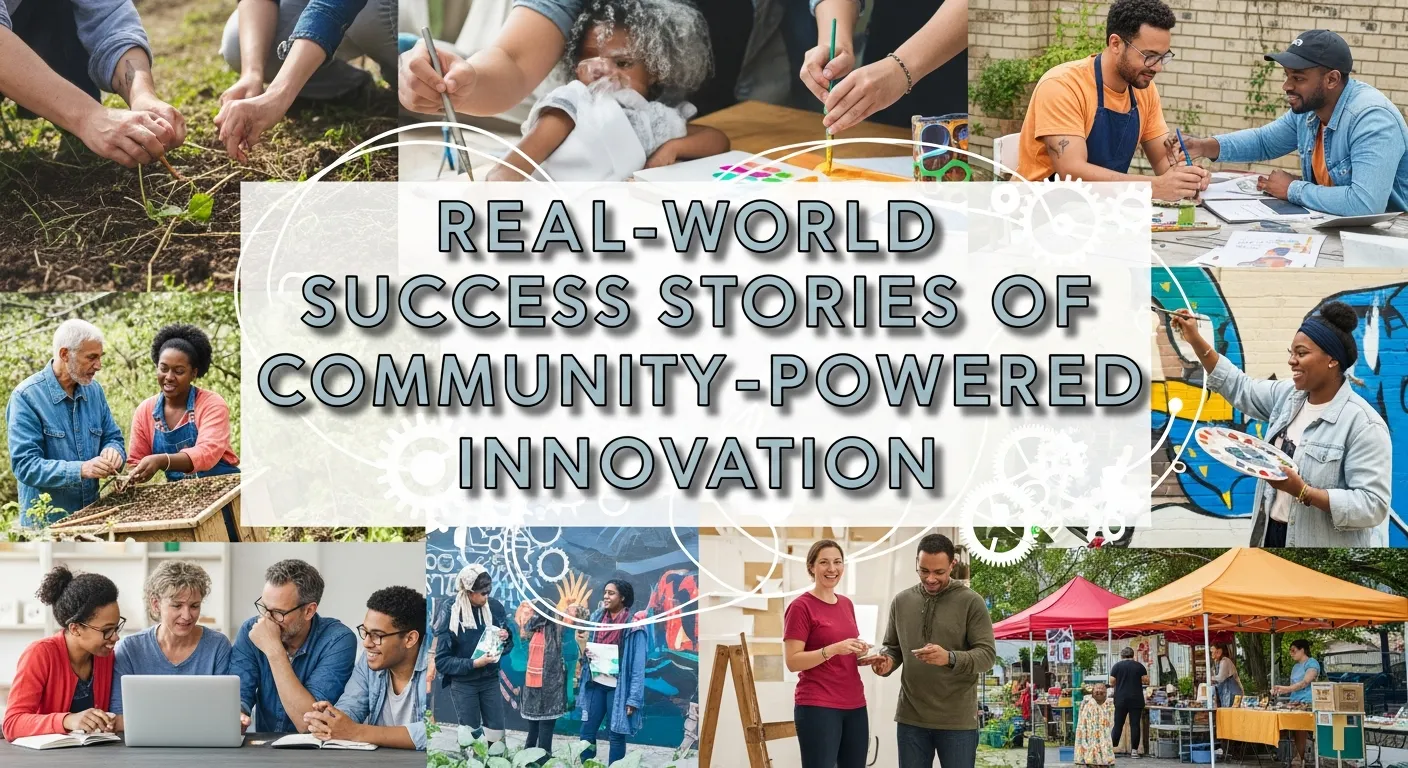
Community-powered innovation isn’t just a theory—it’s already transforming industries across the globe.
Wikipedia: Knowledge Built by the Crowd
Wikipedia revolutionized knowledge sharing by enabling millions of contributors to collectively build the world’s largest encyclopedia. Instead of relying on a small group of credentialed experts, it embraced community-powered innovation at a global scale.
The result is unmatched depth, constant updates, and coverage across cultures and languages. No traditional publisher could replicate the scale, speed, or diversity of knowledge created by this community-driven model.
Open-Source Software: Innovation Without Borders
The open-source movement is one of the strongest and most enduring examples of community-powered innovation. Linux, originally developed by Linus Torvalds, is now maintained and improved by thousands of contributors worldwide.
Thanks to community-driven development, Linux powers:
- Smartphones and mobile devices
- Cloud infrastructure and data centers
- Supercomputers used for scientific research
- Embedded systems in everyday technology
This level of robustness, security, and adaptability would be impossible without collective collaboration.
Foldit: When Gamers Solve Scientific Problems
Foldit transformed protein folding—a complex scientific challenge—into an online puzzle game. Non-scientists from around the world contributed solutions that helped researchers make real medical breakthroughs.
This example highlights a powerful truth: community-powered innovation allows insights to emerge from unexpected places. Expertise can come from passion, curiosity, and pattern recognition—not just formal credentials.
Breaking Down Barriers Through Community-Powered Innovation
Traditional innovation often happens behind closed doors, restricted by organizational silos and rigid roles. Community-powered innovation tears down these walls.
When diverse voices are invited into the process:
- Solutions become more inclusive and Human-Centered Design
- Hidden needs and pain points surface
- Assumptions are challenged and refined
- Creativity and experimentation increase
People with lived experience bring insights that no outsider or consultant can replicate. A frontline worker may understand operational gaps better than leadership. A customer may imagine use cases engineers never considered. In community-powered innovation, good ideas can come from anywhere.
The Role of Psychological Safety in Innovation Communities
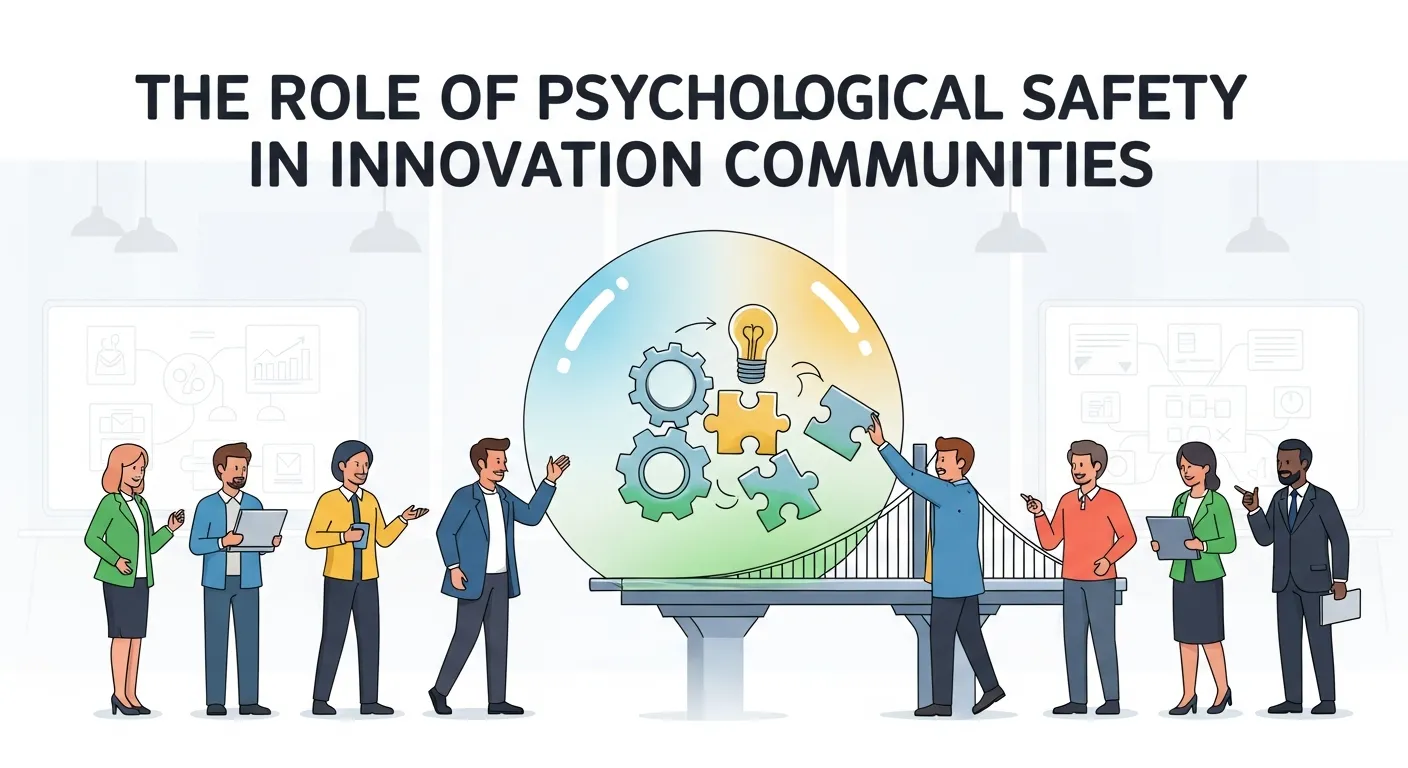
One of the most critical foundations of community-powered innovation is psychological safety.
People must feel safe to:
- Share unfinished or imperfect ideas
- Ask questions without fear of judgment
- Disagree respectfully with others
- Experiment, fail, and learn openly
Without psychological safety, communities grow quiet and risk-averse. With it, they become engines of creativity, learning, and continuous improvement. Psychological safety turns participation into contribution.
How to Build a Successful Community-Powered Innovation Ecosystem
At BuildBonding, we’ve seen firsthand how intentional community design leads to breakthrough solutions. Strong innovation communities don’t emerge by accident—they are carefully cultivated.
1. Define a Shared Purpose
Every successful community-powered innovation effort begins with a clear and compelling purpose. Participants need to understand why they’re contributing and what impact they’re working toward.
2. Frame Clear Challenges
Open-ended creativity thrives when guided by focused challenges. Clear problem statements help channel collective energy and prevent confusion or drift.
3. Ensure Diversity of Voices
Diversity fuels innovation. Aim for diversity in:
- Backgrounds and cultures
- Skills and expertise
- Life experiences
- Thinking styles and perspectives
The broader the perspectives, the stronger and more adaptable the outcomes of community-powered innovation.
4. Enable Easy Participation
Lower barriers to entry. Provide simple tools, transparent processes, and accessible platforms so people can contribute without friction or intimidation.
5. Recognize and Celebrate Contributions
Recognition builds momentum. When people feel seen and valued, they remain engaged and motivated to contribute over time.
Community-Powered Innovation in a Complex World
Today’s biggest challenges—climate change, public health crises, social inequality, and economic resilience—are too complex for isolated problem-solving.
They demand:
- Systems thinking across disciplines
- Local and global perspectives
- Continuous learning and adaptation
- Collective ownership and action
Community-powered innovation brings these elements together. It transforms fragmented knowledge into shared understanding—and shared understanding into meaningful, scalable solutions.
The Future Is Collaborative
As complexity increases, collaboration becomes essential—not optional.
Organizations, governments, and communities that embrace community-powered innovation will be better equipped to adapt, evolve, and lead in uncertain times. Those that cling to closed, top-down models risk becoming irrelevant.
The future belongs to those who can mobilize collective intelligence, nurture trust, and innovate together.
By harnessing the power of community-powered innovation, we unlock possibilities that simply don’t exist when we work alone.
A Final Reflection
In an increasingly complex world, relying on a single expert is no longer enough. Community-powered innovation empowers organizations, governments, and communities to solve problems collaboratively, uncover hidden insights, and create solutions that are adaptable, inclusive, and impactful. By fostering diversity, psychological safety, and shared purpose, we unlock opportunities that are simply impossible when working in isolation.
FAQs on Community-Powered Innovation
1. What is community-powered innovation?
Community-powered innovation is a collaborative approach where diverse groups of people work together to generate ideas, solve problems, and develop solutions that are practical, inclusive, and scalable. It emphasizes co-creation over top-down decision-making, turning collective knowledge into actionable results.
2. Why is community-powered innovation important?
It allows organizations and communities to leverage collective intelligence, uncover blind spots, and develop solutions that are more resilient and effective than those created by individuals alone. This approach drives faster learning, better problem-solving, and stronger engagement from stakeholders.
3. How does community-powered innovation differ from traditional innovation?
Unlike traditional top-down models that rely on a few experts, community-powered innovation actively engages diverse voices, encourages experimentation, and values real-world insights. It prioritizes collaboration, inclusivity, and adaptive problem-solving over hierarchical decision-making.
4. Who can participate in community-powered innovation?
Participants can include customers, employees, industry peers, researchers, educators, and anyone with relevant lived experience. The wider the range of contributors, the richer and more effective the solutions that emerge.
5. What role does collective intelligence play in community-powered innovation?
Collective intelligence enables diverse ideas to collide, evolve, and improve each other. This leads to better decision-making, higher creativity, and more practical, innovative solutions—especially when tackling complex or systemic challenges.
6. Can community-powered innovation solve global challenges?
Yes. By mobilizing diverse contributors across regions and sectors, it has been successfully applied to climate change, public health, social inequality, technological advancement, and other large-scale problems that no single organization or individual could address alone.
7. How do organizations build a successful innovation community?
Successful communities start with a shared purpose, clearly defined challenges, diverse participation, low barriers to contribution, and recognition of contributions. These elements foster engagement, trust, and sustained collaboration over time.
8. Why is psychological safety crucial in community-powered innovation?
Psychological safety allows participants to share unfinished or unconventional ideas, ask questions freely, experiment, and even fail without fear of judgment. This openness fuels creativity, learning, and continuous improvement in innovation communities.
9. What are real-world examples of community-powered innovation?
Wikipedia, Linux (open-source software), and Foldit are prime examples. These platforms demonstrate how communities of contributors can create large-scale, high-impact solutions that surpass what any individual or closed team could achieve.
10. How does community-powered innovation improve inclusivity?
By actively involving diverse voices, it uncovers hidden needs, addresses multiple perspectives, and ensures that solutions reflect the experiences of different stakeholders. Inclusivity strengthens adoption, relevance, and long-term impact.
11. Can small businesses use community-powered innovation?
Absolutely. Small businesses can engage employees, customers, and local communities to co-create solutions, improve products, enhance services, and build stronger loyalty. Community-powered approaches help level the playing field for smaller organizations.
12. What is the future of community-powered innovation?
As challenges grow increasingly complex, collaborative innovation will become essential. Organizations, communities, and governments that embrace community-powered innovation will be better equipped to adapt, innovate, and thrive, while those relying solely on closed, hierarchical models risk falling behind.