
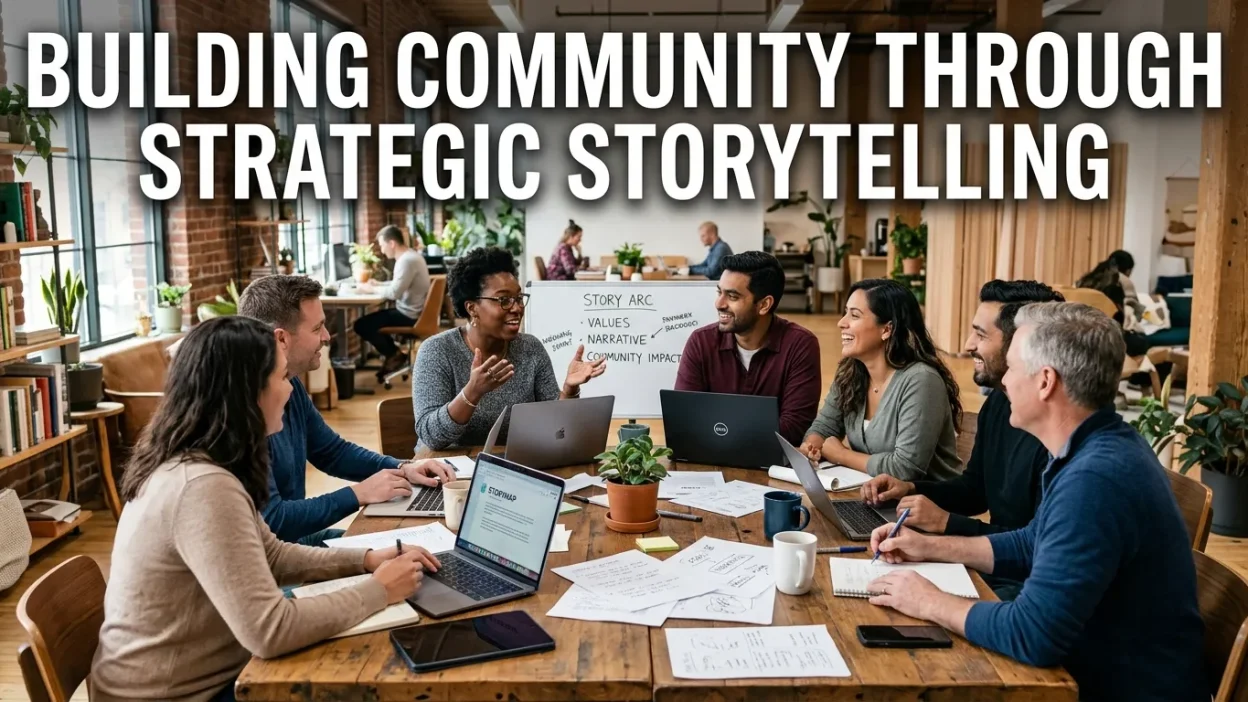
Strategic community storytelling transforms passive audiences into passionate advocates. By sharing authentic narratives and fostering meaningful connections, you can build a loyal following that directly drives long-term brand growth and success.
Effective community storytelling connects people through relatable narratives and authentic shared values. This comprehensive guide covers proven frameworks, actionable strategies, and critical mistakes to avoid. You will learn exactly how to transform your brand messaging into a collaborative ecosystem that drives deep loyalty, organic advocacy, and sustainable business growth.
The Foundation of Authentic Connection
Humans are hardwired for stories. When organizations shift from broadcasting messages to facilitating genuine conversations, they tap into a powerful psychological trigger. The essence of community storytelling lies in decentering the brand and elevating the voices of the people who use the product, share the mission, or participate in the culture. This approach builds trust faster than traditional marketing because it relies on peer validation and emotional resonance rather than corporate promises.
To succeed in this arena, you must first understand the foundational elements that make a narrative compelling to a group. It requires active listening, a deep understanding of your audience’s pain points, and the willingness to let your most passionate users shape the conversation. When executed correctly, community storytelling becomes a self-sustaining engine for growth, retention, and innovation.
Understanding the Psychology of Shared Narratives
People join groups to find belonging, status, and identity. A strong brand narrative provides the framework for this identity. When members see themselves reflected in the stories you highlight, their connection to your organization deepens. This psychological alignment is what separates a transactional customer base from a thriving, deeply engaged ecosystem.
Moving From Broadcast to Dialogue
Traditional marketing operates as a one-way street. A company creates a message and pays to distribute it to a target demographic. In contrast, modern strategies rely on dialogue. You present a theme, and your members respond, add their own experiences, and reshape the message. This interactive loop generates higher audience engagement and ensures that your content remains relevant to the people who consume it. High-authority sources on behavioral psychology suggest that participatory narratives increase retention rates significantly.
How to Craft a Compelling Strategy
 Building a successful content engine requires more than just collecting quotes from users. It demands a structured approach to gathering, curating, and distributing narratives across the right channels. You must develop a system that consistently surfaces the best stories without making them feel manufactured or overly polished.
Identifying the Right Voices
Not every customer story will resonate with your broader audience. You need to look for individuals who articulate the core values of your organization naturally. Look for members who are already helping others in your forums, creating user-generated content on social media, or actively participating in your events. These are your natural ambassadors. By elevating their voices, you validate their contributions and inspire others to participate.
Formulating the Core Message
Every piece of content you produce should tie back to a central theme. Are you empowering small business owners? Are you democratizing access to education? When your core message is clear, it becomes easier to identify which member stories align with your mission. This consistency helps build a cohesive emotional connection over time, making your organization recognizable and trusted within your industry.
Structured Content Frameworks
To scale your efforts, you need repeatable frameworks. Relying on random bursts of inspiration will lead to inconsistent publishing schedules and disjointed messaging. Implement structural guidelines that your internal team and external contributors can easily follow.
The Hero’s Journey in Group Dynamics
The classic Hero’s Journey framework can be adapted for group narratives. Instead of a single protagonist overcoming a challenge, frame the collective group as the hero facing a shared industry problem. Your product or service acts as the mentor or tool that helps them achieve victory. This subtle shift empowers your audience and makes them the focal point of the success story.
Utilizing User-Generated Content
User-generated content is the lifeblood of authenticity. Encourage your members to share their own experiences, photos, and videos. Create dedicated hashtags, host contests, and provide templates to make participation frictionless. When you feature this content on your official channels, you not only save time on content creation but also provide incredible social proof to prospective members.
Comparison: Traditional Marketing vs. Community-Driven Content
To fully grasp the impact of this approach, it helps to compare it directly with legacy marketing tactics.
|
Feature |
Traditional Marketing |
Community-Driven Content |
|---|---|---|
|
Primary Voice |
Corporate / Brand |
Users / Advocates |
|
Direction |
One-way broadcast |
Two-way dialogue |
|
Trust Factor |
Low to Medium |
Very High |
|
Content Production |
Expensive, resource-heavy |
Scalable, organically sourced |
|
Primary Goal |
Direct sales / Conversions |
Loyalty, advocacy, retention |
|
Longevity |
Short-term campaign-based |
Long-term sustainable ecosystem |
Expert Insights
 To maximize the impact of your efforts, we must look at how top leaders in the industry manage their ecosystems. Building a dedicated following requires patience, empathy, and strategic foresight.
“The most successful brands today are those that act as facilitators rather than dictators of culture,” notes leading marketing strategist Seth Godin. By giving your audience the tools to tell their own stories, you multiply your reach exponentially.
Another critical insight is the importance of vulnerability. Perfect, polished corporate case studies often feel sterile. Highlighting stories where a member struggled, made mistakes, and eventually found success through shared experiences creates a much stronger bond with the reader. Authenticity requires transparency, and transparency breeds trust.
Common Mistakes to Avoid
Even well-intentioned organizations can stumble when trying to implement these strategies. Navigating the nuances of human connection requires a careful touch. Below are the most frequent missteps that can derail your progress.
Over-Editing Authentic Voices
When a user submits a raw, passionate story, the instinct of a marketing department is often to sanitize it. They remove the colloquialisms, fix the grammar, and inject corporate jargon. This destroys the authenticity of the message. While basic readability edits are fine, you must preserve the unique voice and tone of the original storyteller. If it sounds like a PR team wrote it, the audience will immediately tune it out.
Faking Engagement
Never create fake personas or artificially inflate comments to make a space look more active than it is. Digital communities thrive on genuine interaction. If members discover that the narratives are fabricated, the resulting breach of trust is often irreparable. It is always better to have a small, highly engaged group of real people than a massive, silent audience padded by bots.
Ignoring the Silent Majority
In any group, a small percentage of people will create the vast majority of the content. However, the silent majority who simply read and observe are just as important. Ensure that the stories you highlight are relevant to these passive observers. Provide low-barrier ways for them to participate, such as anonymous polls or simple reaction buttons, to gradually bring them into the active fold.
Measuring the Impact of Your Strategy
You cannot manage what you do not measure. While emotional resonance can feel abstract, there are concrete metrics you can track to ensure your community storytelling strategy is driving tangible business results.
Tracking Qualitative Metrics
Qualitative data involves the sentiment and depth of the conversations happening around your brand. Are members using your branded terminology naturally? Are they defending your organization when critics appear online? Are the stories they share aligning with your intended core message of community storytelling? You can track these elements through social listening tools and regular sentiment analysis surveys that reveal how your narrative is being received.
Tracking Quantitative Metrics
Advanced Tactics for Scaling Narratives
 As your organization grows, manually curating every story becomes impossible. You need advanced tactics to scale your operations without losing the authentic feel that made you successful in the first place.
Empowering Community Managers
Your community managers are the frontline journalists of your organization and play a vital role in successful community storytelling. Empower them to proactively reach out to interesting members, conduct brief interviews, and draft content. Give them the autonomy to publish stories quickly without getting bogged down in weeks of editorial review. Speed and relevance are often more important than absolute perfection in a fast-moving digital landscape.
Creating Ambassador Programs
Formalize your relationship with your most active members by creating an ambassador program that strengthens community storytelling efforts. Provide these individuals with exclusive access, early product releases, and direct lines of communication with your leadership team. In exchange, ask them to document their journey and share their insights with the broader audience. This creates a reliable, high-quality stream of peer-led content.
Leveraging Multi-Channel Distribution
Conclusion
Mastering community storytelling requires a fundamental shift from corporate broadcasting to authentic, peer-led conversations. By elevating your members’ voices, analyzing engagement data, and scaling your efforts through structured frameworks, you build undeniable trust and loyalty. Start identifying your most passionate advocates today, and invite them to share their journey to transform your brand into a thriving, collaborative ecosystem.
Frequently Asked Questions
1. What exactly is community storytelling?
It is the strategic practice of utilizing the authentic experiences, challenges, and successes of your audience to build a cohesive brand narrative through community storytelling. Instead of the company talking about itself, the members of the ecosystem share their stories, which fosters deeper trust, emotional resonance, and organic growth.
2. How does this differ from standard content marketing?
Standard content marketing often relies on a brand acting as the sole authoritative voice broadcasting to a target audience. In contrast, community storytelling acts as a facilitator, elevating user-generated content and peer-to-peer dialogue to build a decentralized, highly trusted narrative ecosystem.
3. How do I find the right stories to tell?
Look for highly engaged members in your forums, social media channels, or customer support tickets. Identify users who naturally align with your brand values and have achieved a transformation or overcome a specific challenge using your product or service through authentic community storytelling.
4. What is the biggest mistake brands make with this strategy?
The most common mistake is over-editing or sanitizing user stories to make them sound like polished corporate press releases. This strips away the authenticity and vulnerability that makes community storytelling so powerful and relatable in the first place.
5. Can B2B companies use this approach effectively?
Absolutely. B2B buyers are still human beings who crave connection and peer validation. Highlighting case studies where specific teams or individuals within a client company overcame operational challenges builds massive credibility and trust through community storytelling in the B2B space.
6. How do I measure the success of these narratives?
Track quantitative metrics like dwell time, content shares, user-generated content volume, and retention rates. Additionally, monitor qualitative metrics such as brand sentiment, the depth of comments, and the organic use of your brand’s specific terminology by your audience to evaluate the impact of community storytelling.
7. What if my audience is too small to generate content?
Start by telling your own authentic founder story or the internal stories of your early team members. As you attract your first few users, personally interview them and write the stories on their behalf (with their permission) to seed the ecosystem and encourage future participation in community storytelling.
8. How often should we publish user-focused stories?
Consistency is more important than sheer volume. Aim for a regular cadence that you can maintain long-term, whether that is one deep-dive spotlight per month or a weekly short-form highlight. Integrate these stories naturally into your existing editorial calendar to strengthen community storytelling efforts.
9. Do I need to offer incentives for people to share their experiences?
While tangible rewards (like discounts or swag) can boost initial participation, the best stories usually come from intrinsic motivation. Highlighting a user’s success gives them social status and professional visibility, which is often a more powerful incentive than a monetary reward in community storytelling campaigns.