
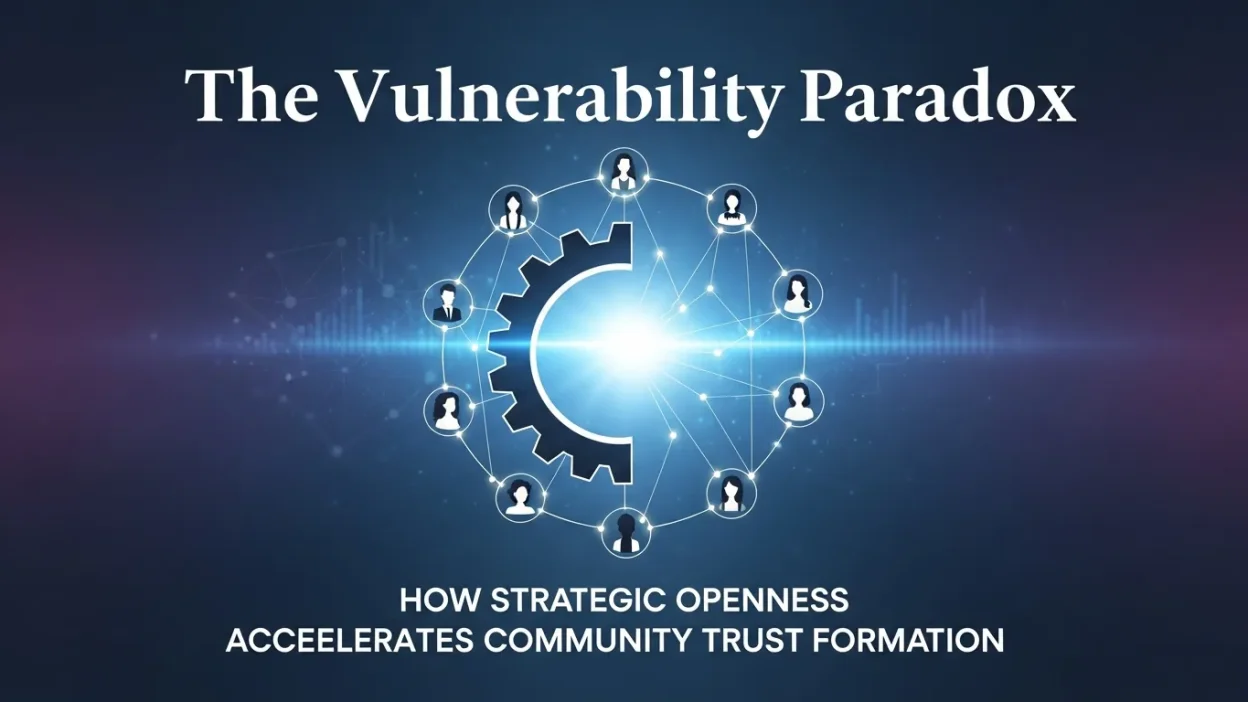
The Vulnerability Paradox shows that strategic openness—sharing personal insights, challenges, or uncertainties—accelerates trust and deepens community connections. By embracing calculated vulnerability, members and leaders foster psychological safety, stronger engagement, and meaningful relationships. Communities that practice this paradox thrive through reciprocity, authentic interactions, and inclusive cultural norms.
In a world obsessed with projecting strength and perfection, vulnerability remains our most underutilized social currency. The vulnerability paradox describes a fascinating human tendency – the more we open ourselves to potential emotional harm, the faster we build genuine trust with others. This counterintuitive principle operates at the heart of meaningful community development.
When we embrace strategic vulnerability, we create shortcuts to connection that might otherwise take months or years to develop. These authentic moments of openness signal to others that we trust them enough to share our true selves, creating a reciprocal cycle that accelerates relationship formation.
Understanding the Vulnerability Paradox in Community Building
The Vulnerability Paradox highlights a counterintuitive principle: the more we allow ourselves to be seen authentically, even at the risk of emotional exposure, the faster we develop genuine trust and deeper connections. Strategic vulnerability accelerates relationship formation and fosters psychological safety within communities.
- Calculated openness signals trust and invites reciprocity
- Builds authentic relationships faster than surface-level interactions
- Strengthens Online Community Management and Member
This paradox demonstrates that vulnerability is not a weakness; instead, it serves as a catalyst for meaningful social bonds.
Understanding the Mechanics of Strategic Vulnerability
Strategic vulnerability isn’t about oversharing or emotional dumping. Rather, it involves calculated moments of transparency that reveal your authentic character while maintaining appropriate boundaries. This delicate balance transforms vulnerability from a weakness into a strength.
The neuroscience behind this phenomenon is compelling. When we witness vulnerability in others, our brains release oxytocin – the bonding hormone associated with trust and connection. This neurochemical response physically primes us for deeper social engagement and community formation.
Not coincidentally, the strongest communities are built on foundations of mutual vulnerability. As we’ve explored at Build Bonding, these authentic exchanges create the psychological safety necessary for community members to fully engage and contribute.
Three Stages of Strategic Vulnerability
Applying the Vulnerability Paradox in practice involves three consistent stages:
- Initial Disclosure: Sharing something meaningful but controlled to signal authenticity
- Reciprocity Response: Others respond with their own vulnerability, creating feedback loops of trust
- Community Integration: Regular exchanges of openness embed vulnerability norms into the community culture
Table: Stages of Strategic Vulnerability
| Stage | Action | Community Impact |
|---|---|---|
| Initial Disclosure | Share a personal insight or challenge | Sets the tone for authenticity |
| Reciprocity Response | Members share their own experiences | Amplifies trust and engagement |
| Community Integration | Repeated vulnerability exchanges | Creates psychological safety and belonging |
When implemented carefully, these stages accelerate trust formation and strengthen bonds among community members.
The Three Stages of Strategic Vulnerability
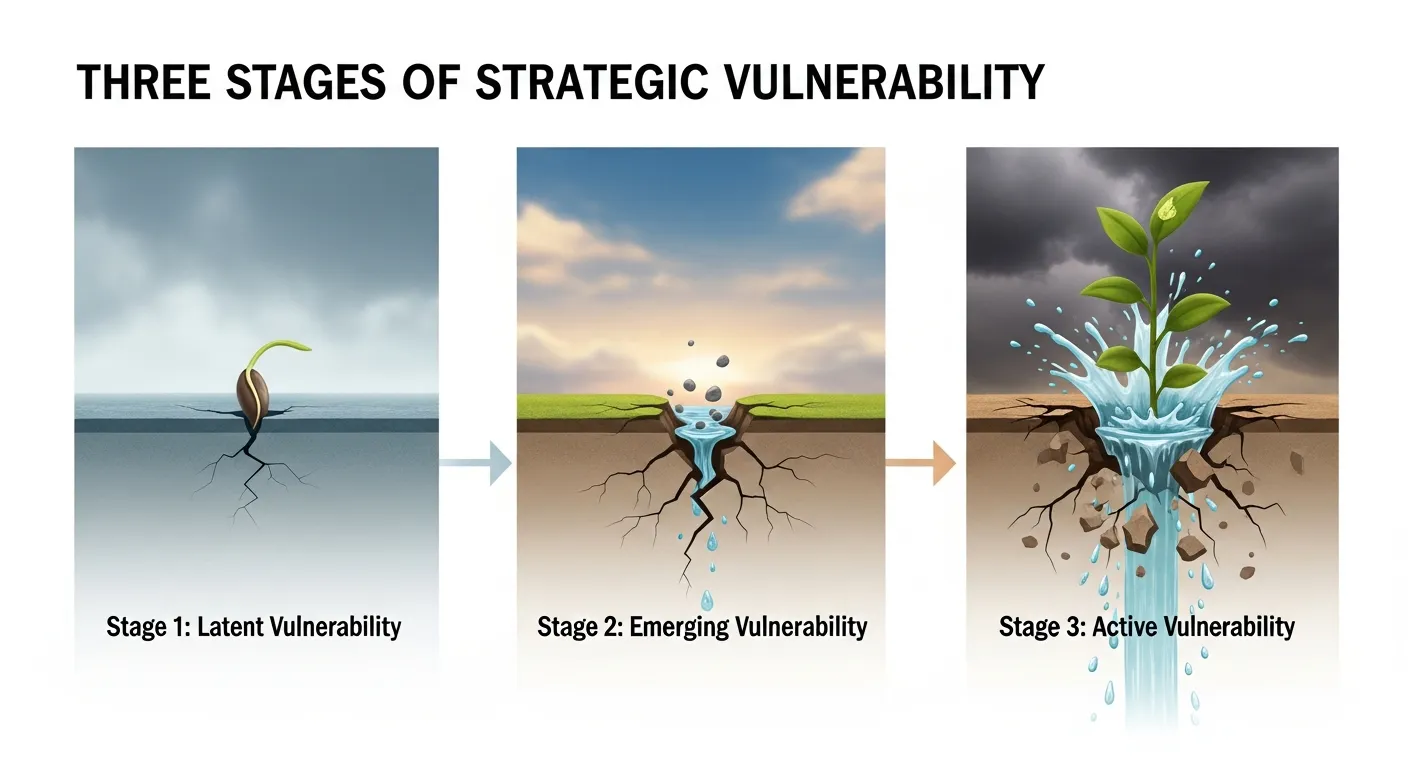
Effectively using vulnerability to build community trust follows a consistent pattern:
The Initial Disclosure
The process begins with a calculated first step – sharing something meaningful but not overwhelming. This initial disclosure sets the tone for authentic interaction. The most effective vulnerability displays acknowledge reality without dwelling in negativity, showing both awareness and resilience.
The Reciprocity Response
Once vulnerability has been shared, the community dynamics shift. Others frequently respond with their own disclosures, creating a feedback loop of increasing trust. This reciprocity amplifies connection exponentially compared to surface-level interactions.
The Community Integration
As vulnerability exchanges continue, they weave into the community’s fabric, establishing norms of authenticity and support. Members begin to identify strongly with the group, creating a self-reinforcing cycle of belonging.
Neuroscience Behind the Vulnerability Paradox
The Vulnerability Paradox is not just a social phenomenon; it is backed by neuroscience. When we witness authentic vulnerability in others, our brains release oxytocin, the bonding hormone associated with trust and empathy. This chemical response primes individuals to form deeper connections, making the community environment more open and receptive. By strategically sharing personal insights or challenges, leaders and members alike can create a neurochemically supported foundation for lasting relationships. Over time, these authentic interactions foster collective psychological safety, allowing communities to thrive in both online and offline spaces.
Vulnerability in Leadership: Setting the Tone
Leaders who demonstrate appropriate vulnerability transform their communities from the top down. By acknowledging challenges, showing humanity, and being transparent about decision processes, vulnerable leaders create psychological safety that empowers everyone around them.
This approach contrasts sharply with traditional leadership models focused solely on projecting strength. Modern communities builders respond more positively to authentic leadership that balances capability with transparency.
The most effective community builders understand that vulnerability isn’t weakness – it’s strategic strength that accelerates human connection.
Practical Applications of the Vulnerability Paradox
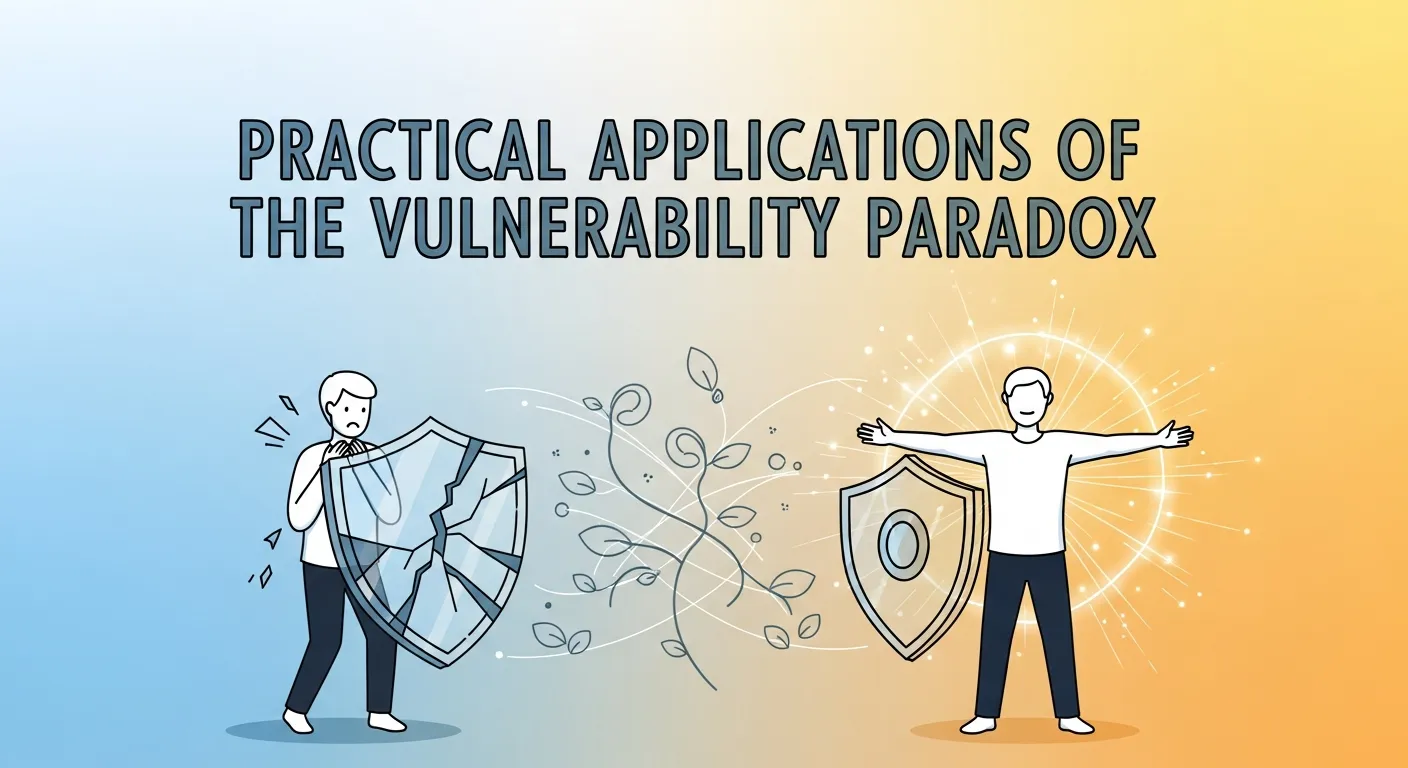
Strategic vulnerability can be applied across community contexts to improve connection and engagement:
- Identify appropriate moments to disclose insights, challenges, or learning experiences
- Observe reciprocity signals to gauge readiness for deeper engagement
- Gradually expand authenticity boundaries while respecting cultural norms
By using the Vulnerability Paradox intentionally, community leaders can create environments where members feel safe to engage, share, and contribute fully.
Practical Applications: Implementing Strategic Vulnerability
Building trust through vulnerability requires intentional practice. Begin by identifying appropriate disclosure opportunities – moments where sharing a challenge, uncertainty, or learning experience would enhance connection rather than damage credibility.
Pay attention to reciprocity signals – when others respond to your vulnerability with their own, it indicates readiness for deeper connection. These exchanges create momentum that propels relationship development forward at accelerated rates.
Remember that cultural context matters significantly. Different communities have varying vulnerability thresholds, and successful integration requires sensitivity to these norms while gradually expanding the boundaries of acceptable authenticity.
Cultural Sensitivity and the Vulnerability Paradox
Applying the Vulnerability Paradox requires awareness of cultural norms and community dynamics. Not all members respond to openness in the same way, and the thresholds for sharing vary widely across groups. Communities that succeed in leveraging vulnerability are attentive to these differences, gradually expanding what is acceptable without forcing members into discomfort. By fostering an inclusive and sensitive approach, the paradox can be harnessed to encourage authenticity without alienating participants. Over time, this creates a community culture where members feel safe, supported, and empowered to engage meaningfully.
Overcoming Vulnerability Resistance
Despite its benefits, many of us resist vulnerability due to past experiences or fear of judgment. Addressing these barriers begins with recognizing that calculated vulnerability actually decreases rejection risk by fostering genuine connection.
The paradox reveals itself most clearly here – what feels most dangerous (opening ourselves to others) often provides the greatest protection against the very rejection we fear.
Strategic Vulnerability as a Tool for Leadership
Leaders who embody the Vulnerability Paradox play a transformative role in shaping their communities. By practicing strategic vulnerability, leaders model transparency, acknowledge mistakes openly, and share personal growth experiences. This approach signals to community members engage authentically, creating a culture of trust and psychological safety.
When leaders demonstrate calculated openness, they break down traditional hierarchical barriers, encouraging collaboration and active participation across all levels. Members feel empowered to share their ideas, concerns, and experiences without fear of judgment, leading to richer dialogue, innovative problem-solving, and stronger relationships.
Strategic vulnerability in leadership also fosters loyalty and long-term commitment. As members witness leaders being genuine and accountable, they develop confidence in the community’s integrity and shared values. Over time, this consistent demonstration of openness strengthens cohesion, enhances collective resilience, and cultivates a community where engagement is driven by trust rather than obligation.
In essence, leaders who embrace strategic vulnerability not only accelerate connection but also create sustainable, high-performing communities built on authenticity, mutual respect, and shared purpose.
Leveraging the Vulnerability Paradox for Stronger Communities
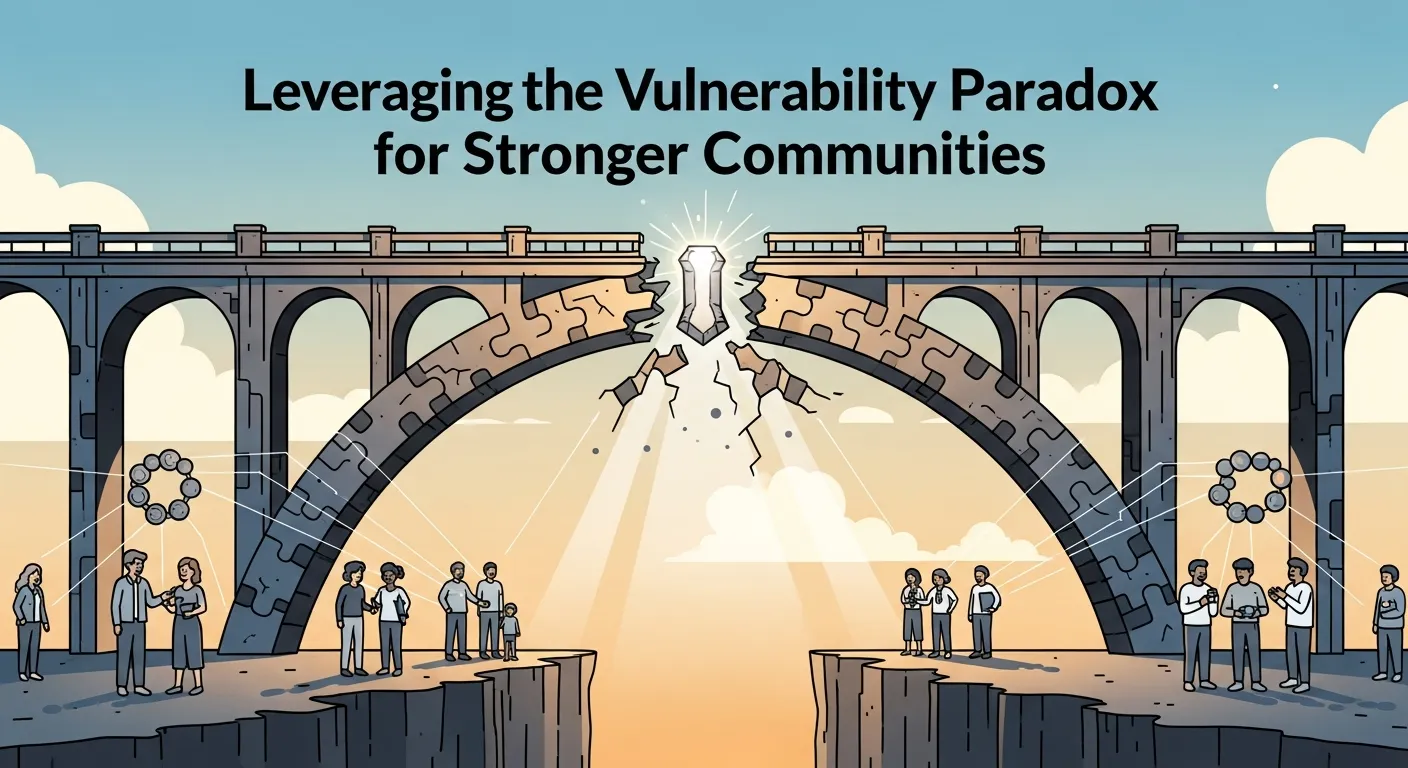
Communities that embrace the Vulnerability Paradox thrive because:
- Members experience accelerated trust and belonging
- Reciprocal openness fosters a self-reinforcing cycle of connection
- Leaders modeling vulnerability create cultural norms that empower participation
- Encourages authentic leadership and transparent decision-making
- Reduces fear of judgment and resistance among members
- Creates pathways for faster, meaningful community integration
By embracing calculated openness, communities can transform ordinary engagement into lasting, high-quality connections that extend beyond digital or physical spaces.
Long-Term Benefits of Embracing the Vulnerability Paradox
Communities that consciously embrace the Vulnerability Paradox experience benefits beyond immediate trust and engagement. Relationships formed through authentic sharing tend to be more durable, reducing churn and member attrition. Collective problem-solving improves as members feel comfortable bringing up challenges without fear of judgment. Over time, the community evolves into a space where shared learning, support, and collaboration become intrinsic values. By prioritizing vulnerability as a strategic tool, communities lay the groundwork for sustainable growth, emotional resilience, and a sense of belonging that transcends individual participation.
Conclusion: Embracing the Paradox
The vulnerability paradox offers a powerful framework for accelerating community trust formation. By strategically opening ourselves to others, we create the conditions for deeper, more meaningful connections.
As you build your own communities, consider how intentional vulnerability might transform your approach. The shortest path to belonging often runs directly through our most authentic selves.
The communities that thrive tomorrow will be those that embrace this paradox today – creating spaces where strategic openness accelerates trust, belonging, and collective purpose.
Frequently Asked Questions (FAQs)
1. What is the Vulnerability Paradox?
The Vulnerability Paradox is a concept in social and community dynamics that explains how intentional openness and calculated vulnerability can accelerate trust and foster deeper, meaningful connections among community members. By sharing personal experiences thoughtfully, members signal authenticity, which encourages reciprocal openness and stronger relationships.
2. Why is the Vulnerability Paradox important in community building?
The Vulnerability Paradox is crucial because it transforms surface-level interactions into genuine engagement. Communities that embrace strategic vulnerability experience higher participation, stronger member loyalty, enhanced psychological safety, and a culture where individuals feel seen, heard, and supported.
3. What is strategic vulnerability?
Strategic vulnerability refers to the intentional and controlled sharing of personal insights, challenges, or learning experiences in ways that build trust without compromising boundaries. It’s about balancing openness with discretion to strengthen relationships and create a safe, authentic community environment.
4. How does the Vulnerability Paradox work?
The paradox works through reciprocity. When one member shares authentically, it encourages others to do the same. This creates a feedback loop where trust, engagement, and mutual understanding grow faster than in communities relying only on surface-level interactions.
5. How can leaders apply the Vulnerability Paradox?
Leaders can model vulnerability by acknowledging mistakes, sharing personal growth stories, and demonstrating transparency in decision-making. When leaders practice strategic openness, they set cultural norms that make members feel safe to engage authentically, which strengthens trust across the community.
6. Can the Vulnerability Paradox be applied online?
Yes. Online communities benefit from carefully designed shared experiences such as discussion threads, collaborative projects, book clubs, or asynchronous challenges. These structured opportunities allow members to engage meaningfully, reflect thoughtfully, and build lasting trust even without in-person interaction.
7. What are the benefits of practicing the Vulnerability Paradox?
Practicing the Vulnerability Paradox leads to:
- Faster trust formation among members
- Deeper engagement and participation
- Reduced fear of judgment or social risk
- Stronger collective identity and belonging
- Long-term community cohesion and loyalty
8. What are the three stages of strategic vulnerability?
- Initial Disclosure: A carefully chosen personal insight or challenge is shared to signal authenticity.
- Reciprocity Response: Others respond with their own openness, creating mutual trust.
- Community Integration: Regular vulnerability exchanges establish norms of authenticity and psychological safety, embedding openness into the community culture.
9. How can communities overcome resistance to vulnerability?
Resistance often comes from fear of judgment or past negative experiences. Communities can overcome this by starting with small disclosures, celebrating reciprocal sharing, respecting cultural differences, and modeling consistent, safe openness. Over time, this builds confidence and comfort in being authentic.
10. How does vulnerability affect psychological safety?
Strategic vulnerability signals trust and openness, which encourages members to engage without fear of criticism or rejection. This strengthens psychological safety, allowing individuals to share ideas, ask questions, and contribute meaningfully to community growth.
11. Can the Vulnerability Paradox improve long-term community cohesion?
Absolutely. Communities that intentionally apply the Vulnerability Paradox see durable relationships, higher member retention, increased collaboration, and a culture of mutual support. Over time, this leads to a self-sustaining, resilient community environment.
12. What is the key takeaway of the Vulnerability Paradox?
The key takeaway is that intentional openness accelerates trust, belonging, and authentic connection. Communities and leaders that embrace the Vulnerability Paradox create spaces where meaningful relationships form naturally, fostering lasting engagement and a strong sense of belonging.