
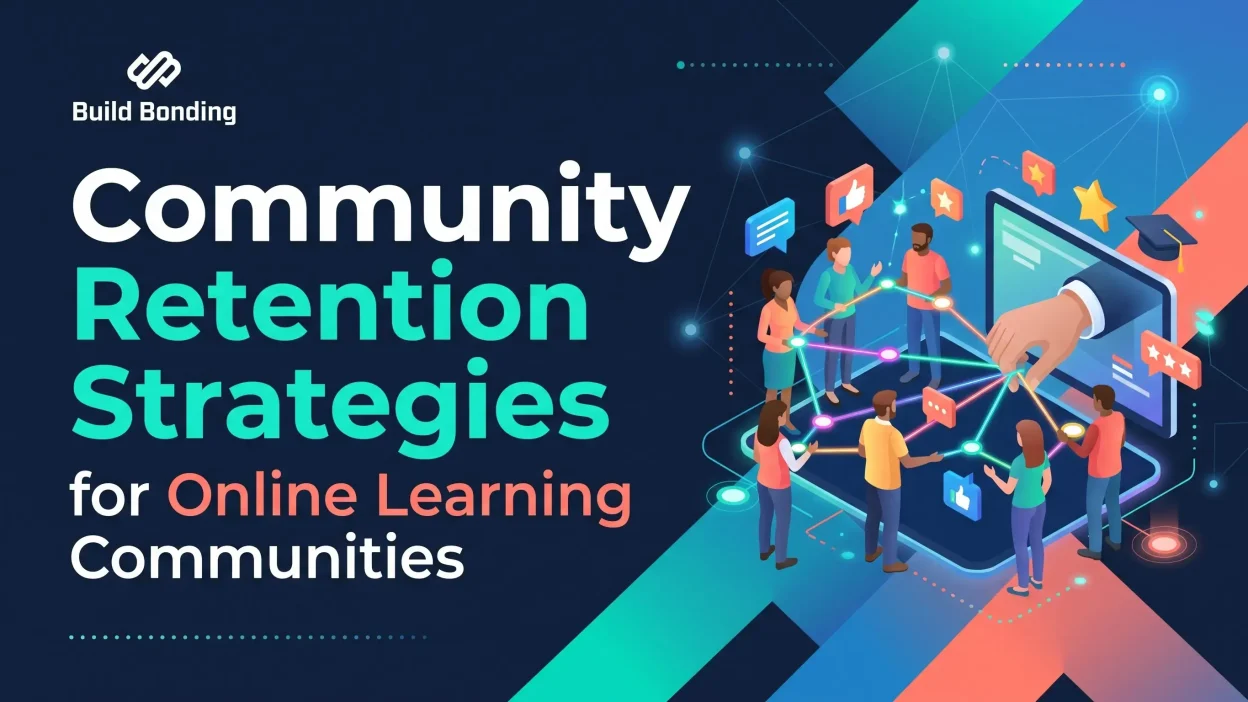
Community retention is essential for building successful online learning communities where members feel connected, supported, and motivated to continue learning. Attracting new learners is important, but keeping them engaged over time creates stronger relationships and more sustainable growth. When learners feel that a community provides meaningful value, they are more likely to participate in discussions, share experiences, and return for future learning opportunities.
Effective community retention strategies focus on creating a welcoming environment, delivering valuable educational content, encouraging interaction, and recognizing member contributions. Whether a business operates a digital community, a social media community, or a dedicated learning platform, consistent engagement can help reduce member inactivity and improve long-term participation. By understanding learner needs and providing opportunities for collaboration, community managers can transform temporary visitors into active, loyal members.
Understanding Community Retention in Online Learning
Community retention refers to the ability of an online community to keep its members active and involved over an extended period. In online learning environments, retention involves encouraging learners to attend sessions, participate in discussions, complete educational activities, and maintain relationships with other members.
A successful learning community offers more than access to information. It provides ongoing support, shared experiences, and opportunities for personal development. When learners recognize the value of their membership, they have stronger reasons to remain involved.
Why Community Retention Matters
Community retention helps learning platforms maintain consistent participation and build stronger relationships with their audiences. When existing members remain active, they can share knowledge, answer questions, support newcomers, and contribute to a positive learning environment. Their involvement also creates valuable peer-to-peer learning opportunities.
Retaining members can improve the long-term value of an educational community. Instead of repeatedly focusing on attracting new participants, community managers can develop existing relationships and encourage learners to continue progressing. This creates a more stable environment for knowledge sharing, collaboration, and sustainable community growth.
Common Reasons Learners Leave Online Communities
Learners may leave an online community when they cannot find relevant information, receive little interaction, or struggle to understand how participation benefits them. An overwhelming volume of notifications and repetitive content can also reduce interest. Some members become inactive because they feel uncomfortable asking questions or believe their contributions are not valued.
Identifying these problems is an important step toward improving retention. Community managers should review participation patterns, collect feedback, and observe where learners lose interest. Understanding these challenges makes it easier to develop strategies that address the actual needs of community members.
Create a Welcoming Onboarding Experience
 The first experience a learner has with a community can influence whether they decide to participate regularly. A clear onboarding process helps new members understand the community’s purpose, available resources, communication guidelines, and learning opportunities. When newcomers know what to do and where to begin, they are more likely to feel comfortable participating.
Help New Members Get Started
A structured onboarding experience should introduce members to the community’s main features and explain how they can benefit from joining. A welcome message, a short platform tour, or an introductory learning resource can make the process easier. Community managers should also explain where members can ask questions and find support.
Personal introductions can strengthen the onboarding experience. Inviting newcomers to share their interests, goals, or current learning challenges gives other members an opportunity to connect with them. These early interactions can establish a sense of belonging and encourage learners to return.
Set Clear Expectations
Clear community guidelines help learners understand acceptable behavior and encourage respectful communication. Members should know how discussions work, how questions are answered, and how they can contribute to shared learning activities. Simple expectations reduce confusion and help create a more organized environment.
Community managers should communicate these guidelines in a friendly and accessible way. Rather than overwhelming new members with lengthy instructions, they can introduce essential information gradually. A clear and supportive onboarding process helps learners become comfortable, confident, and more willing to participate.
Encourage Meaningful Member Engagement
Member engagement plays a central role in community retention because learners are more likely to remain active when they feel involved. Engagement should go beyond counting comments, likes, or page visits. Meaningful participation occurs when members exchange ideas, solve problems, receive support, and make progress toward their learning goals.
Start Relevant Discussions
Relevant discussions encourage learners to connect educational concepts with their personal experiences. Community managers can introduce weekly questions, practical challenges, topic discussions, or opportunities to share recent achievements. These activities give members clear reasons to participate without requiring them to spend excessive time on the platform.
Discussion topics should reflect the interests and experience levels of the audience. Beginners may appreciate basic questions and guided conversations, while experienced learners may prefer detailed problem-solving discussions. Matching activities to member needs makes participation more accessible and valuable.
Encourage Peer-to-Peer Learning
Peer-to-peer learning allows community members to exchange knowledge and learn from different perspectives. Learners can explain concepts, discuss challenges, review projects, and share useful resources with one another. This approach creates a collaborative environment in which members contribute to the community rather than depending entirely on instructors.
Community managers can support peer learning through group projects, study partnerships, feedback sessions, and mentorship opportunities. These activities help members develop stronger relationships while reinforcing their understanding of educational material. When learners become valuable contributors, they gain additional reasons to remain involved.
Build a Strong Digital Community
A successful digital community provides a consistent environment where members can connect around shared interests and goals. For online learning platforms, this means combining useful educational resources with opportunities for discussion, collaboration, and mutual support. The community should help learners feel that they belong to something valuable beyond an individual course or lesson.
Develop a Shared Community Purpose
A clear purpose gives members a common reason to participate. For example, a digital community focused on professional development might help learners improve workplace skills, exchange industry knowledge, and prepare for career opportunities. A language-learning community might emphasize regular practice, conversation, and cultural understanding.
Community managers should communicate this purpose through welcome messages, discussion topics, learning activities, and community announcements. When members understand the shared mission, they can recognize how their participation contributes to collective progress. A meaningful purpose helps strengthen identity and encourages long-term involvement.
Create Opportunities for Connection
Relationships are an important part of a strong digital community. Learners who develop friendships, find mentors, or connect with people facing similar challenges often have more reasons to return. These relationships can make online learning feel less isolated and create a supportive environment for continued development.
Virtual study groups, live discussions, collaborative assignments, and member introductions can help build these connections. Community managers should encourage interaction without forcing members to participate in every activity. Providing different ways to connect allows learners with varying schedules and communication preferences to find their place.
How Online Community Building Improves Member Retention
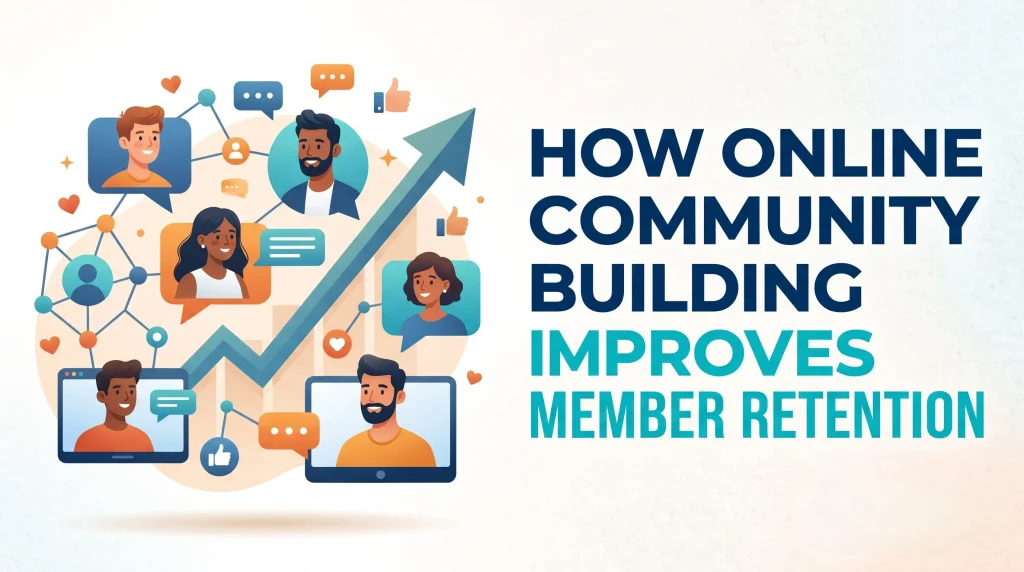 Online community building is an essential part of improving member retention in online learning environments. It focuses on creating meaningful relationships, encouraging knowledge sharing, and developing a supportive atmosphere where learners feel comfortable participating. By organizing group discussions, collaborative projects, and interactive learning activities, community managers can help members build stronger connections and remain engaged over time.
Use a Social Media Community to Maintain Engagement
A social media community can help online learning platforms stay connected with learners between lessons, workshops, and formal learning sessions. Social channels provide familiar spaces where members can discover updates, exchange experiences, and participate in conversations. However, social media activity should support the learning experience rather than replace meaningful educational interaction.
Share Consistent and Valuable Content
Consistent content gives members a reason to revisit a community. Learning tips, short tutorials, discussion prompts, practical examples, and progress reminders can maintain interest between major educational activities. Content should address common questions and help members apply what they learn in real situations.
A content calendar can help community managers maintain a balanced publishing schedule. Instead of sharing repetitive promotional messages, they should prioritize educational value and member interaction. Consistent, relevant content helps establish trust and reinforces the community’s usefulness over time.
Make Social Interaction More Personal
Personal interaction can make a social media community feel more welcoming. Responding to questions, acknowledging member achievements, and encouraging thoughtful conversations show that contributions matter. Community managers should also monitor discussions to ensure that members receive appropriate guidance and that conversations remain respectful.
Personalization can improve these interactions further. For example, a community manager might recommend resources based on a learner’s interests or invite members to discussions related to their goals. Relevant communication makes participation feel more meaningful and can encourage inactive members to reconnect.
Provide Continuous Educational Value
Learners are more likely to remain in a community when it continues to support their development. Educational value should extend beyond the initial course or learning activity. Members need opportunities to explore new topics, strengthen existing skills, apply their knowledge, and discover resources that match their changing goals.
Offer Fresh Learning Resources
Fresh resources help prevent the community from becoming repetitive. Community managers can introduce updated guides, expert interviews, case studies, practical exercises, recorded sessions, and advanced learning materials. Resources should be selected according to member interests and the community’s overall educational objectives.
Organizing resources by topic, skill level, or learning goal also improves accessibility. Members can quickly locate useful information without searching through large volumes of discussions. When educational content remains relevant and easy to find, the community becomes a dependable destination for continued learning.
Support Different Learning Levels
Online learning communities often include beginners, intermediate learners, and experienced professionals. Providing identical activities to every member may leave some participants confused while others feel unchallenged. A more flexible learning experience offers resources and opportunities suited to different levels of knowledge.
Beginner-friendly explanations, intermediate projects, and advanced discussions can help members progress at their own pace. Experienced learners can also contribute through mentorship and knowledge sharing. Supporting different learning levels increases the likelihood that members will continue finding value as their skills and interests develop.
Recognize and Reward Member Contributions
Recognition helps learners understand that their efforts and contributions are appreciated. Members who receive constructive feedback or acknowledgment may feel more connected to the community and more motivated to participate. Recognition does not need to involve expensive rewards; sincere appreciation can be equally meaningful.
Celebrate Learning Achievements
Community managers can celebrate completed courses, successful projects, skill improvements, and helpful contributions. Acknowledging these achievements reinforces positive behavior and shows other learners what progress can look like. Recognition should focus on meaningful accomplishments rather than rewarding activity purely for its quantity.
Public appreciation can be effective when members are comfortable being recognized. For those who prefer privacy, a personal message may be more appropriate. Offering different forms of recognition respects individual preferences and helps create an inclusive learning environment.
Introduce Meaningful Rewards
Rewards can provide additional motivation when they support the community’s learning goals. Digital badges, certificates, mentorship opportunities, special workshops, and opportunities to lead discussions can encourage participation. These rewards work best when they reflect genuine effort, useful contributions, or measurable progress.
Community managers should avoid creating systems that encourage meaningless activity or unhealthy competition. Instead, recognition should promote collaboration, helpfulness, and continuous improvement. A balanced approach can strengthen community retention while keeping the learning environment supportive and welcoming.
Measure Community Retention and Improve Performance
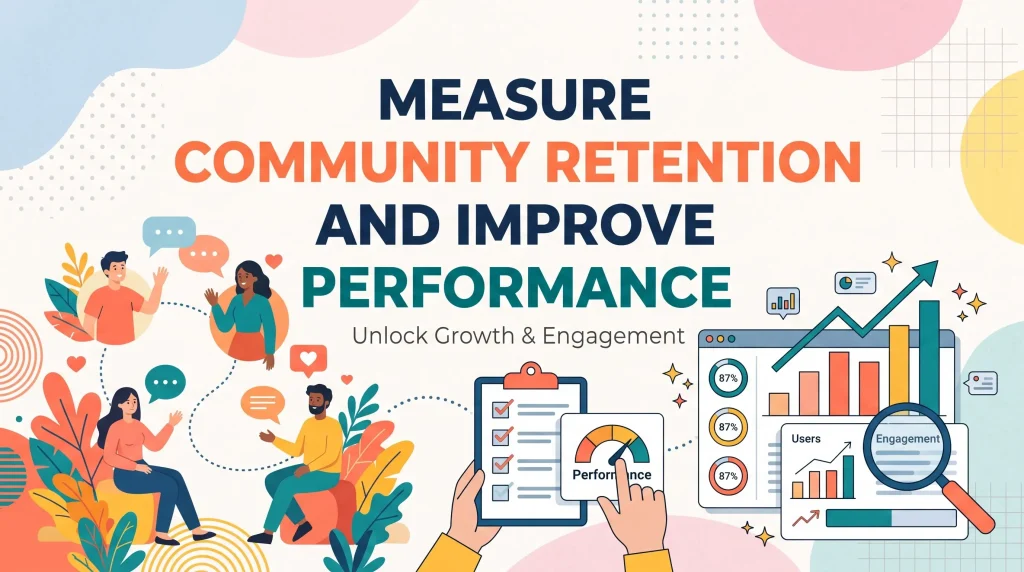 Measuring retention helps community managers understand whether their strategies are producing meaningful results. Without measurement, it can be difficult to determine whether members are returning, participating consistently, or gradually losing interest. Tracking relevant indicators provides insights that support better decisions and more effective community management.
Track Important Retention Metrics
Useful metrics include returning member rates, active member retention, discussion participation, course completion, event attendance, and the number of previously inactive members who return. Each metric reveals a different aspect of the learner experience. For example, high enrollment combined with low repeat participation may indicate that onboarding or ongoing engagement needs improvement.
Community managers should select metrics that align with their goals. A professional learning group may prioritize repeat participation and project collaboration, while a course-based community may focus on lesson completion and continued membership. Reviewing these indicators over time helps identify patterns and opportunities for improvement.
Collect Feedback and Make Changes
Quantitative metrics explain what is happening, while member feedback can help explain why. Short surveys, polls, interviews, and open discussions allow learners to share what they value and what they find frustrating. Their responses may reveal missing resources, scheduling problems, technical barriers, or opportunities for more relevant activities.
Community managers should act on feedback and communicate important improvements to members. When learners see that their opinions influence decisions, they may feel more invested in the community. Regular evaluation creates a continuous improvement process that supports stronger participation and long-term retention.
Conclusion
Community retention is a long-term process that depends on trust, educational value, meaningful engagement, and a strong sense of belonging. Online learning communities can improve retention by welcoming newcomers, encouraging peer-to-peer learning, maintaining consistent communication, recognizing contributions, and offering resources that support continued progress.
A well-managed digital community or social media community should make members feel that their participation matters. By measuring engagement, listening to feedback, and adapting activities to learner needs, community managers can build a more supportive environment where members choose to return, contribute, and grow together.
Frequently Asked Questions (FAQs)
1. What is community retention?
Community retention is the ability of a community to keep its members active and involved over time. In online learning environments, it involves encouraging learners to continue participating in discussions, educational activities, and collaborative experiences.
2. Why is community retention important for online learning communities?
Community retention supports consistent participation, stronger relationships, and ongoing knowledge sharing. Retained members can help newcomers, contribute useful insights, and create a supportive environment that improves the overall learning experience.
3. How can online learning communities improve member retention?
Online learning communities can improve retention through effective onboarding, relevant discussions, consistent educational content, peer support, personalized communication, and recognition of member achievements. Regular feedback also helps community managers identify and address participation barriers.
4. What is the role of a digital community in learner engagement?
A digital community provides a shared space where learners can exchange knowledge, ask questions, collaborate on projects, and build relationships. These interactions can reduce the isolation of online learning and encourage continued participation.
5. How can a social media community support community retention?
A social media community helps maintain communication between formal learning sessions. Educational posts, interactive discussions, progress celebrations, and timely responses can keep members connected and encourage them to revisit the community.
6. What causes low retention in online learning communities?
Low retention may result from irrelevant content, limited interaction, confusing onboarding, excessive notifications, weak community relationships, or a lack of visible learning progress. Understanding member feedback can help identify the specific causes.
7. Which metrics help measure community retention?
Useful metrics include returning member rates, active participation, event attendance, course completion, discussion activity, and reactivation rates. The most appropriate metrics depend on the community’s goals and the behaviors that indicate meaningful participation.
8. How does member recognition improve retention?
Member recognition helps people feel that their contributions are valued. Celebrating achievements, highlighting helpful contributions, and offering relevant rewards can strengthen belonging and encourage members to remain active.
9. How often should an online learning community publish content?
There is no universal publishing schedule. Content frequency should match member needs, available resources, and the community’s purpose. Consistent, useful content is generally more valuable than frequent posts that add little educational value.
10. How can community managers re-engage inactive members?
Community managers can reconnect with inactive members by sharing relevant resources, inviting them to suitable discussions, asking for feedback, and highlighting new learning opportunities. Communication should be helpful and respectful rather than overly promotional or repetitive.