
Strong communities grow through intentional design, offering clear pathways for members to move from observers to contributors and leaders. By removing barriers, providing mentorship, and recognizing contributions, engagement and retention increase, while leadership pipelines strengthen.
During my fifteen years building communities across various sectors, I’ve witnessed countless groups struggle with the same fundamental challenge. They attract initial interest but fail to convert that interest into sustained participation. Members drift away, contribution remains shallow, and leadership falls to the same overworked few who eventually burn out.
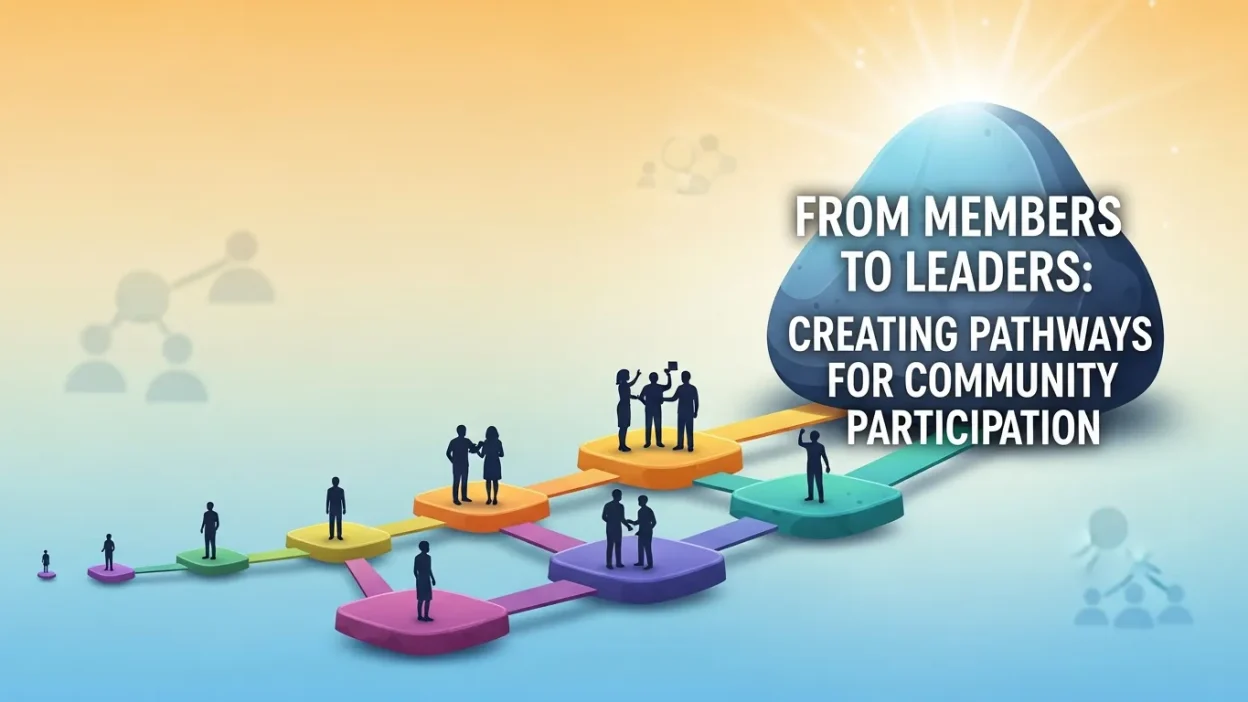
The communities that overcome this challenge understand something crucial: people need structured pathways that guide them toward deeper engagement. These pathways provide both permission and direction for increased participation.
The Engagement Spectrum
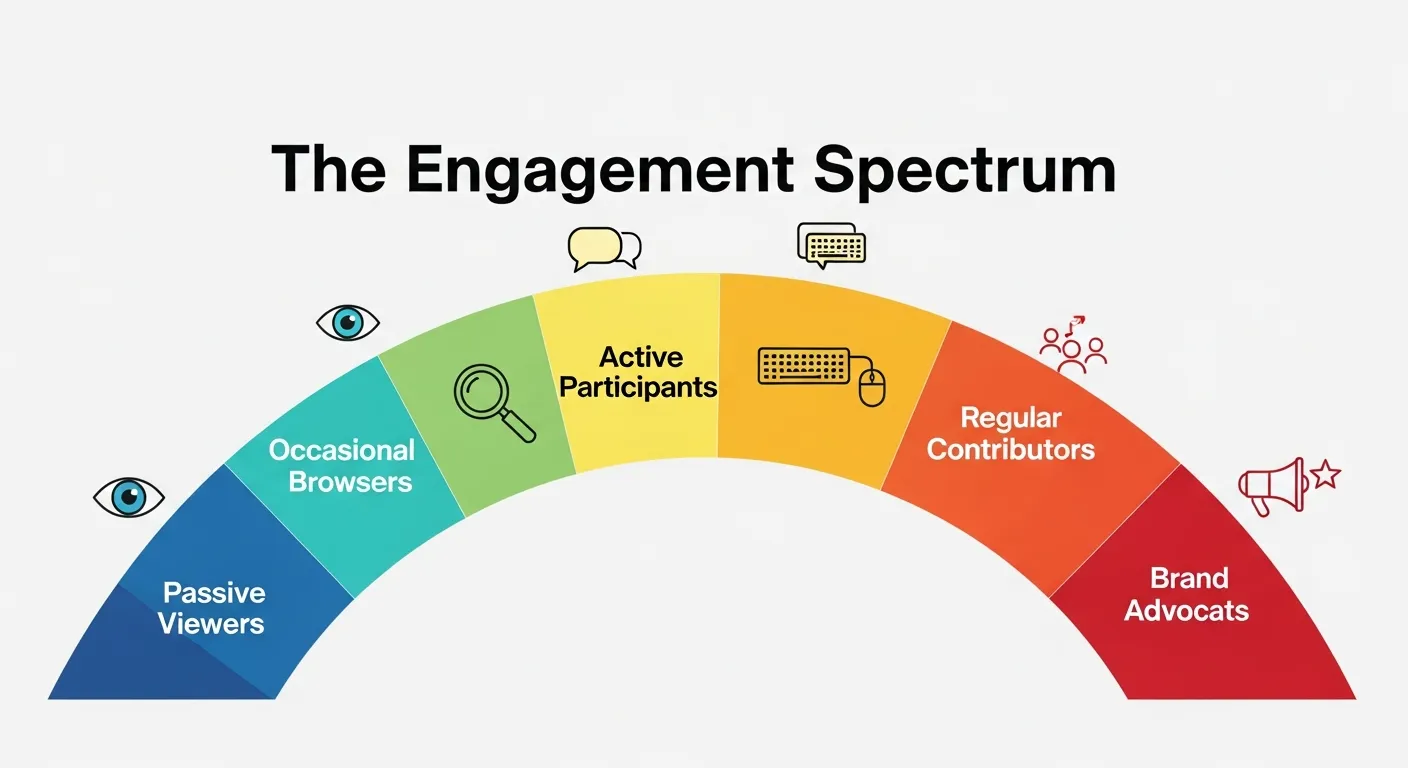
Community involvement exists on a spectrum rather than as a binary state. New members rarely leap directly into leadership roles. Instead, they gradually increase their commitment through a series of natural steps.
Consider the journey of Michael, who joined our neighborhood improvement association three years ago. He first attended monthly meetings sporadically, sitting quietly in the back row. After six months, he volunteered for the cleanup committee, joining weekend projects. A year later, he coordinated the committee’s efforts. Today, he serves on the association’s board, helping shape its overall direction.
Michael’s progression—from sporadic attendance to consistent participation to coordination to governance—represents a classic engagement pathway. The association successfully retained his involvement because each step felt manageable and natural.
Research from the Center for Community Engagement confirms that communities with clearly defined participation pathways report significantly higher retention rates and leadership development outcomes. Members stay engaged because they always see a clear next step that matches their current capacity and interest.
The Strategic Value of Community Participation
Strong Community Participation is not just about attendance or volunteer numbers—it is a measurable indicator of long-term sustainability. Communities that prioritize structured participation often experience higher retention, stronger relationships, and more organic leadership development. When members feel that their involvement matters, they invest emotionally as well as practically. This emotional investment is what transforms a short-term initiative into a long-term movement.
Moreover, Community Participation strengthens collective resilience. In times of crisis or transition, engaged members step forward naturally because they already see themselves as stakeholders. Communities that fail to cultivate participation often struggle during change, whereas those with active contributors adapt more quickly and confidently.
Psychological Foundations of Effective Pathways
Effective participation pathways align with fundamental psychological principles that drive human behavior:
Self-efficacy theory tells us that people engage more deeply when they believe they can succeed at the tasks required. Well-designed pathways break participation into manageable steps that build confidence gradually.
Commitment and consistency research demonstrates that small initial commitments often lead to larger ones. Each step in a participation pathway leverages previous involvement to encourage further engagement.
Belonging and identity development emerge as people invest more in community activities. As participation increases, community involvement becomes part of how members define themselves.
I witnessed these principles in action while helping a struggling online forum transform its culture. Initially, new members faced an intimidating blank page with no guidance for participation. We implemented a structured pathway: first introducing yourself, then responding to others, then starting topical discussions, then moderating conversations, and finally mentoring newcomers. Participation rates tripled within three months because members always knew what appropriate engagement looked like at their particular stage. Reading more about Bioregional Community Development
Designing Effective Participation Pathways
Creating successful pathways requires intentional design around several key principles:
Clarity and Visibility
Pathways must be transparently articulated so members understand available opportunities. The most effective communities make these pathways explicit rather than assuming members will discover them organically.
At BuildBonding, we’ve found that visually mapping participation options dramatically increases member progression through engagement levels. When people see the whole journey—from initial membership through various contribution opportunities to leadership roles—they more readily envision themselves moving along that continuum.
Multiple Entry Points
Different people bring different skills, interests, and availability. Effective pathways offer various entry points for deeper participation rather than funneling everyone through identical experiences.
A faith community I worked with struggled with volunteer recruitment until they replaced their generic “volunteer sign-up” with specific pathways based on different interests: hospitality, education, maintenance, outreach, and administrative support. This specificity helped members identify where their particular gifts aligned with community needs.
Graduated Responsibility
Each step in well-designed pathways involves slightly greater responsibility than the previous one—enough to stretch participants without overwhelming them. This graduated progression honors people’s need to build confidence through successful experiences.
The most effective graduated pathways create what psychologist Mihaly Csikszentmihalyi calls “flow states”—the sweet spot between boredom and anxiety where people feel appropriately challenged. When community responsibilities consistently exceed members’ current capabilities, they withdraw from participation. When responsibilities remain too simple, engagement stagnates.
Recognition and Affirmation
Acknowledging contribution milestones reinforces the value of participation and motivates continued engagement. These recognitions needn’t be elaborate—sometimes simple public acknowledgment sufficiently validates someone’s evolving role.
According to research published in the Journal of Voluntary Action, communities that regularly celebrate member contributions show significantly higher rates of continued participation compared to those that take involvement for granted.
Clear Progression Criteria
While participation should feel natural rather than mechanical, members benefit from understanding what qualifies them for increased responsibility. Transparent criteria eliminate confusion and reduce perceptions of insider favoritism.
An arts organization I consulted with struggled with seemingly arbitrary promotion into leadership roles until they created clear qualification frameworks. By establishing and communicating specific experience benchmarks for various roles, they eliminated the mystery surrounding advancement while creating natural development goals for engaged members.
Measuring the Impact of Community Participation
While Community Participation may feel intangible, it can and should be measured. Tracking indicators such as volunteer retention rates, event attendance consistency, leadership pipeline growth, and member-generated initiatives provides insight into the health of engagement pathways. Quantifying participation helps communities identify gaps, recognize high-potential contributors, and refine development strategies.
Data also reinforces accountability. When leaders regularly evaluate Community Participation trends, they can proactively address disengagement before it becomes widespread. Measurement turns participation from an abstract ideal into a strategic priority.
Removing Participation Barriers
Even well-designed pathways prove ineffective when structural barriers prevent members from accessing them. Common obstacles include:
Time Constraints
Modern schedules leave little room for community involvement. Effective communities create participation options requiring various time commitments, from brief, discrete tasks to ongoing roles.
Knowledge Gaps
Members often hesitate to increase participation because they doubt their qualifications. Successful communities pair participation pathways with appropriate training, ensuring people feel equipped for each new responsibility.
Social Uncertainty
New members frequently report feeling like outsiders in established communities. Structured mentorship between existing and new participants creates relational bridges that facilitate increased involvement.
Hidden Requirements
Many communities operate with unstated cultural norms that remain invisible to newcomers. Explicit onboarding processes that illuminate these implicit expectations help new members navigate community culture more confidently.
When a professional association I belonged to examined their leadership pipeline, they discovered unintentional barriers limiting participation. Leadership meetings occurred during workday hours, effectively excluding members with traditional employment. Committee work required specialized knowledge never formally taught. By addressing these structural issues, they dramatically diversified their leadership pool.
From Consumption to Co-Creation
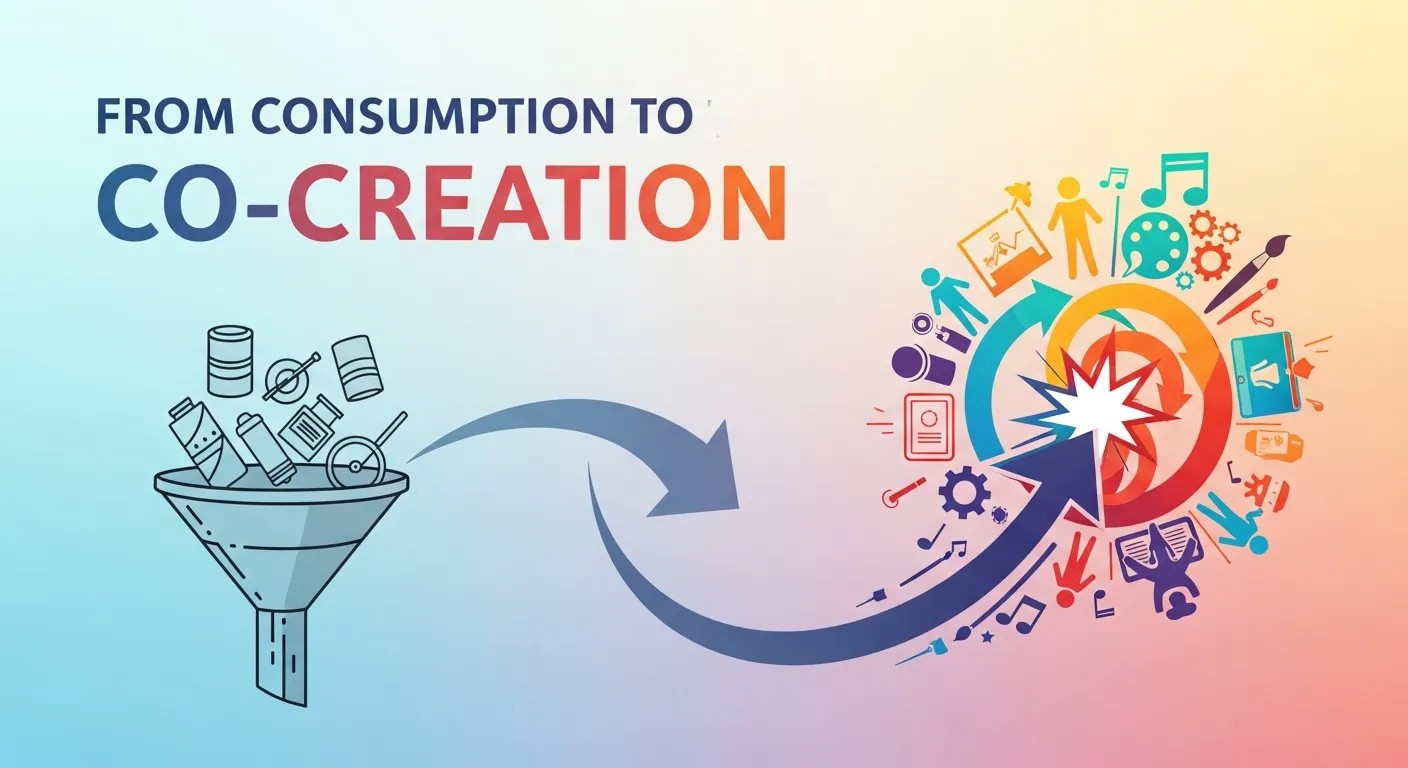
The ultimate goal of participation pathways isn’t merely getting tasks accomplished—it’s transforming members’ relationship with the community itself. Effective pathways guide people from consuming community benefits to co-creating community experiences.
This transformation represents a fundamental identity shift. Members begin seeing themselves not as customers receiving community services but as owners responsible for community outcomes. This ownership mindset creates sustainable community structures that transcend individual leaders.
I witnessed this shift dramatically in a coworking space struggling with member retention. Initially focused on amenities and services (treating members as customers), they reimagined their entire approach around participation pathways. Members progressed from using the space to hosting events to joining governance committees to eventually shaping the space’s evolution. Retention rates doubled not because services improved but because members’ relationship to the community fundamentally changed.
Leadership as Service and Development
The culmination of most participation pathways involves some form of leadership. Yet communities often conceptualize leadership too narrowly, focusing exclusively on formal positions rather than diverse ways members might guide community development.
Expanded leadership models include:
Content leadership through knowledge sharing and resource creation Cultural leadership through modeling and reinforcing community values Interpersonal leadership through member connection and conflict resolution Project leadership through initiative coordination Governance leadership through policy and direction setting
By recognizing these varied leadership forms, communities create multiple paths to meaningful contribution that honor different strengths and interests.
A neighborhood association I worked with expanded their traditional board structure to include “community captains” focused on specific issues like safety, beautification, and youth engagement. This distributed leadership model created multiple leadership pathways while preventing board burnout.
The Cyclical Nature of Participation
Effective participation pathways recognize that engagement naturally ebbs and flows throughout members’ lives. Rather than expecting linear progression toward ever-increasing involvement, sustainable communities accommodate cycling between different participation levels as circumstances change.
This realistic approach prevents communities from losing members entirely when life changes temporarily reduce capacity for involvement. By normalizing movement both up and down participation pathways, communities maintain long-term connections through changing life seasons.
The most resilient communities I’ve observed maintain relationships with members through various involvement phases, from intense leadership to occasional participation to temporary hiatus and back again. This flexibility creates communities that people return to repeatedly throughout their lives rather than passing through briefly.
Building Tomorrow’s Community Today
Creating intentional participation pathways represents one of the most powerful strategies for sustainable community development. These pathways transform the fundamental question members ask themselves from “Do I belong here?” to “How might I contribute here?” This shift changes everything—for individual members and for communities themselves.
When we design clear routes from initial interest to meaningful leadership, we don’t just solve today’s engagement challenges. We create self-renewing communities capable of evolving and thriving long into the future.
Conclusion
Community Participation is the foundation of long-term sustainability. Communities that create intentional engagement pathways move beyond surface-level involvement and foster true ownership among members. When people clearly understand how to contribute, feel equipped to participate, and see opportunities for growth, they invest more deeply.
By designing structured participation models, measuring engagement, and removing barriers, communities transform from leader-dependent systems into self-renewing ecosystems. Ultimately, sustainable growth happens when members shift from asking, “Do I belong?” to confidently declaring, “This is my community, and I contribute to it.”
FAQs About Community Participation
1. What is Community Participation?
Community Participation is the active and meaningful involvement of members in a community’s activities, decision-making processes, leadership roles, and overall development. Rather than being passive observers, members engaged in Community Participation contribute ideas, time, skills, and energy to help the community grow and thrive.
2. Why is Community Participation important?
Community Participation is essential because it drives long-term sustainability. Strong Community Participation increases member retention, builds future leaders, strengthens relationships, and creates a shared sense of ownership. Communities with high levels of Community Participation are more resilient during change and less dependent on a small group of overworked leaders.
3. How can communities improve Community Participation?
Communities can improve Community Participation by creating clear engagement pathways, offering mentorship, providing training, recognizing contributions, and removing structural barriers. When members understand how to increase their involvement step by step, Community Participation naturally becomes stronger and more consistent.
4. What are participation pathways in Community Participation?
Participation pathways are structured progression models that guide members from initial engagement to deeper Community Participation. These pathways help members move from attending events to volunteering, leading projects, mentoring others, and eventually taking on governance or leadership roles.
5. How does Community Participation impact leadership development?
Community Participation creates a natural leadership pipeline. As members gradually increase their involvement, they build confidence, skills, and trust within the community. This structured growth ensures that leadership emerges organically from strong Community Participation rather than being forced or limited to a select few.
6. How can Community Participation be measured?
Community Participation can be measured through retention rates, volunteer engagement levels, repeat event attendance, leadership pipeline growth, member-generated initiatives, and contribution frequency. Tracking Community Participation data helps communities identify engagement gaps and refine their development strategies.
7. What are common barriers to Community Participation?
Common barriers to Community Participation include time constraints, unclear expectations, lack of training, social discomfort, and hidden cultural norms. If these obstacles are not addressed, Community Participation may remain shallow or decline over time.
8. How does psychology influence Community Participation?
Psychological principles such as self-efficacy, belonging, identity formation, and commitment play a crucial role in Community Participation. When members believe they can succeed, feel valued, and see themselves as part of the community identity, Community Participation increases naturally and sustainably.
9. Can Community Participation fluctuate over time?
Yes, Community Participation naturally rises and falls depending on members’ life circumstances. Healthy communities design flexible systems that allow individuals to move between different levels of Community Participation without losing their connection to the group.
10. What role does recognition play in Community Participation?
Recognition significantly strengthens Community Participation. Public acknowledgment, appreciation, and milestone celebrations validate member contributions and encourage continued involvement. When Community Participation is recognized consistently, members feel valued and motivated to contribute further.
11. How do communities shift from passive membership to active Community Participation?
Communities shift toward active Community Participation by encouraging co-creation rather than consumption. Offering opportunities for members to lead initiatives, contribute ideas, solve problems, and shape decisions transforms them from consumers into committed contributors.
12. What is the long-term benefit of strong Community Participation?
Strong Community Participation creates resilient, adaptive, and self-sustaining communities. When Community Participation is embedded into the culture, leadership renewal becomes continuous, engagement remains high, and the community evolves successfully across generations.