

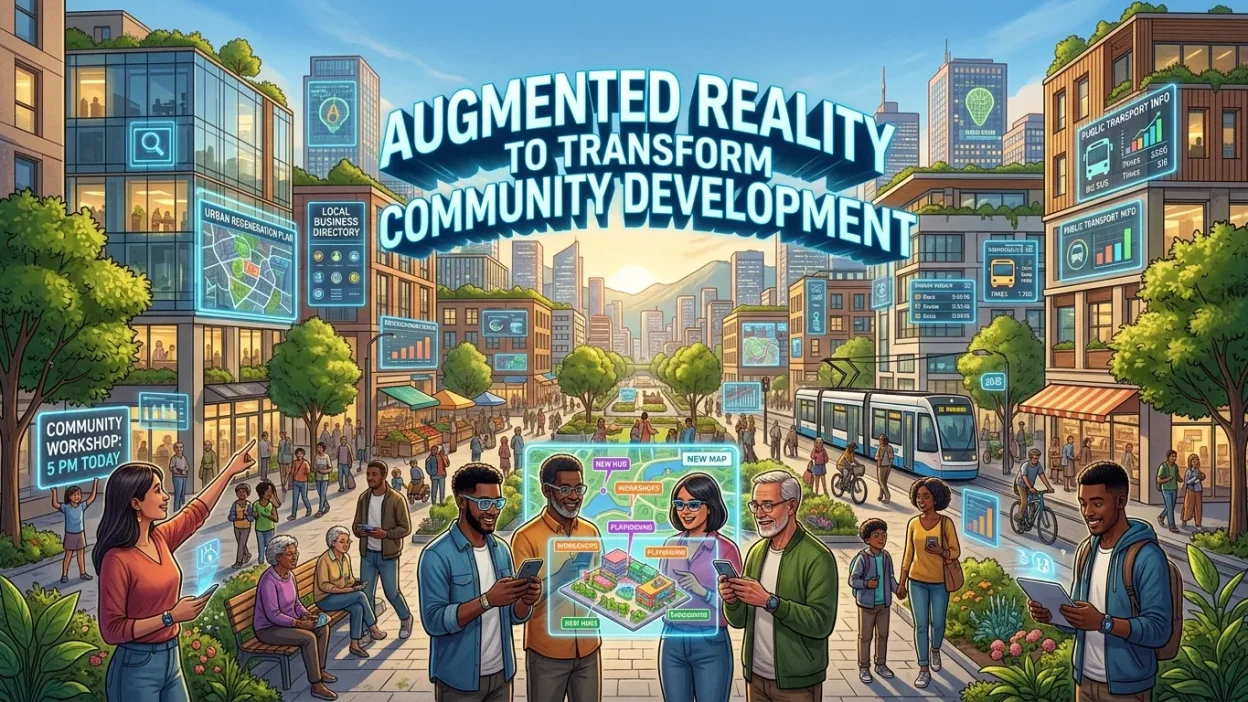
Urban planning faces a critical evolution. Integrating augmented reality into civic projects empowers citizens, bridges communication gaps, and fundamentally transforms how we design our shared public spaces.
This comprehensive guide explores how augmented reality reshapes urban environments and community development. You will learn practical applications, discover how interactive technology boosts civic engagement, and understand the core strategies required to build sustainable, future-ready neighborhoods using immersive digital tools.
The Intersection of Technology and Urban Growth
Urban environments are growing rapidly, requiring innovative approaches to spatial design, resource management, and citizen involvement. At the forefront of this digital revolution is augmented reality. By overlaying digital information onto the physical world, augmented reality offers planners, architects, and residents a unique opportunity to visualize changes before a single shovel hits the ground.
When applied to community development, augmented reality allows stakeholders to step inside proposed developments, interact with new infrastructure, and provide immediate feedback. This shifts the paradigm from top-down planning to a highly collaborative ecosystem, ensuring that Sustainable Urban Planning reflects the genuine needs of the people who live there.
Visualizing the Future of Public Spaces
For decades, urban planners relied on two-dimensional blueprints, physical models, and complex statistical data to convey their visions. These methods, while foundational, often fail to communicate the true scale and impact of a project to the general public. Augmented reality changes this dynamic entirely. Through a simple smartphone or wearable device, a resident can stand in an empty lot and see a fully rendered, 3D community center, park, or housing complex.
This level of immersion reduces misunderstandings. When citizens can visualize how a new transit station will affect their neighborhood’s aesthetics and traffic, they can provide more constructive feedback. It democratizes the design process, making Civic Tech Solutions accessible to everyone, regardless of their technical background or ability to read architectural plans.
Core Applications in Community Building
 The applications of augmented reality extend far beyond simple 3D models. It is a versatile tool that touches multiple facets of local development, from infrastructure to historical preservation.
Enhancing Civic Engagement and Participation
One of the most significant hurdles in community development is low citizen participation. Town hall meetings are often poorly attended, and public surveys rarely capture a representative sample of the population. Augmented reality brings the town hall to the citizen. By scanning a QR code on a public notice board, residents can immediately view proposed zoning changes or infrastructure updates directly on their mobile devices.
This localized, on-the-spot interaction encourages greater participation. It transforms passive observers into active contributors. When people feel their voices are heard, and their visual feedback is integrated into the final design, trust in local government and developers increases substantially.
Streamlining Infrastructure and Utility Planning
Below the surface of every city lies a complex web of utilities, including water pipes, electrical grids, and telecommunication networks. Mapping and maintaining these systems is a logistical challenge. Augmented reality provides municipal workers with “x-ray vision,” allowing them to see subterranean infrastructure overlaid on the physical streetscape.
This capability is invaluable for community development. When planning new residential zones or commercial hubs, engineers can use augmented reality to identify potential conflicts with existing utilities, preventing costly delays and minimizing disruptions to the neighborhood.
Historical Preservation and Cultural Integration
Modernizing a community does not mean erasing its history. Augmented reality serves as a bridge between the past and the future. City planners can use this technology to show how new developments will integrate with historical landmarks. Furthermore, educational overlays can be added to public spaces, allowing residents to point their devices at a modern building to see the historical structure that once stood there. This fosters a sense of local pride and ensures that Smart City Initiatives respect the cultural heritage of the area.
Strategic Implementation Framework
Deploying augmented reality in a civic context requires careful planning, robust technological infrastructure, and a deep understanding of human-computer interaction. Local governments and private developers must work together to ensure these tools are deployed effectively and equitably.
Assessing Technological Readiness
Before launching an augmented reality initiative, municipalities must assess their digital infrastructure. High-speed internet access and widespread smartphone adoption are prerequisites for a successful rollout. Communities with limited broadband access may require targeted investments in digital equity programs to ensure all residents can participate in the augmented reality experience.
Building Collaborative Partnerships
Successful implementation often requires partnerships between local government, technology providers, and academic institutions. By pooling resources and expertise, communities can develop bespoke augmented reality applications tailored to their specific developmental goals.
Pro Tips for Successful Adoption
- Start Small: Pilot augmented reality on a single, high-visibility project, such as a new park or community center, before rolling it out for complex Zoning Regulations.
- Prioritize User Experience: Ensure the application is intuitive and accessible to users of all ages and technological proficiencies.
- Gather Actionable Data: Use the platform not just to show designs, but to collect measurable feedback through integrated polling or spatial heat maps.
Overcoming Challenges in Adoption
 While the benefits are clear, integrating augmented reality into community development is not without its hurdles. Understanding and mitigating these challenges is essential for long-term success.
Addressing the Digital Divide
The most pressing concern is the digital divide. If augmented reality becomes the primary method for public consultation, individuals without access to modern smartphones or high-speed internet risk being excluded from the conversation. To combat this, communities must provide physical kiosks or loaner devices at libraries and community centers, ensuring that digital tools enhance, rather than replace, traditional methods of engagement.
Data Privacy and Security
Augmented reality applications often require access to location data and camera feeds. Protecting user privacy is paramount. Developers must implement strict data anonymization protocols and transparent privacy policies. Citizens must be assured that their participation in civic planning will not compromise their personal information.
Cost and Resource Allocation
Developing high-quality 3D models and maintaining an augmented reality platform requires a significant financial investment. Local governments must weigh these costs against the potential savings from reduced planning errors and increased public support. Grants for Urban Innovation Programs can often help offset initial development costs.
Comparison: Traditional vs. Immersive Planning
To understand the transformative power of this technology, it is helpful to compare traditional urban planning methods with augmented reality-enhanced processes.
|
Feature |
Traditional Planning |
Augmented Reality Planning |
|---|---|---|
|
Visualization |
2D blueprints, physical models |
Immersive 3D overlays in real environments |
|
Public Engagement |
Scheduled town hall meetings |
On-demand, location-based interaction |
|
Feedback Mechanism |
Paper surveys, verbal comments |
In-app spatial feedback, instant polling |
|
Error Detection |
Often discovered during construction |
Identified during the virtual overlay phase |
|
Accessibility |
Requires architectural literacy |
Highly intuitive, visual comprehension |
Expert Insights and Best Practices
 Industry leaders emphasize that technology should serve the community, not the other way around. Augmented reality is a tool for communication, not a replacement for human connection.
Common Mistakes to Avoid
- Focusing on Flash over Function: Creating highly realistic models is less important than creating functional, easy-to-understand overlays that clearly communicate proposed changes.
- Ignoring Accessibility: Failing to design for individuals with visual impairments or motor disabilities limits the reach of the platform.
- Siloed Data: Augmented reality platforms should integrate seamlessly with existing Geographic Information Systems (GIS) and city databases to ensure accuracy.
Maximizing ROI in Civic Tech
To maximize the return on investment, cities should mandate that private developers utilize the municipal augmented reality platform for all major project proposals. This standardizes the public review process, reduces the burden on city IT departments, and creates a unified experience for the end-user.
The Future of Connected Communities
As augmented reality hardware becomes more advanced and less obtrusive—transitioning from smartphones to lightweight smart glasses—its integration into daily civic life will become seamless. We are moving toward a future where walking through a neighborhood provides instant access to zoning information, environmental data, and proposed architectural changes.
This continuous stream of contextual data will fundamentally alter community development. It will create agile, responsive neighborhoods that adapt to the needs of their residents in real-time. By embracing augmented reality today, communities are laying the digital foundation for the smart cities of tomorrow.
Conclusion
The integration of augmented reality into community development marks a pivotal shift in how we design, build, and interact with our urban spaces. By prioritizing transparency, improving visualization, and fostering inclusive civic engagement, we can create neighborhoods that truly reflect the needs of their inhabitants. The time to embrace this technology is now. If you are ready to modernize your civic planning process, begin exploring augmented reality integration platforms today to build a more connected and sustainable tomorrow.
Frequently Asked Questions
1. What is augmented reality in the context of urban planning?
Augmented reality in urban planning refers to the use of digital technology to superimpose 3D models, data, and visual information onto the physical world. This allows planners and citizens to visualize proposed buildings, parks, or infrastructure exactly where they will be built, using a smartphone or tablet.
2. How does this technology improve citizen engagement?
It improves engagement by making architectural plans easy to understand. Instead of trying to interpret complex 2D blueprints, citizens can walk through a virtual model of a new development. This immersive experience makes people more comfortable sharing feedback and participating in the planning process.
3. Can augmented reality help with environmental sustainability?
Yes. Planners can use the technology to simulate environmental impacts, such as shadow casting from new buildings, water runoff patterns, and the integration of green spaces. This helps communities design more sustainable and eco-friendly neighborhoods.
4. What are the hardware requirements for residents to participate?
In most cases, a modern smartphone or tablet with a working camera and internet connection is all that is required. Users simply download a specific application or scan a localized QR code to view the 3D overlays in their web browser.
5. Is augmented reality expensive for local governments to implement?
While there is an initial investment in software development and 3D modeling, the costs have decreased significantly in recent years. Furthermore, the technology can save municipalities money in the long run by preventing costly construction errors and reducing delays caused by public opposition.
6. How does this technology assist utility workers?
Utility workers can use augmented reality to “see” underground pipes, electrical lines, and telecommunication cables overlaid on the street. This improves safety, speeds up maintenance, and helps planners avoid damaging existing infrastructure during new community development projects.
7. What happens to people who do not own smartphones?
To ensure equitable access, local governments must provide alternative viewing methods. This often includes setting up physical augmented reality kiosks at the project site or providing loaner tablets at local libraries and community centers.
8. Does augmented reality replace traditional town hall meetings?
No. It is designed to supplement traditional methods, not replace them. While it provides an excellent tool for visual communication and data gathering, in-person discussions and community gatherings remain vital for building consensus and addressing complex social issues.
9. How secure is the data collected through these apps?
Security depends on the specific platform used, but reputable civic tech companies utilize strict encryption and data anonymization protocols. Personal information is typically separated from the spatial feedback and polling data to protect user privacy.
10. How can a small community get started with this technology?
Small communities should start with a pilot program. Partnering with a local university or applying for technology grants can help fund a small-scale project, such as visualizing a new playground. This allows the community to test the technology and gauge public interest before committing to larger investments.